 Guide On Map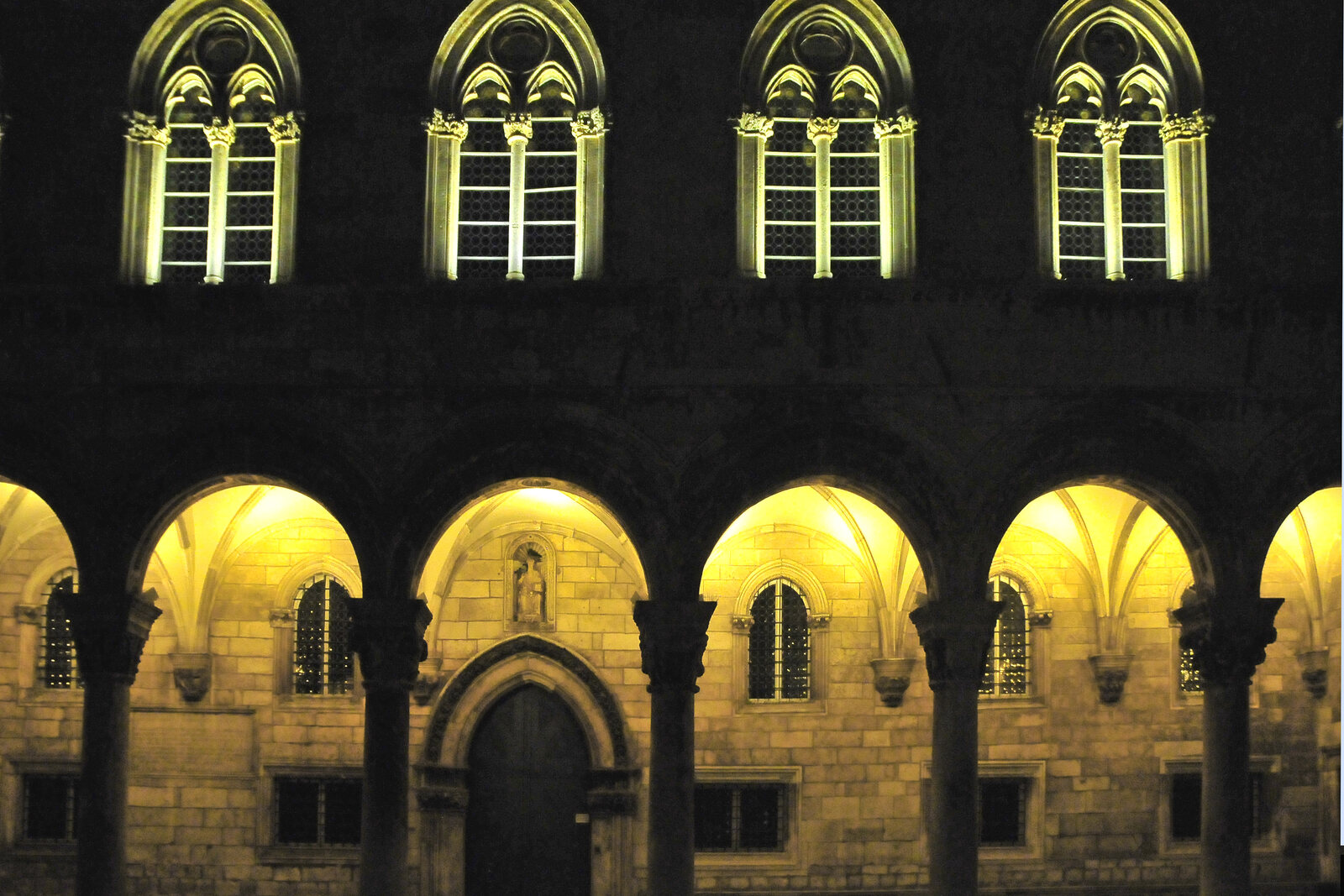
Look around first
What to notice
- Front arcade
- Door to the council chamber with its inscription
- Rooms of the former court
- Cells of the former prison
The story of the place
In sixteen sixty-two, two Dubrovnik patricians met beneath the arcade of the Rector's Palace. Thirty-two-year-old Marojica Kaboga was a diplomat who carried out dangerous assignments for the Republic of Ragusa. He was suspected of excessively close ties with Ottoman officials at the border and was summoned to the city for an inquiry. Nikola Sorkočević, a member of the Minor Council, pressed for Kaboga to be punished. During their meeting in the portico, Kaboga mortally wounded his accuser.
The killer took refuge in the Franciscan monastery and demanded ecclesiastical asylum. City officials forcibly brought him out. The dispute between the senators and the clergy reached Rome; Kaboga faced execution, but in sixteen sixty-three it was commuted to life imprisonment.
Every part of this case converged at the Rector's Palace. The Minor Council and the Major Council met here, while the chancery and the court worked here, and ambassadors were received here. The lower rooms held a guardroom, an armory, and a prison; above were service rooms and the Rector's apartment.
In Dubrovnik, the Rector was a patrician elected to chair the Republic of Ragusa for only one month. For the duration of his service, he moved here without his family, presided over meetings, and left the palace only on state business. A month later, the next elected man occupied his rooms. The building takes its name from this office. An instruction survives above the door to the council chamber: “Forget private affairs; care for public ones.”
On April sixth, sixteen sixty-seven, an earthquake destroyed most of the city and disrupted the work of the court and the prison. Friends helped Kaboga out of confinement. He remained in Dubrovnik, gathered armed men, and set about stopping looting. The surviving patricians appointed the former prisoner one of the five commanders of the city units and elected him to the Council of Twelve—an emergency group restoring government after the disaster. The life sentence was no longer carried out.
Today, the museum on the palace's lower floor shows the court rooms and the former prison. Beneath the front arcade, Kaboga mortally wounded Sorkočević; behind the doors of the same building, the court passed sentence on him, and the former cells still form part of the museum route.
Useful on site
The main idea of this stop can be understood from outside. The atrium, museum halls, and bust of Miho Pracat are accessible only as part of a separate visit to the palace; check admission conditions in advance.