 Guide On Map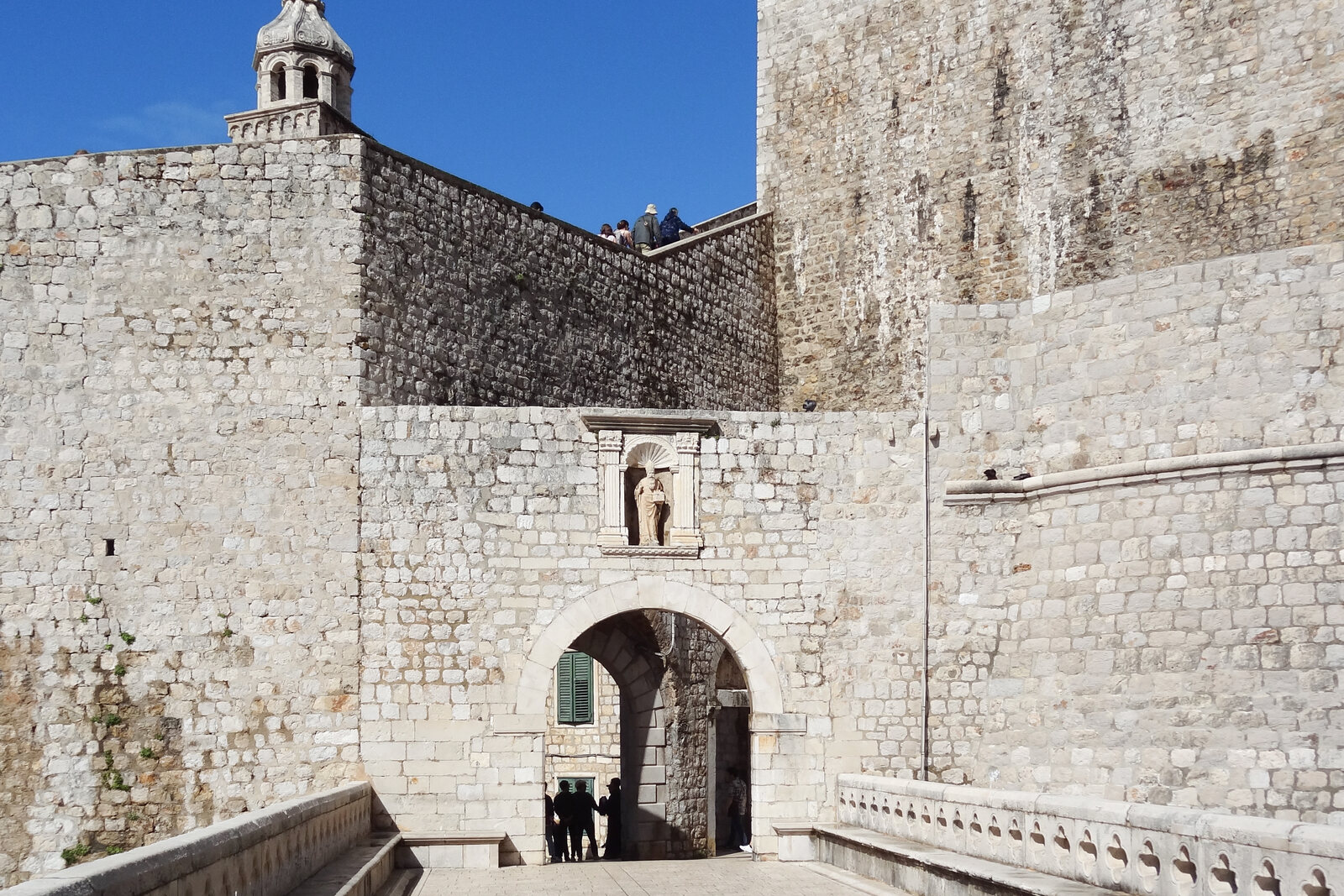
Look around first
What to notice
- Outer gate
- Inner gate
- Stone bridges
- Revelin Fortress
The story of the place
The route from Dubrovnik's eastern side passes through Ploče, named after the suburb beyond the city walls. The defenses were arranged in several layers: outer and inner gates are separated by stone bridges, and Revelin Fortress rises nearby. The outer bridge retains its wooden section, which was once raised at night; now the passage remains open at all times.
On January twenty-seventh, eighteen fourteen, Dživo Natali arrived at this gate. He was a colonel of the Dubrovnik insurgents, seeking the restoration of the republic. With him were about one thousand armed residents of Župa and Brgat, villages east of the city. Inside the walls, townspeople were already disarming the French sentries and disabling the cannons. Natali expected to enter through Ploče, join them, and declare that the republic had been restored.
For him, this was not a safe role taken on for a few days. Natali came from an old noble family, but lived modestly. The French had already arrested him, searched his house, and seized his papers. Now he had brought to the city people who farmed the land in the surrounding villages and were risking their livelihoods and families to drive out the French garrison.
Natali had one obstacle left: the closed gates. The city head, Sabo Giorgi, did not know how fully the insurgents obeyed their commanders. He feared looting and a clash with the Austrian troops that were also approaching Dubrovnik. Natali was therefore ordered to wait outside. There was not even reliable communication between the people in the city and the detachment in front of Ploče.
The Austrian general Todor Milutinović, who intended to occupy Dubrovnik in the emperor's name, used this delay. While the local detachments stood here, he arranged the French surrender without them. On January twenty-eighth, Austrian and British soldiers broke through the barrier at the western Pile Gate and entered the city. Natali's men were not allowed through Ploče. They were ordered to withdraw, and the city guard was disarmed.
The Dubrovnik flag remained raised for another two days. On January thirtieth, Milutinović ordered it taken down. The following year, European monarchs confirmed Dubrovnik's annexation to the Habsburg Monarchy. Natali continued to seek the restoration of the republic through diplomats in Constantinople; for this, his property was sequestered and he was threatened with exile. He never saw the republic again.
The insurgents from Župa and Brgat soon returned to the city gates. This time, instead of rifles, they carried fruit and vegetables to sell.
The name Ploče indicates the direction: these eastern gates lead to the suburb of Ploče. The outer and inner gates, stone bridges, and Revelin Fortress still stand here. The wooden section of the outer bridge is no longer raised at night. The passage where Natali's detachment waited with weapons is now open at all times.
Useful on site
The gate route and the exterior of Lazareti are accessible without a museum visit, but the passages remain busy. Check separately whether it is possible to enter the complex's interiors, and do not regard this as part of the route.