 Guide On Map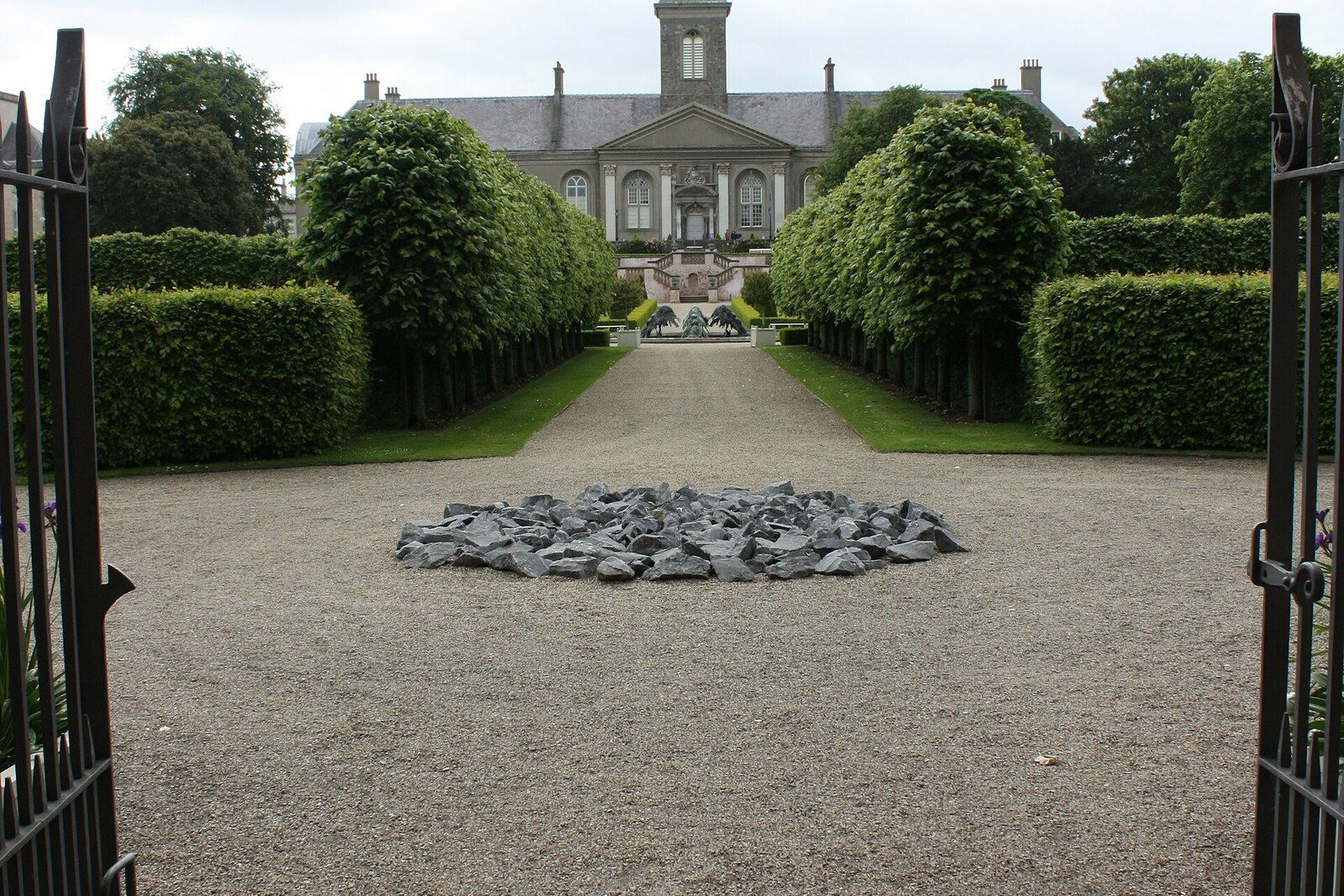
Look around first
What to notice
- Clipped hedges
- Geometric paths
- Large fountain
- Fruit trees by the walls
The story of the place
Clipped hedges divide the garden into even sections, with straight paths running between them toward the large fountain. When Kilmainham Hospital served as a home for retired soldiers, residents who still had enough strength worked here, growing vegetables and rare fruits for the common table. The garden lay below the private rooms of the hospital governor. The present parterres were restored according to ideas of a seventeenth-century garden, but the fruit trees by the northern and eastern walls still grow in the soil cultivated by the military pensioners.
The current exhibition, “Old Man’s House,” is named in memory of the pensioners who lived here. On the second of July, seventeen thirty-nine, the council of Kilmainham Hospital ordered the expulsion of an elderly army pensioner, William Steerman. The minutes called his offence “insolence and a breach of order.” The officials did not record exactly what he had done. But they did record the consequence: Steerman would be left without support in old age. His place was immediately given to the person first in line.
There was a waiting list because the pension here was full maintenance. Former soldiers received clothing, food, medical care, and shelter. In the eighteenth century, about four hundred privates and non-commissioned officers lived here at once, along with only a dozen former officers. Beyond the walls, other veterans received small weekly payments and waited for one of the residents to die, leave to join relatives, find work, or be expelled.
The military routine continued inside. Men able to walk attended morning parade, were required to pray twice a day, ate to a schedule, and were not allowed to leave their rooms after lights-out. Until seventeen ninety-six, two men shared one bed; a room usually held three such beds. Anyone late for the closing of the gates was left outside and reported to the authorities. Steerman lost his home in precisely a system where an old man’s place depended on obeying orders, and his expulsion meant salvation for the next veteran on the list.
The current exhibition is called “Old Man’s House” in memory of these residents. It occupies two rooms, and on its screen you can browse a digitized book of the pensioners’ wills. Steerman’s expulsion order itself survives among the hospital records: behind the brief wording lay the whole outcome—one old man went out through the gates, and another took his place.
The formal garden belonged to the same routine. It was called the governor’s garden: it lay below the private rooms of the hospital governor. Some pensioners who were able to work were sent here to dig and tend the plantings. Over time, a kitchen garden and greenhouses appeared among the geometric paths; the vegetables and rare fruits grown here went to the table of the house’s residents.
The clipped hedges, parterres, and large fountain took their current form after restoration began in the nineteen eighties. This is a historically grounded image of a seventeenth-century garden, not its exact surviving layout. Along the northern and eastern walls, trees still bear fruit in the very soil cultivated by the pensioners who lived here.
Useful on site
Old Man’s House: Mon–Sat 10:00-17:00, Sun 11:00-17:00, tours 11:00/13:00/15:00; the schedule changes outside the main season. The Royal Hospital gates close at 18:30.
Checked: June 27, 2026. Check the official source before visiting.Stay on the open paths and do not go beyond the barriers for inscriptions or graves; access to Old Man’s House is checked separately.