 Guide On Map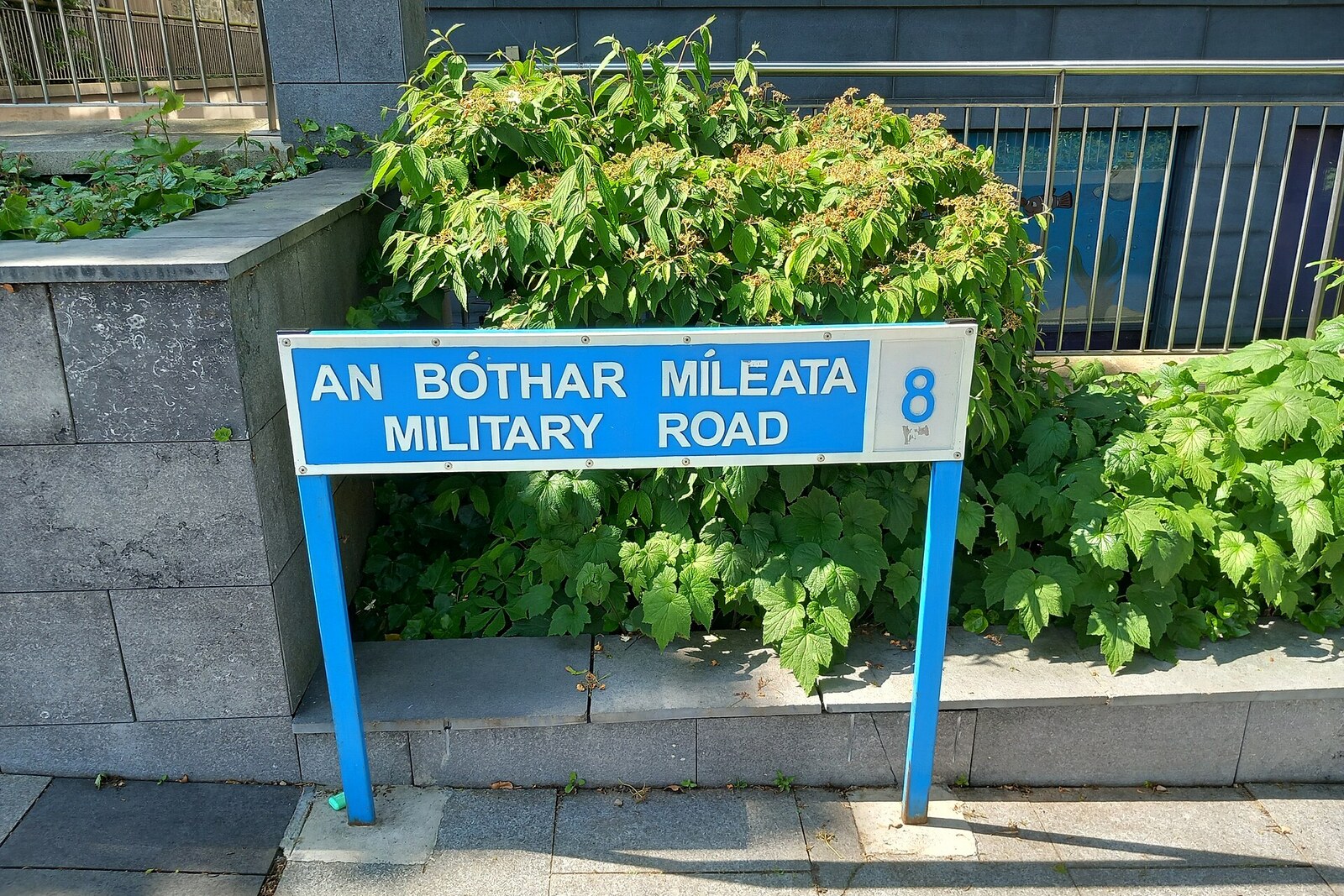
Look around first
What to notice
- Eastern Gate
- Guardhouse
- Bricked-up windows and doors
- The line of Military Road
The story of the place
Military Road rises here from the Liffey, skirts the former hospital gardens, and leads to the main gate of what was once an enclosed estate. People, supplies, and commanders were brought along it to the British Crown's soldiers' home, while aged and injured servicemen lived beyond the entrance. Opposite, a small guardhouse survives with its windows and doors completely bricked up, though the barracks that later stood nearby have disappeared. Beyond the gates now begins the Irish Museum of Modern Art, but the road still follows the line of the old military approach.
On the morning of December seventeenth, nineteen twenty-two, General Nevil Macready, commander of the British forces in Ireland, waited in his residence behind these gates. He was to leave the Royal Hospital immediately after the arrival of the Irish National Army and the changing of the guard. To leave earlier would have meant leaving headquarters unguarded; to remain after the handover would have breached the agreed withdrawal procedure.
The hospital was then the name for a home for elderly and disabled soldiers of the British Crown. It had operated here since sixteen eighty-four, and its buildings also housed the military administration. The Eastern Gate was the main entrance from the city. At the end of the eighteenth century, Military Road was laid to it: it rose from the Liffey, then skirted the hospital gardens to the north and continued toward Islandbridge. Its name indicated its purpose: soldiers, supplies, and commanders arrived along this road at the enclosed estate.
After the Anglo-Irish Treaty of nineteen twenty-one, the Irish Free State was created, and the British army began vacating barracks and depots. Dozens of units needed somewhere to wait for transport. Outside the Eastern Gate had once stood the hospital's service buildings; later, ammunition was stored here. The military now set up a large transit camp on this site. Soldiers were housed there temporarily, then sent through Dublin to the ships at North Wall.
In a photograph of the camp, a boy in uniform is pictured among adult servicemen. His name is not given in the caption. Such children really were prepared for service: army schools admitted orphans and the sons of soldiers who had been killed, and the teenagers then joined their fathers' regiments. For them, the regiment determined an occupation and their future lives in advance. Along with experienced servicemen, boys who were only learning to be soldiers were leaving Ireland.
On December seventeenth, British sentries took up their final posts at seven in the morning. An hour later, Irish units began inspecting the sites being handed over. When a detachment of the National Army entered the Royal Hospital and relieved the guard, Macready looked over the new soldiers, turned, and walked out. The British flag was lowered. The last units departed for the ships; the general himself left Ireland on a warship from Dún Laoghaire.
The changing of the guard did not evict the old men for whom the hospital had been built. They lived here for another five years. In nineteen twenty-seven, the last pensioners were transferred to Royal Hospital Chelsea in London, and the complex's original purpose came to an end.
No barracks remain from the transit camp. Opposite the entrance, a guardhouse built around eighteen sixty still stands; its windows and doors are now bricked up. Military Road still rises from the Heuston Station area toward the Eastern Gate, but since nineteen ninety-one the main entrance to the Irish Museum of Modern Art has been beyond them.
Useful on site
East Gate / Military Road — steep pedestrian entrance; Royal Hospital gates close at 18:30, western entrance on Sundays open from 12:00.
Checked: June 27, 2026. Check the official source before visiting.Proceed carefully on the uphill stretch and watch for traffic; the space in front of the gates is sufficient for this stop.