 Guide On Map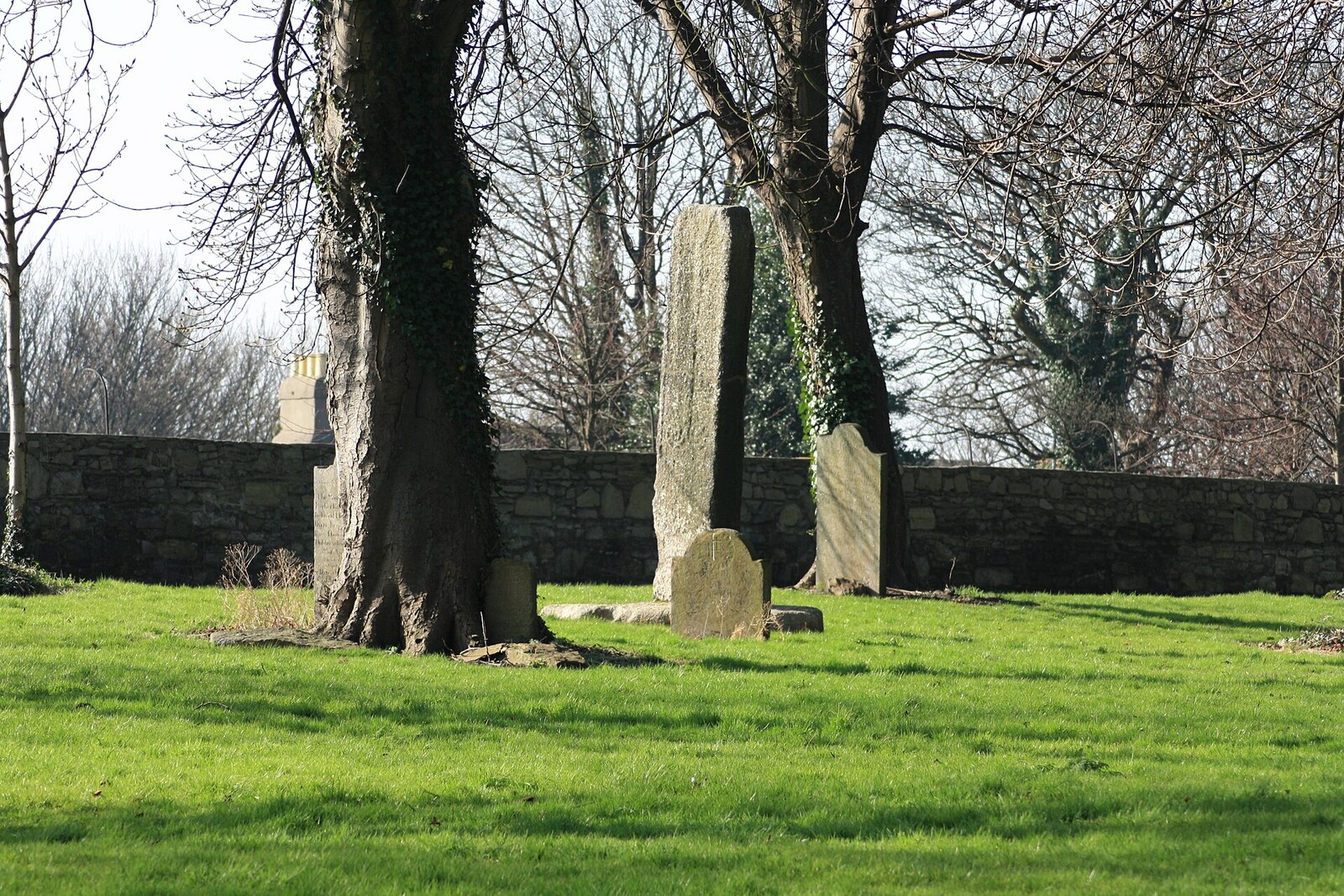
Look around first
What to notice
- Stone gravestones
- Granite standing stone
- Stone enclosure
The story of the place
Among the surviving gravestones at Bully’s Acre, not one is older than seventeen sixty-four. The reason is not that the cemetery is young. Michael O’Brien Dilkes, the superintendent of the Royal Hospital, ordered the earlier stones buried because he wanted to stop burials and the passage of townspeople across hospital land.
People had been buried on this rise since at least the twelfth century, long before the hospital appeared. Dubliners considered the land common ground, so no fee was charged for a grave here. For poor families from The Liberties, a district of weavers, tailors, and other craftspeople, this settled a very practical financial matter. Catholics also buried their loved ones here: the city had no official Catholic cemetery at the time. Most graves had wooden markers, while only wealthier families could afford stone.
In seventeen fifty-five, Dilkes prohibited new burials. He ordered the site enclosed by a high wall, the graves levelled, the gravestones and an ancient carved stone buried, and the ground covered with lime. Families lost both the cemetery and their customary route between Kilmainham and the city.
Dilkes lost the court case over the right of way. When the residents of The Liberties learned of the court’s decision, they came to the hospital in a large crowd and pulled down the wall. The route was reopened and burials resumed; the first surviving stone gravestones after the destruction date from seventeen sixty-four.
Burials continued here until the cholera epidemic of eighteen thirty-two. Over several months, the bodies of three thousand two hundred people were buried in the overcrowded ground, after which the cemetery was officially closed.
A fight over a wall sounds like a ready-made explanation for the name, yet historians have not established a direct connection. “Acre” means a plot of land measuring an acre, while the origin of “Bully’s” remains disputed. It may be a distortion of “bailey,” the title of an attendant at a medieval monastery. Another version says this was a place for fights; similar Bully’s Acres are found in other parts of Ireland as well. The name contains no single famous bully.
The present stone enclosure was built in seventeen ninety-five. Dilkes’s wall disappeared, while the granite standing stone from the ninth to eleventh centuries, buried on his orders, was found and set upright again. Most likely, it now stands somewhere other than where it was erected in the Middle Ages.
Useful on site
Historic cemetery on the grounds of the Royal Hospital / IMMA; dogs are not permitted. Access depends on the operating arrangements for the grounds and gates; cemetery tours take place only as separately announced Heritage Ireland/OPW events.
Checked: June 27, 2026. Check the official source before visiting.Walk only in accessible areas, do not step on gravestones, and do not treat empty grass as unoccupied space.