 Guide On Map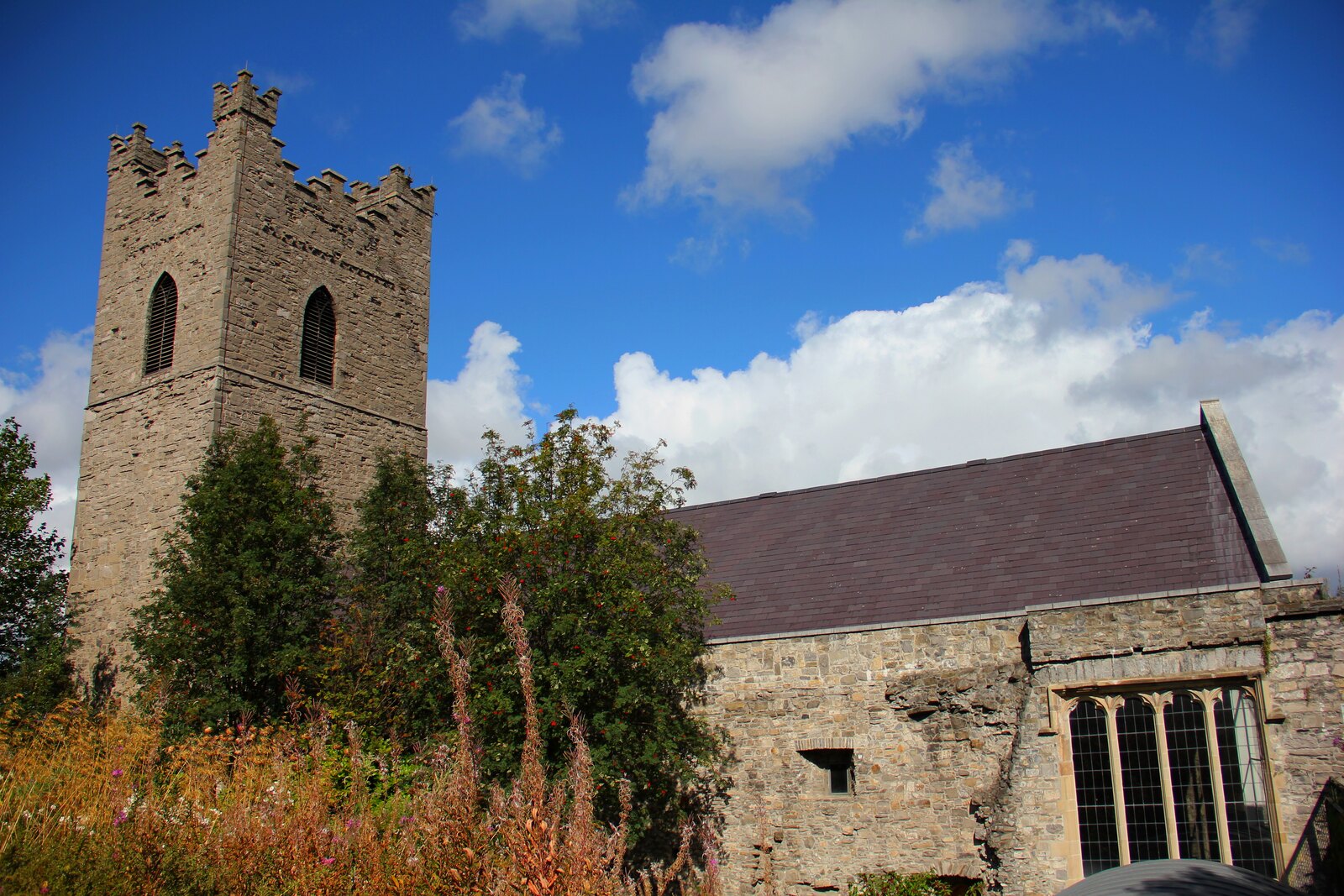
Look around first
What to notice
- Two reclining granite figures
- The west porch
- The chapel open to the sky
- The carved inscription
The story of the place
Services are still held in the north nave: this is Dublin's only surviving medieval parish church. It was built around eleven ninety for townspeople who had settled at the western edge of the fortified city.
St Audoen never visited this place. He lived in the seventh century and was Bishop of Rouen. Anglo-Norman settlers revered him as the patron saint of Normandy and gave his name to their new Dublin church. The dedication indicated where the community gathering by the city gate had come from.
In the west porch lie two life-size granite figures—Rowland FitzEustace, 1st Baron Portlester, and his wife Margaret d'Artois. The monument was made in fourteen eighty-two, when both were alive. Rowland served as Ireland's royal treasurer, received income from offices and extensive lands, and wanted to establish his family's memory here.
Tradition links his decision to a dangerous sea voyage from which he returned alive. It is impossible to verify that reason. But the gift itself is precisely recorded: Rowland paid for a separate chapel beside the church's southeastern section. On the monument, he ordered a request to be carved asking people to pray for him and Margaret, to shorten their stay in purgatory. It is the earliest surviving inscription in the church.
The prayers were provided not by monks but by the Guild of St Anne—a brotherhood of wealthy laypeople that maintained priests and altars here from income from real estate. Probably in return for the chapel, the brotherhood granted Portlester a nearby holding with a house, outbuildings, a garden, and fruit trees. Rowland and his son could use it for the rest of their lives.
Portlester died in fourteen ninety-six. He was buried in the Franciscan abbey he founded in County Kildare, so the Dublin monument became a memorial without his grave. In seventeen seventy-three, the parish could no longer maintain the eastern part of the church and removed its roof. The chapel paid for by Portlester now stands open to the sky southeast of the nave, while the stone husband and wife lie beneath the roof of the west porch. The inscription still asks people to pray for people who are not here.
Useful on site
Officially: the Visitor Centre is open daily 09:30–17:30, admission is free, last entry 16:45; for the church section, the Heritage Ireland page notes that the reopening date is still to be confirmed.
Checked: June 26, 2026. Check the official source before visiting.Outside, focus on the building's age and layout. The lucky stone and the cenotaph are inside, so check access to them separately.