 Guide On Map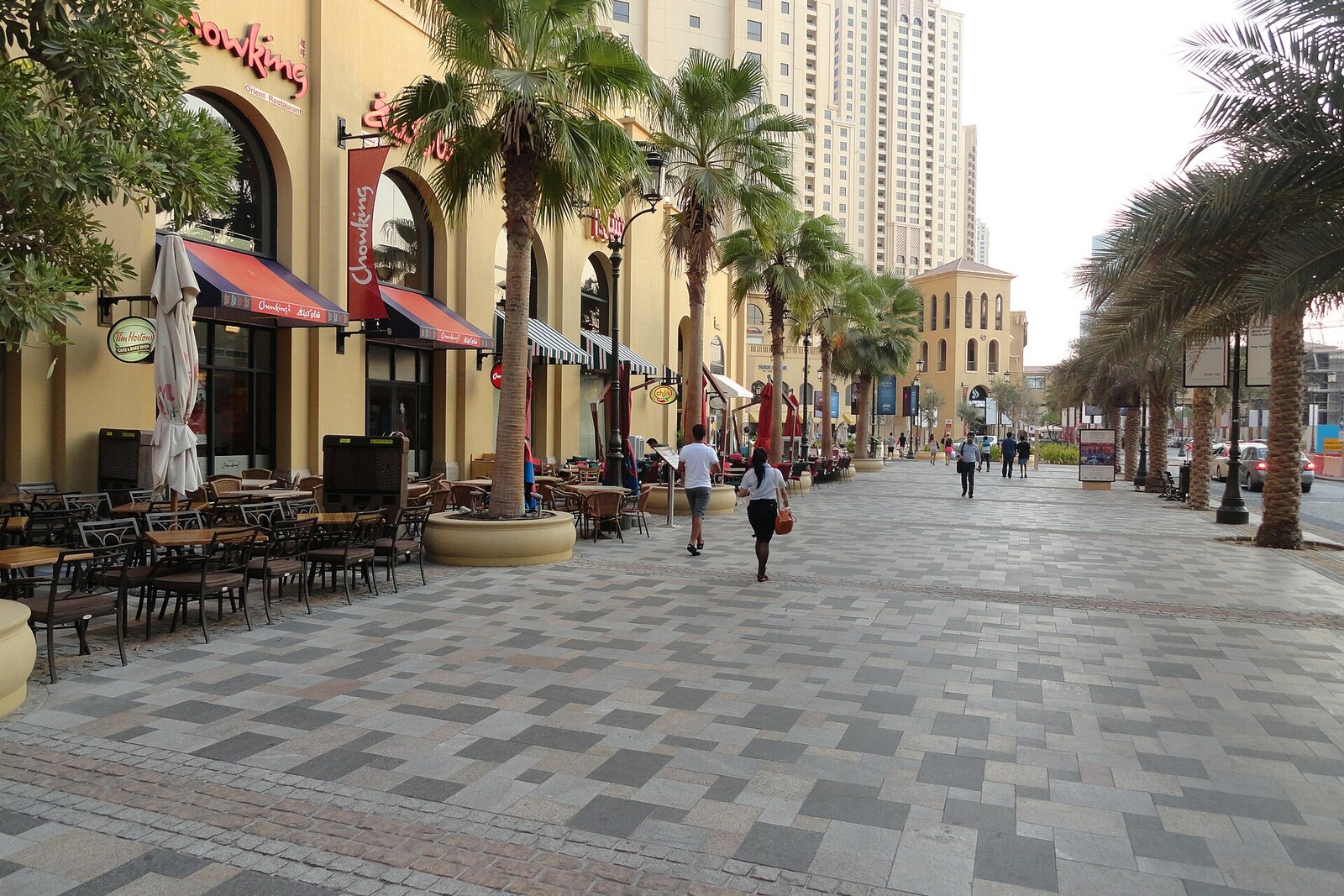
Look around first
What to notice
- Lower row of shop windows
- Staircases to the upper plaza
- Upper premises
- Tables by the passageway
The story of the place
For nearly two miles, a shopping street stretches between four dozen residential towers by Jumeirah Beach. It opened in two thousand eight, with two retail strips arranged one above the other: the lower one runs along shop windows and cafés, while the upper one is hidden behind the walls of a raised plaza. Tall staircases connect the levels, but the upper doors are almost invisible from the lower passageway. Today, kindergartens, clinics, salons, and offices are more common upstairs—services for those who live in the towers.
In the spring of two thousand nine, Jamal Shaeito, co-owner of the Duo restaurant, counted diners at the tables. On Fridays and Saturdays, there were about one hundred fifty to two hundred people. By his calculation, that was not enough to pay the rent and cover the other expenses. Meanwhile, from ten to fourteen thousand potential customers passed nearby each day.
The restaurant stood on the upper plaza, while the main stream of people ran one floor below. That was how the new shopping street, opened in two thousand eight inside a residential complex by the sea, was laid out. “JBR” is the English initialism of the name “Jumeirah Beach Residence,” the residential complex by Jumeirah Beach. The line of shops and cafés, about one mile and seven hundred meters long, was called “The Walk,” meaning “a stroll.”
Dubai Retail expected the residents of four dozen towers to fill both retail levels. On the lower floor, that calculation worked: people walked straight along the shop windows, and restaurants set tables by the passageway. Tall staircases led upward; the plaza walls hid the establishments from those who stayed below, and there were few elevators. Jamal decided to move the restaurant to the ground floor and was arranging a new lease, although the move required additional expenses.
The managers tried to change visitors’ habits. They installed more than two thousand signs and prepared electronic maps. The head of Dubai Retail acknowledged that people preferred to walk straight ahead. Some entrepreneurs closed their establishments, while others moved downstairs. The idea of a second shopping street above the first had to be reconsidered.
By two thousand eleven, Dubai Properties began leasing the upper premises to kindergartens, offices, salons, gyms, and other services that tower residents use regularly. Over a year and a half, occupancy on that level more than doubled, reaching seventy-five percent.
The staircases above the lower shop windows lead to the very level where shoppers were being lured with thousands of signs. Cafés and the flow of strollers remain at street level; kindergartens, clinics, salons, and offices still operate upstairs today. The managers did not bring the strolling crowd up there—they found tenants who did not need it.
Useful on site
Open twenty-four hours; shops and markets operate until late at night
Checked: June 22, 2026. Check the official source before visiting.It can be crowded here; listen to the story away from entrances, terraces, and the main flow of people.