 Guide On Map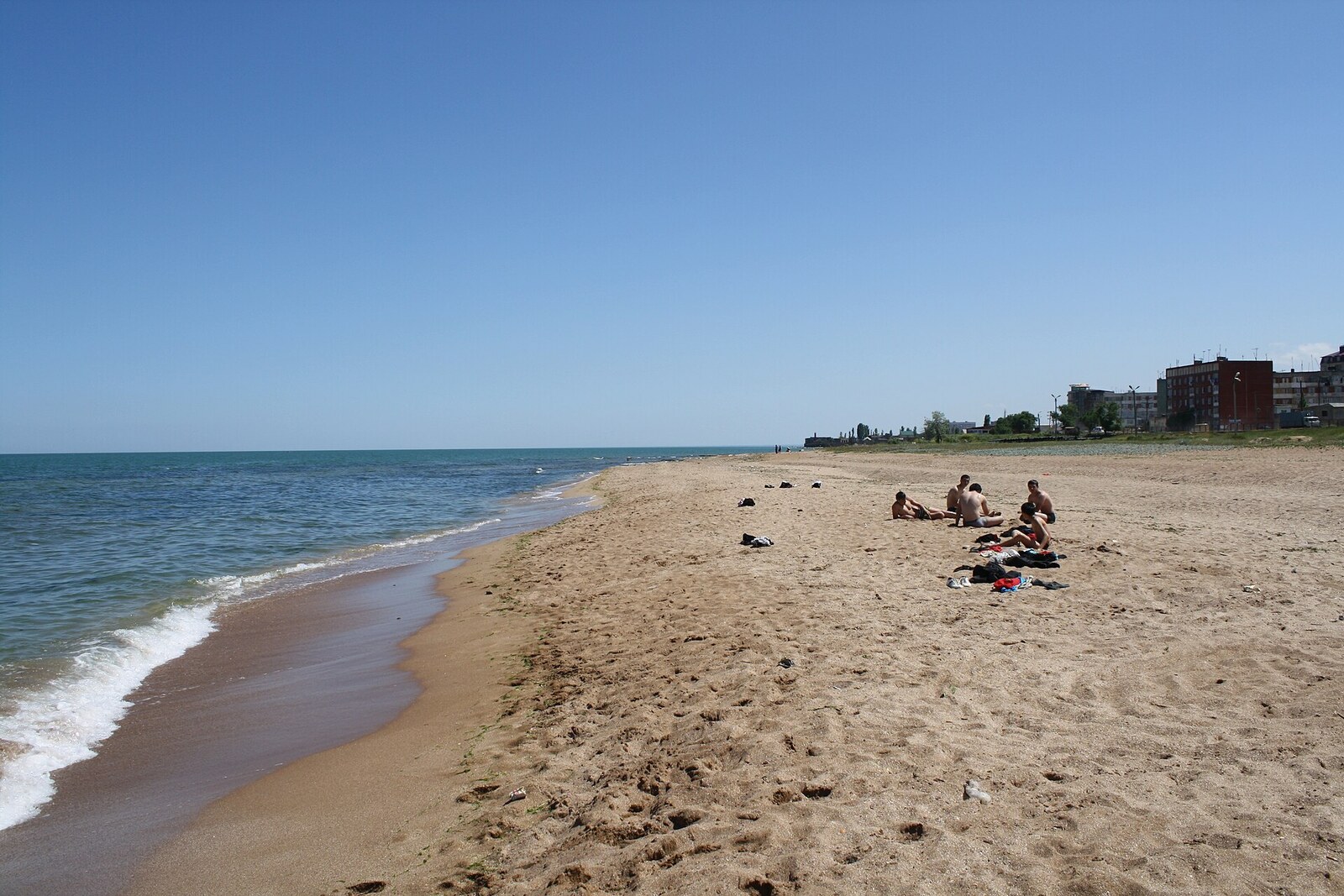
Look around first
What to notice
- Shoreline
- Caspian Sea waters
- The white lighthouse tower beyond the city rooftops
The story of the place
The water along the city shoreline conceals the remains of Derbent Harbor. The fortress walls extended into the sea and left a narrow entrance between them, closed by a chain; guards admitted vessels on the rulers’ orders. Through this passage, ships entered beyond the line of fortifications that blocked the road between the seashore and the mountains. Stonework stretches for hundreds of meters from the shore, and farther on the remains of a sea wall lie on the seabed; ceramics and anchors were also found underwater.
Here, on the shore of the Caspian Sea, eighteen ships of Rus'—northern warriors who lived by military service and campaign spoils—appeared in nine eighty-seven. They had been secretly summoned by Maymun ibn Ahmad, the emir, or ruler, of Derbent. Influential townspeople—the ra'ises—removed him from power and held him under guard in his own residence. Maymun needed men who did not depend on his opponents within the city.
Derbent was then called Bab al-Abwab—“the Gate of Gates.” The fortress walls familiar from the route descended to the Caspian Sea and continued into the water, forming a harbor. A chain closed the narrow entrance between them. Harbor guards admitted vessels only on the orders of the city’s rulers. Here, a ship found itself within the same fortification that blocked the road between the sea and the mountains.
Not all eighteen vessels entered the harbor at once. The Rus' sent one ship to check whether Maymun was truly asking for help. The landing party reached his residence and freed the emir. Then the townspeople surrounded the foreigners and slaughtered the entire detachment. The remaining seventeen ships sailed south.
Maymun nevertheless assembled a new personal guard from the Rus'. Such warriors were called ghulams: they served the ruler as bodyguards and formed the armed support of his court. Two years later, Musa al-Tuzi, a preacher from the southern Caspian region of Gilan, supported by the ra'ises, rose against the emir. He demanded that the Rus' ghulams be handed over, to force them to convert to Islam or execute them.
Maymun refused. For twenty-eight days, he and his bodyguards defended themselves in the citadel. Then he arranged free passage with the townspeople, surrendered the fortification, and left with his detachment for neighboring Tabasaran. The ships brought him freedom, but he could not hold the city.
The exact landing place of the first crew is unknown. The harbor itself remains beneath the surface of the Caspian Sea. In the nineteen eighties, Alexander Kudryavtsev and Murtazali Gadzhiyev, together with scuba divers, examined the stonework, ceramics, and anchors here. Underwater blocks can be traced from the shore for hundreds of meters; farther on lies the collapse of the sea wall. The chain and the harbor gates have disappeared, but the layout of the harbor that received the ship carrying Maymun’s mercenaries has survived on the seabed.
Useful on site
Publicly accessible shore without museum restrictions; visit in daylight and safe weather.
Checked: date not specified. Check the official source before visiting.The remains of the walls are underwater and may be indistinguishable from the shore; do not enter the sea to search for them or mistake random stones for masonry.