 Guide On Map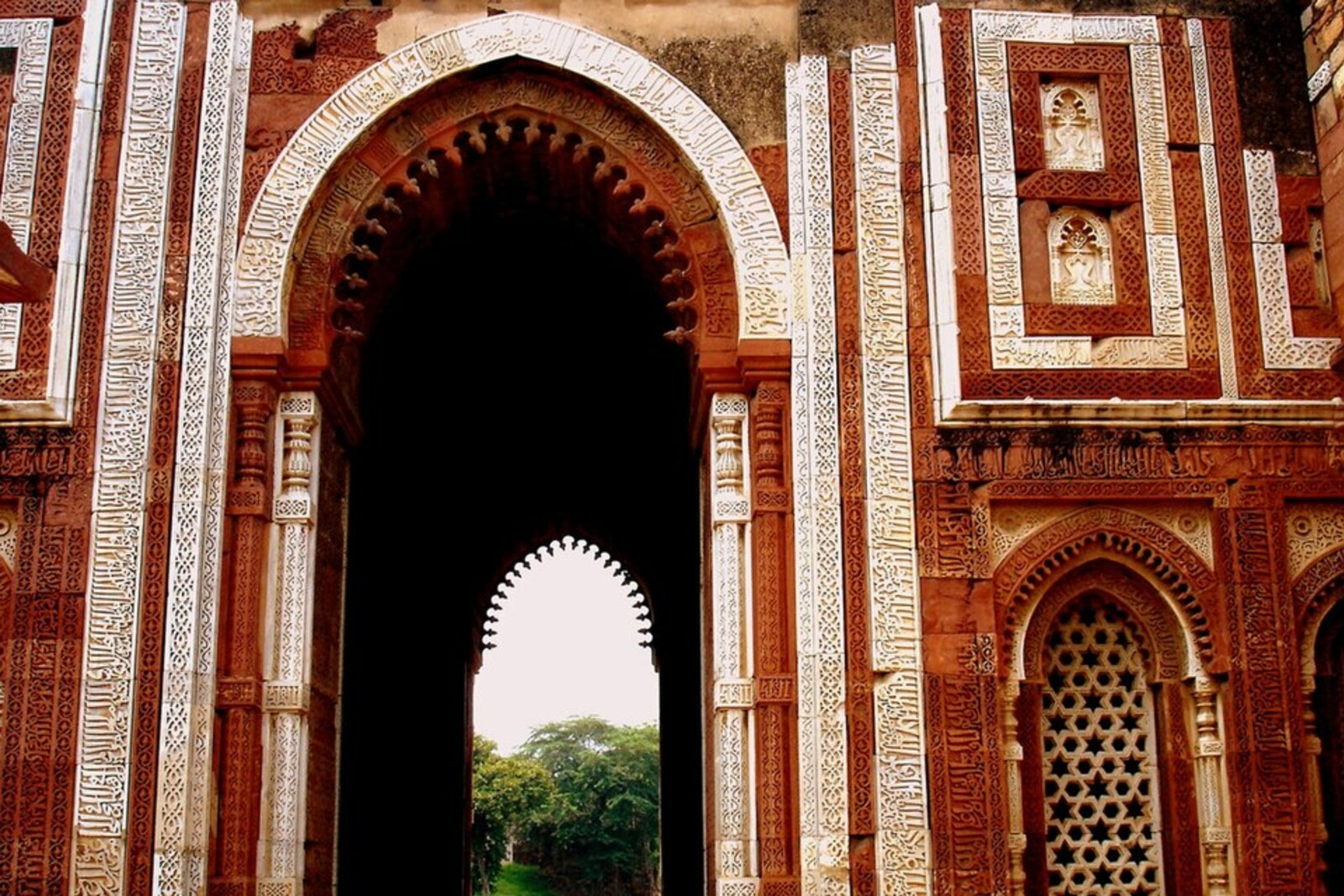
Look around first
What to notice
- Pointed arches
- White marble bands
- Stone inscriptions
- The empty space beyond the gate
The story of the place
Today, beyond the arch of Alai Darwaza, there is none of the enormous courtyard for which it was built. “Darwaza” means gate, and “Alai” means “belonging to Alauddin.” This is the southern ceremonial entrance of Alauddin Khalji, the Delhi sultan who, in thirteen eleven, ordered a new expansion of Quwwat-ul-Islam Mosque.
He chose this very mosque because the buildings of Aibak and Iltutmish already stood here. It was the main mosque for communal Friday prayer, where the reigning sultan was named during the sermon. Alauddin envisioned a new courtyard that would encompass the earlier mosque, a new prayer wall, an enormous minaret, and four ceremonial entrances: two from the east, one from the north, and this one from the south.
The funds came from campaigns in the Deccan. They were led by Malik Kafur—a slave of Alauddin, once bought for a thousand dinars. Hence his nickname, Hazar Dinari, the Thousand-Dinar Man. His position at court rested on his master's trust and the success of the campaigns entrusted to him. Kafur forced southern rulers to hand over tribute, gold, precious stones, horses, and elephants; with every success, the former slave rose higher and higher, until he became the sultan's chief commander.
While Kafur had gone on another campaign, toward the lands of the Pandyas in the far south of India, Delhi completed the first gate of the new courtyard. The white marble bands around the arches were made into a stone charter. The inscriptions gave the date and listed the patron's titles; among them was “the Second Alexander.” Alauddin wanted anyone entering the old mosque to first pass beneath his name.
Five years later, the sultan died without completing the expansion. Kafur, by then a regent, placed the dead sultan's roughly six-year-old son on the throne and intended to rule in the child's name. The older heirs were blinded on Kafur's orders. Kafur himself lasted thirty-five days: palace guards killed him. The rulers who followed did not return to the building project.
The three other entrances never appeared. The white inscriptions on the surviving gate still call Alauddin the Second Alexander; beyond it lies the empty space of the unfinished courtyard.
Useful on site
As for the Qutb Minar complex: ASI lists hours from sunrise to 20:00; check the current e-ticket.
Checked: June 28, 2026. Check the official source before visiting.First look straight at the portal, then walk around the building: the symmetry and combination of materials read better as your viewpoint changes.