 Guide On Map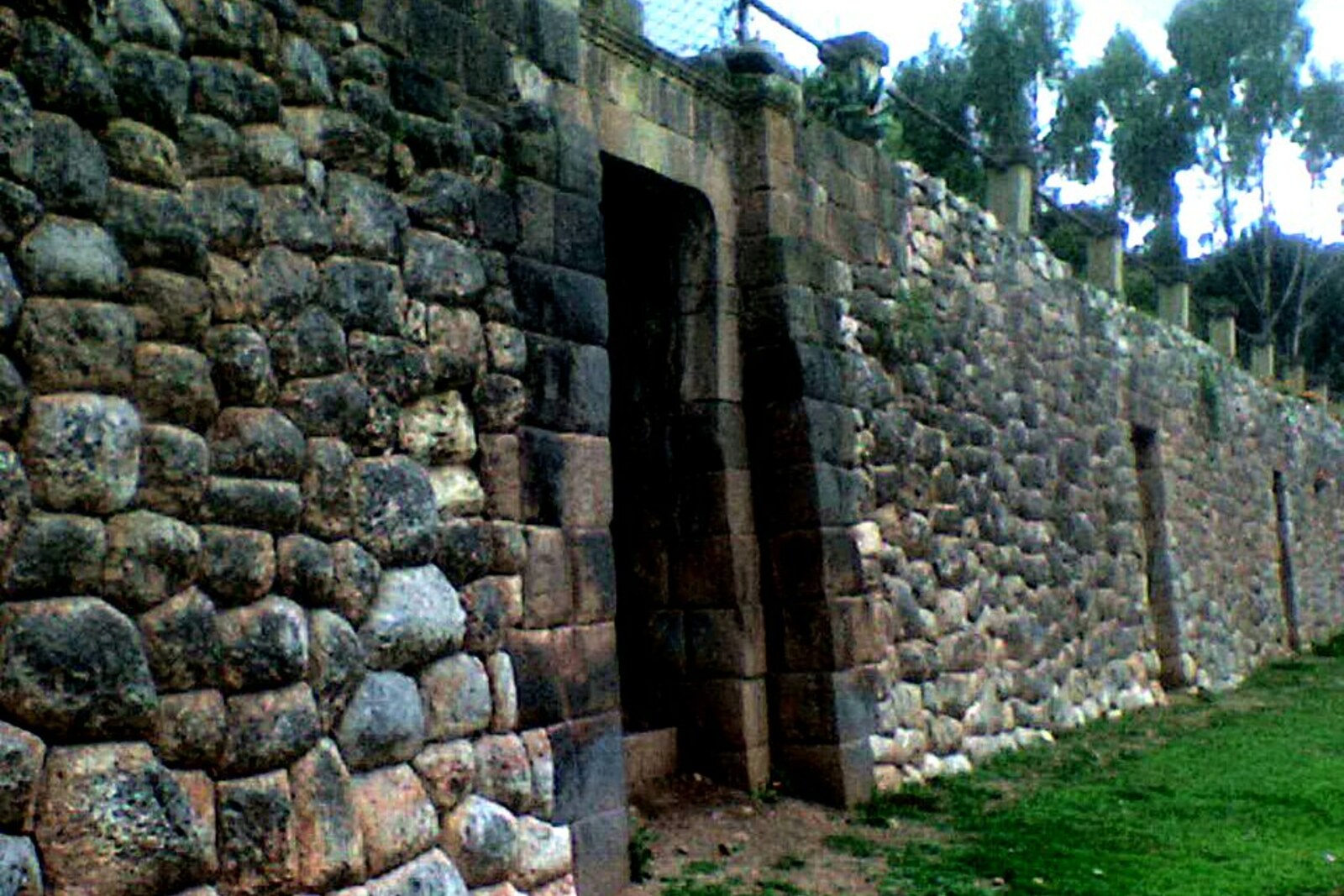
Look around first
What to notice
- The long Inca wall
- Eleven trapezoidal niches
- The stone terrace
The story of the place
Above the square runs a long Inca wall with eleven trapezoidal niches. It is the surviving part of Colcampata—the “terrace of storehouses,” if one follows the usual translation of the Quechua name. Tradition links the palace here to Manco Capac, the legendary founder of Cusco; another fact is more securely known: in the sixteenth century, a huge roofed hall still stood here, capable of replacing the square during rain.
After Paullu Tupac Inca's death, his son Carlos Inca inherited the palace. He sought two things for his family at once: recognition from the Spaniards and precedence among the Inca nobility remaining in Cusco. Carlos read and wrote Spanish fluently, married the Spanish woman María de Esquivel, but maintained his own court at Colcampata. Impoverished Inca nobles gathered in the great hall, old festivals were held, and Spanish and mestizo guests stayed there. Carlos lived on inherited lands, gardens, mills, and income from communities assigned to the family. To lose Colcampata meant losing, all at once, his home, his means of support, and the circle of people who recognized his seniority.
The danger emerged at the baptism of his only son, Melchor Carlos, in fifteen seventy-one. The relatives called the infant “capac.” For them, this title could signify membership in the highest Inca nobility. Viceroy Francisco de Toledo, who sought to destroy the independent Inca court in Vilcabamba and prevent a new dynastic center in Cusco, interpreted the word as “king.” The baptism became evidence: Carlos was accused of allowing his son to be proclaimed sovereign. To this were added alleged correspondence with Vilcabamba and participation in an earlier conspiracy. The surviving documents report the accusations but do not prove them.
Toledo ordered that Carlos be tried for treason, his property seized, and him exiled to Lima. Colcampata interested the viceroy even before the case was concluded. The whole city lay open from this terrace; in a letter to the Spanish king, Toledo explained that a cannon from here could keep every house in Cusco in its sights. By May fifteen seventy-two, builders had already turned the palace into a fortress with battlements, a garrison, and artillery. Officials formally took possession of Carlos's property only in December.
Between these dates, the fortress had time to become a prison. In September, Incas captured at Vilcabamba were brought here, among them Túpac Amaru and his commanders. The people once received by the head of Cusco's Inca nobility gave way to prisoners; the great hall where festivals had been held and a court maintained was used to guard those Toledo intended to try.
Carlos appealed the sentence. The royal court in Lima entered into a dispute with the viceroy over him, and then the case was decided in favor of those convicted. Carlos returned to Cusco and recovered his estates before his death. In his will of fifteen eighty-two, he called Colcampata “the houses that had once been a fortress.” The Spanish battlements, garrison, and cannons are no longer here. Above the square remains the Inca terrace with eleven niches—the wall of the palace that Toledo once chose as a position from which to shell the city.
Useful on site
Open urban space; go during the day, watch your breathing on the climb, and do not block narrow passageways.
Checked: June 28, 2026. Check the official source before visiting.View the complex from the accessible side, and do not try to enter the niches or climb the masonry. Step back far enough to see the wall's full rhythm.