 Guide On Map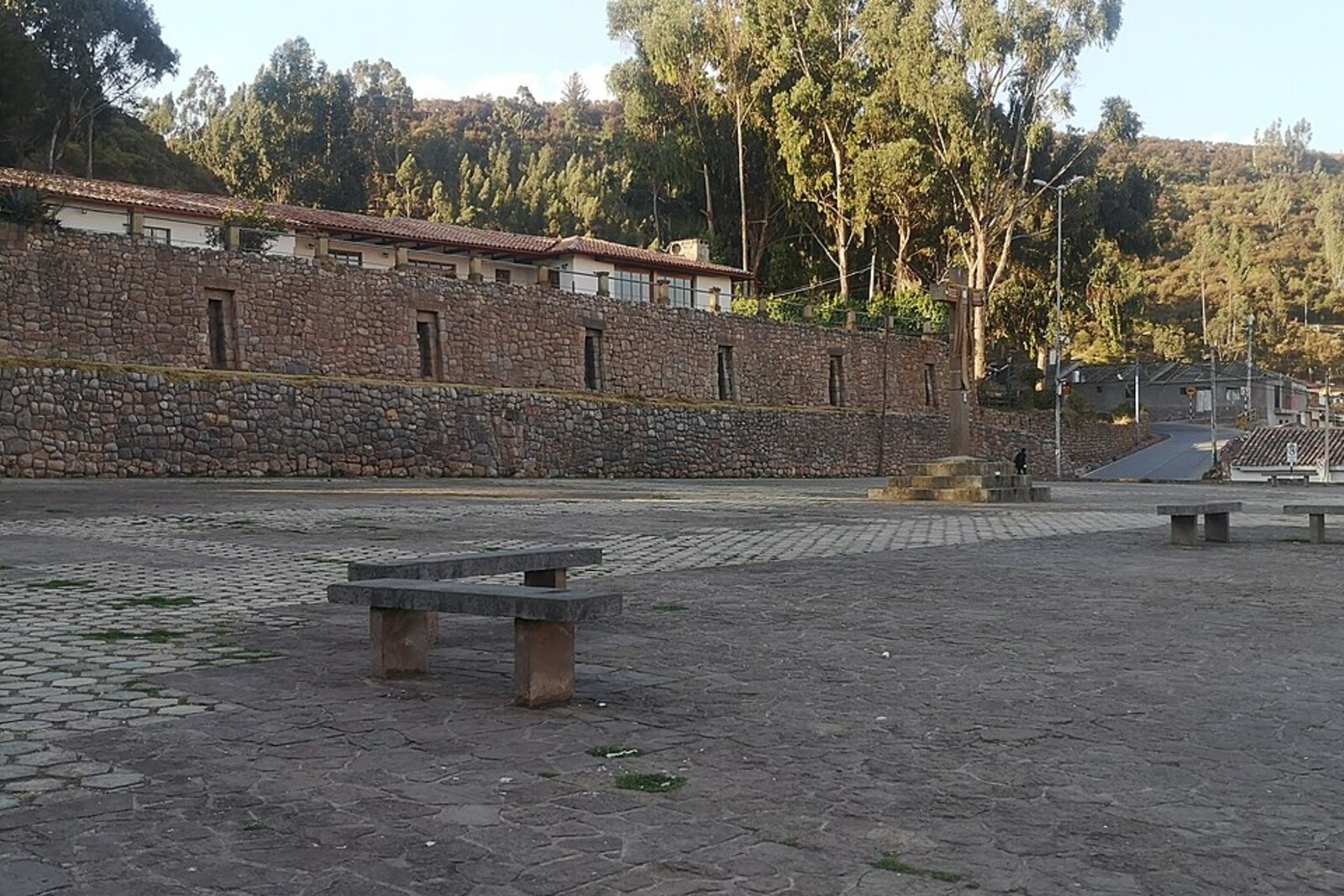
Look around first
What to notice
- Stone bell tower
- Adobe nave
- Section of Inca wall
The story of the place
The adobe nave and stone bell tower belong to the church built after the earthquake that destroyed the earlier chapel. It stood beside the house of the Inca prince and served his household. The entrance faces Colcampata Square, and inside a section of the old Inca wall has been left open: the later church rose directly within the quarter that had existed here before.
Paullu Tupac Inca, the son of the ruler Huayna Capac, ordered the first chapel on this site to be built. After the Spanish conquest, he sought to retain his house in Colcampata, the Inca quarter on this slope, the lands granted to him, and the right to pass them on to his son. His income came in part from the Hatun-Cana repartimiento: this was the name for the right granted by the Spaniards to receive tribute from assigned communities.
Paullu obtained all this by choosing a side in the war against his half-brother. In fifteen thirty-six, Manco Inca, the leader of the uprising, besieged the Spaniards in Cusco and tried to retake the city. Paullu supported the conquistador Diego de Almagro, who was returning from an expedition to Chile with his army. He urged Manco's warriors to go home or join Almagro. The siege collapsed, Manco withdrew to Vilcabamba, and Almagro proclaimed Paullu Inca in Spanish-controlled Cusco.
The alliance almost destroyed Paullu himself. Almagro lost the war to other conquistadors, the Pizarro brothers, and was executed. Paullu changed sides again. He had already seen Spaniards kill Inca princes so that their opponents could not proclaim one of them ruler. Now his life, Colcampata, and his family's income were under threat. In fifteen forty, Paullu gathered testimony about his services to the Spanish Crown. In it, he kept silent about fighting on the side of the defeated Almagro. The royal charters he received afterward secured Colcampata for him, and the Spaniards recognized his son as his heir.
Baptism was the next step. The royal judge Cristóbal Vaca de Castro, on whom Paullu's position in the new order depended, agreed to become his godfather. The Inca prince received the name Cristóbal. His wife, who became Catalina Tocto Ussica, his relatives, and noble supporters were baptized with him.
Paullu built the chapel next to his house. Here priests and monks prepared his relatives and people from his circle for baptism, taught them prayers, and taught those who wished to read and write. The ability to read Spanish documents made it possible to deal with land charters, inheritances, and tribute. The chapel served the whole household whose future Paullu had just set down in the victors' documents.
In church terms, it was dedicated to Saint Christopher, an early Christian martyr whom tradition depicts carrying the infant Christ across a river. The choice of name was connected both with the founder himself and with his godfather, Vaca de Castro. Thus the Inca name of this site, Colcampata, gradually gave way in everyday speech to the name San Cristóbal.
After Paullu's death, his son Carlos Inca inherited the house and maintained the chapel. In the late fifteen fifties, it was turned into a parish for the Indigenous residents of this district. The parish still operates, and the figure of Saint Christopher is carried from here for the city's Corpus Christi celebration.
The chapel Paullu saw is not before us. The earthquake of sixteen fifty destroyed it; the present adobe nave and stone bell tower were built later. Its position has survived: the church doors still face Colcampata Square beside the prince's former residence. Inside, beneath the later church, a section of the original Inca wall has been left open for viewing.
Useful on site
Open urban space; go during the day, watch your breath on the climb, and do not block narrow passageways.
Checked: June 28, 2026. Check the official source before visiting.First look at the church from the square: the present tower appeared much later than the first chapel. Do not consider interior access essential to understanding this stop.