 Guide On Map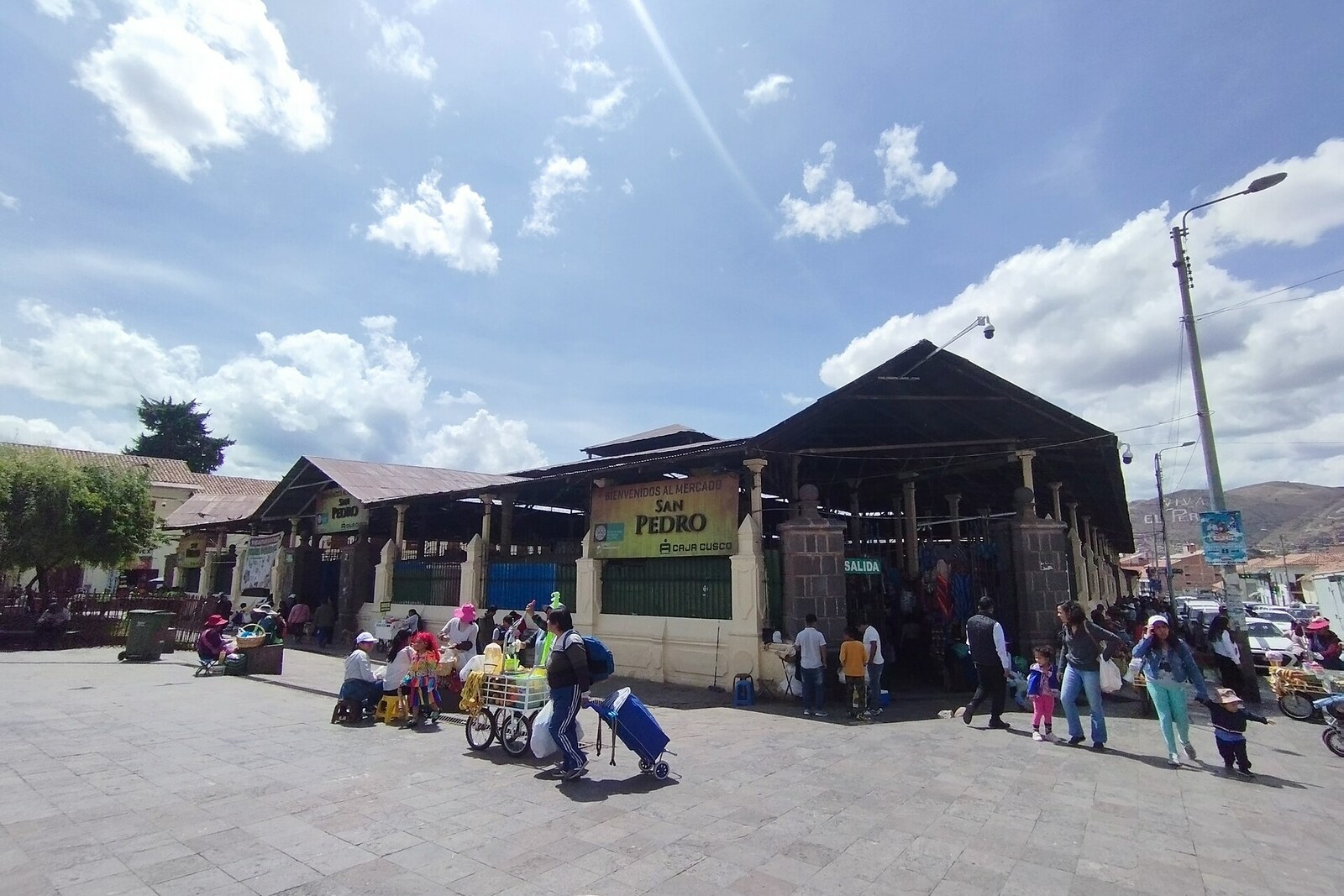
Look around first
What to notice
- The covered market hall
- Prepared-food rows
- Fruit stalls
- Handicraft stalls
The story of the place
Under the market roof, more than one thousand vendors occupy allocated places divided among meat, fruit, groceries, prepared food, and handicrafts. In nineteen twenty-five, the city opened a food market here, intended for ongoing trade. Among the prepared-food rows, a separate Cusco cuisine remains, with fruit and handicraft stalls stretching alongside it. Over the decades, travelers have joined local customers, and vendors explain unfamiliar dishes to them.
At age six or seven, Mary Orellana Flores came here with her mother. Her mother got up at half past four in the morning, walked from Calle Tres Cruces de Oro, and prepared Cusco dishes at San Pedro. Mary washed plates. Food sales supported the family.
At seventeen, Mary was studying archaeology at Universidad Nacional de San Antonio Abad del Cusco. At the same time, she took over her mother's stall. She could not combine selling with classes: after the third semester, Mary left the university and stayed at the market.
The covered San Pedro opened in nineteen twenty-five as a city food market with allocated trading places. There are now more than one thousand vendors here. Their stalls are divided into sections: meat, fruit, groceries, prepared food, and handicrafts. Mary kept her mother's place in the Cusco cuisine row.
Over the following decades, travelers joined the regular customers. When Mary headed her section, vendors increasingly had to explain dishes to people who did not speak Spanish. In two thousand twelve, she says, she secured help from Anel Townsend, the former minister for women's affairs. English classes were arranged for vendors at Universidad San Ignacio de Loyola in Cusco. Mary learned English and picked up several greetings in other languages.
That same year, she received a fifty-page notebook—an ordinary bank giveaway. Mary began asking visitors to leave their names and a few lines in it. She wanted to record what she saw from behind the counter: there were more and more foreigners at the market. The notebook acquired entries from Peruvians and guests from different countries, while beside them Mary collected the coins and banknotes they left.
By San Pedro's centenary, Mary had worked here for more than forty-seven years and had become the market's oldest active vendor, and then its cultural coordinator. At the stall for which she left archaeology, they prepare escabeche cusqueño with vegetables, chicken, bread from Oropesa, and boiled rocoto pepper. The growth in foreign visitors fits alongside it—in a bank notebook with visitors' signatures.
Useful on site
The market is usually active from early morning to evening; individual rows close at different times. Check the schedule on site.
Checked: June 28, 2026. Check the official source before visiting.Do not stand in the middle of the aisles, and give way to people with carts and loads. Always ask permission before photographing a vendor or the vendor's stall.