 Guide On Map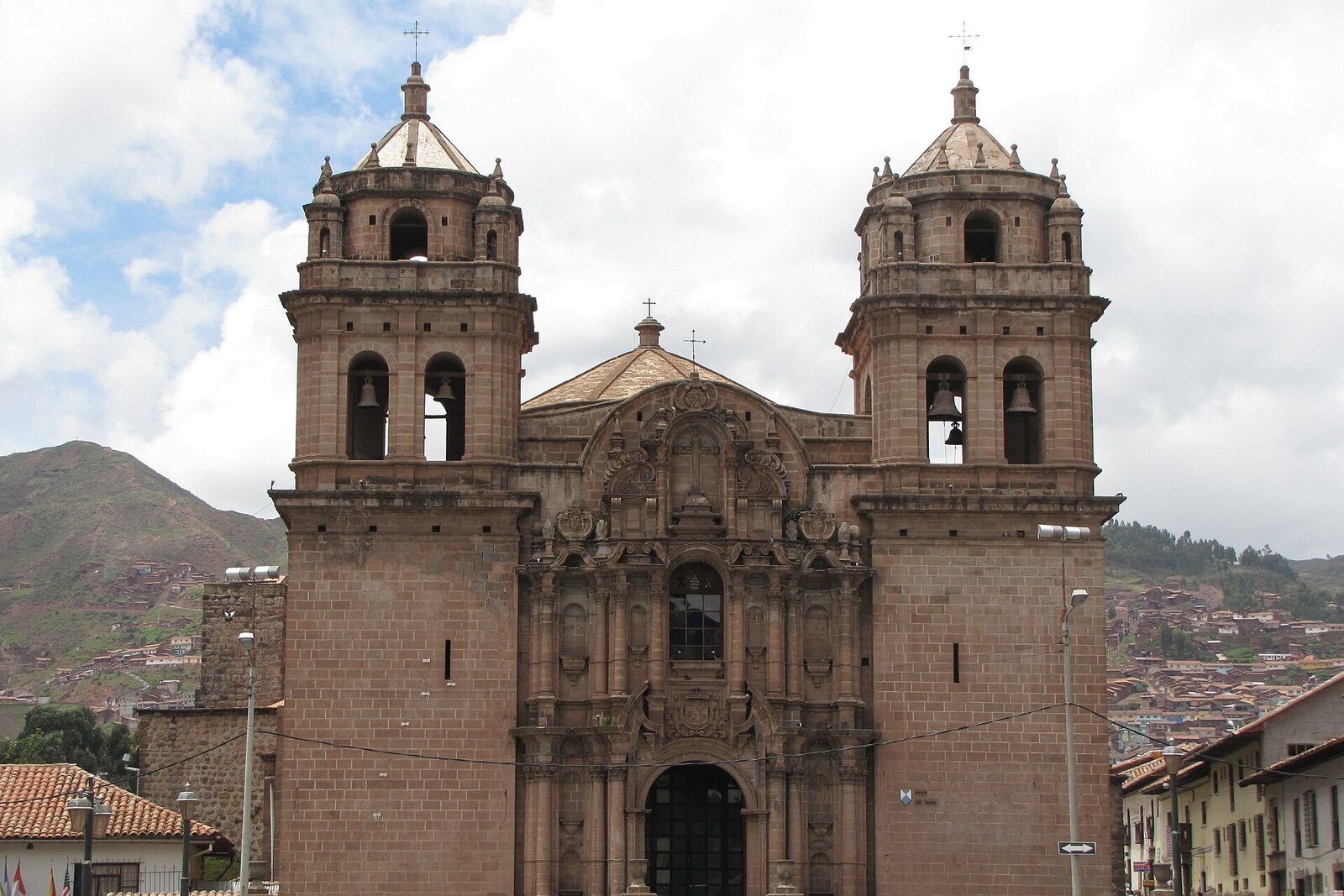
Look around first
What to notice
- The stone church façade
- Plaza San Pedro
- Calle Hospital
The story of the place
Parish life in this square still gathers around the stone façade of Iglesia de San Pedro: Masses are celebrated here, and baptisms and weddings are performed. The church takes its name from Saint Peter the Apostle, whom Catholic tradition calls the first pope; the square received its name from him as well. Calle Hospital runs along the side—a name that outlasted the vanished buildings nearby.
On July fourth, sixteen ninety, the parish priest Andrés de Mollinedo y Rada sent the bishop an alarming report. He sought the construction of a stone church: the old adobe chapel threatened to collapse, there was not enough room inside for people on major feast days, and the neighboring premises were needed by the sick.
Since fifteen fifty-six, Hospital de Naturales had operated here—“naturales” was what the colonial administration called Indigenous people. It was established outside what was then the Spanish city, beside the neighborhoods of those it was meant to admit. Other hospitals existed for Spaniards and mestizos.
Much of the expense was placed on the patients themselves. Viceroy Francisco de Toledo, trying to secure a steady income for the hospital, required Indigenous people from the surrounding parishes to pay one tomín of silver each year—a small coin. When admitted, a sick person paid another quarter of a tomín. The documents state the reason plainly: there were many sick people, there was not enough money, and they had nowhere else to go. The parish church was part of the same complex. Services were held there, and members of the hospital brotherhood and poor people who died during treatment were buried there.
After the earthquake of sixteen fifty, only one room of the hospital survived. The chapel was rebuilt, but three decades later its walls were again considered unsafe. Andrés de Mollinedo decided to build a full stone church beside it. He had the means: the priest owned a silver mine in Paratía and had his trusted men extract and sell the ore. His uncle, Bishop Manuel de Mollinedo y Angulo, supported the construction.
In sixteen eighty-seven, the priest asked the hospital brotherhood to give up the land behind the old chapel. The plot was valued at one thousand five hundred pesos, but it was sold for eight hundred for the church's construction. On September fourteenth of the following year, the first stone, donated ornaments, and coins were laid in the foundation. Townspeople brought materials; a chronicler claimed that Inca terraces on Picchu Hill were dismantled for this purpose.
The project was entrusted to Juan Tomás Tuyru Túpac, a Cusco architect and sculptor of Inca nobility. He designed the present building in its entirety, directed the work, and later carved its pulpit. By the end of the seventeenth century, patients and parish residents had received a stone church, and the former adobe building was dismantled.
The hospital itself disappeared over time. Part of its plot was taken up by a railway station, while part remained with the church. Masses are still celebrated in the church, and baptisms and weddings are still performed there. San Pedro is Saint Peter the Apostle, whom Catholic tradition considers the first pope; he was made the parish's patron, and the name passed from the church to the square. A side street has preserved another name—Calle Hospital.
Useful on site
The church opens according to the rhythm of services; the square is accessible as an urban space.
Checked: June 28, 2026. Check the official source before visiting.First, take in the façade as a whole from the square. If the church is open, enter quietly and postpone looking around during a service.