 Guide On Map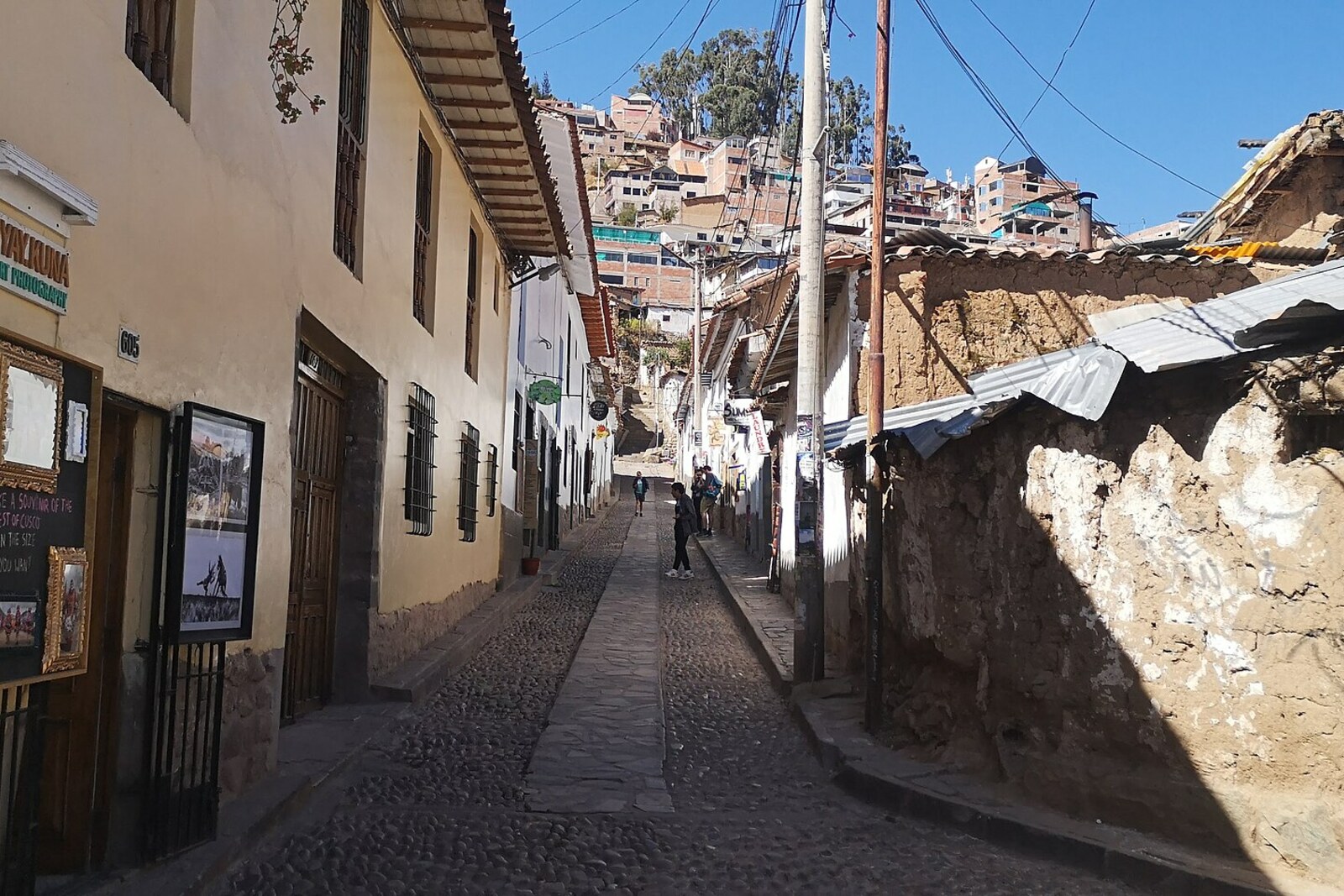
Look around first
What to notice
- Painted underside of the roof tiles
- Heads of cherubs
- Signs of the name of Jesus
- Narrow passage of Siete Diablitos
The story of the place
Cusco residents explained the name Siete Diablitos through an oral legend. In the narrow alley, once poorly lit, couples met who had to conceal their relationships. Neighbors said that little devils tempted the lovers in the dark. No one here had seen seven specific little devils: the number is linked to the seven deadly sins, but documents have not preserved the exact origin of this part of the name.
Nearby stood the house of Blas de Bobadilla. He was a wealthy homeowner and a devout parishioner: with his own money, he set up elaborate street altars where the Corpus Christi parish procession stopped. His faith was expensive and intended for public display.
According to legend, Bobadilla was offended by the fame of the neighboring alley. He decided to answer the lovers with images above his own door and commissioned paintings on the tiles of the cornice. The craftsman covered the concave side of the tiles with lime, then painted heads of cherubs and signs of the name of Jesus in red pigment. The designs also included the profile of a young man and two black birds, which local tradition calls condors, though researchers doubt this. It was precisely the seven cherubs that turned the cornice into Siete Angelitos—seven little angels.
Whether Bobadilla's commission stopped the secret meetings is unknown. But the consequence for his own street was quite measurable. It was previously called Canchipata and served as a quiet residential passage. During the republican era, city residents began calling it after the painted tiles, and the old name gave way to Siete Angelitos.
The house was later restored. Before the restoration, the painted tiles lay exposed in a row; afterward, they were relaid overlapping, with the paintings facing down. They project from the cornice by almost half their length, so the images can still be made out from the street, although the small faces at the edges are already badly damaged.
Siete Diablitos retains the story of unnamed lovers. Blas de Bobadilla's response retains a material address: the underside of the roof tiles above the old casona, second from the start of the street.
Useful on site
Open residential alleys; pass through respectfully, preferably in daylight.
Checked: June 28, 2026. Check the official source before visiting.These are residential alleys: speak quietly, do not look into windows, and do not enter a courtyard for a photograph.