 Guide On Map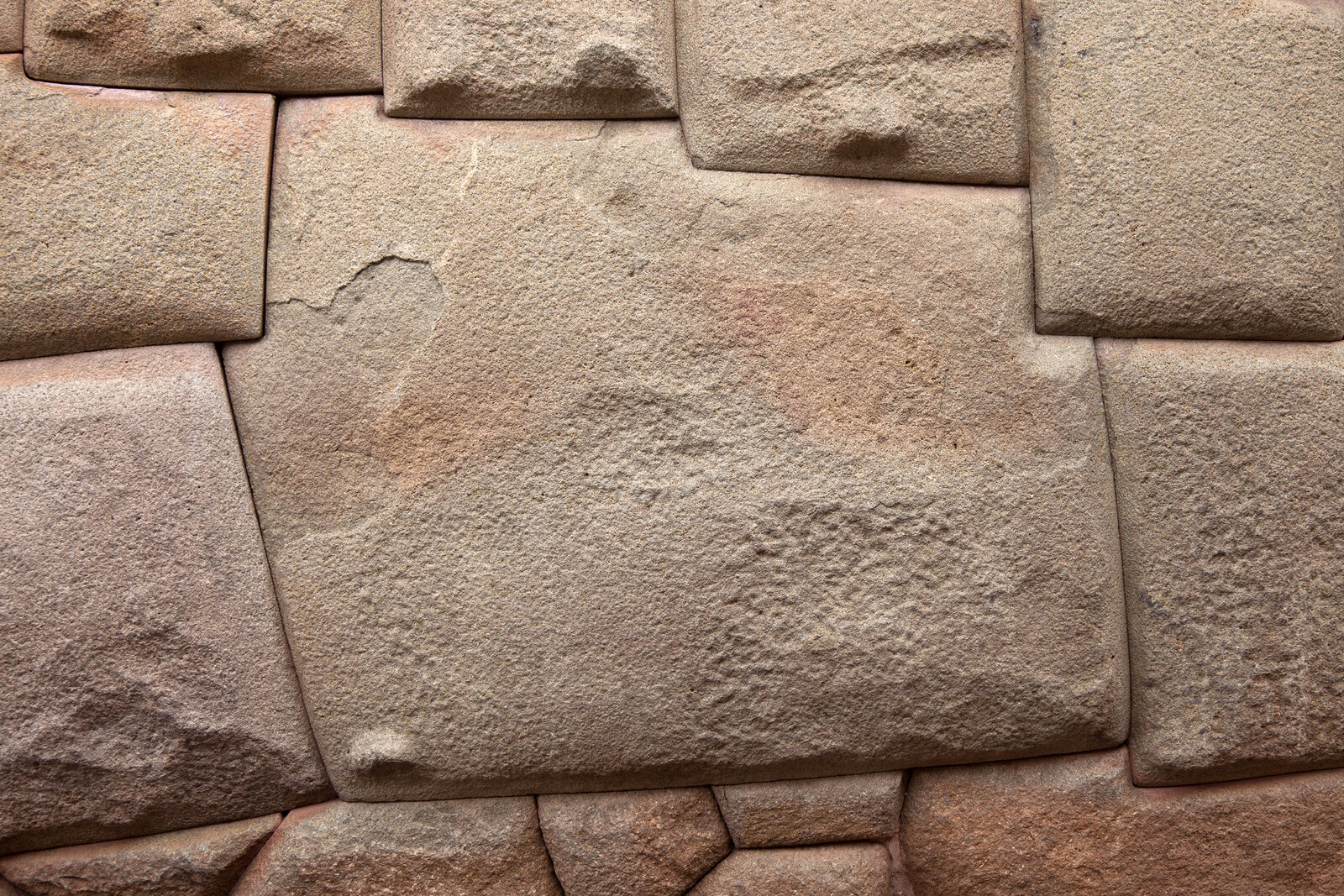
Look around first
What to notice
- Lower row of polygonal blocks
- Plastered stories of the Archbishop's Palace
- Inca wall along Hatun Rumiyoc
- Entrance to the Museum of Religious Art
The story of the place
Beneath the whitewashed stories of the Archbishop's Palace runs an old stone band: blocks with many faces still outline an Inca palace quarter. Once, the ruler's relatives lived behind this wall, property was stored there, and people on whom the affairs of the court depended were received there. Later, the property was divided up, its former owners were expelled, and a Spanish manor rose above the ancient masonry; the Archbishop's Palace and the Museum of Religious Art are now located there.
The stone masonry along the street is commonly considered the outer wall of Inca Roca's palace. In the middle of the fourteenth century, this ruler settled here after a struggle over succession. The story was recorded only after the Spanish conquest, so chroniclers differ over the names of the conspirators and the circumstances of the killings. They recount the sequence of events in similar terms.
Cusco was divided into two halves: Hurin, the lower half, and Hanan, the upper half. These were associations of kin groups competing for supremacy. The rulers of Hurin lived at Inticancha. The last of them, Cápac Yupanqui, was preparing his son Quispe Yupanqui as his successor. After the father's death, supporters of Hanan killed the heir and enthroned in his place another son of the deceased, Inca Roca, the leader of the upper kin groups, who was seeking the throne for his side.
Inca Roca did not return to Inticancha, where the priests and relatives of the defeated side remained. He gave the old residence to the high priest of the Sun and ordered a palace of his own to be arranged here, in the upper half of the city, by the road from central Cusco to Antisuyu. The new ruler settled his court among the kin groups that had helped him take the throne.
A late chronicler counted four large courtyards, more than a hundred rooms, and dozens of baths in this palace. The figures may have been exaggerated, but this was an entire household: the ruler's relatives lived here, property was stored here, and people on whom his position depended were received here. After Inca Roca's death, the palace remained with his panaca, the kin community that managed its lands and maintained the cult of its deceased ancestor. The successor could no longer simply occupy his father's rooms: he was entitled to a residence of his own.
Quispe Yupanqui died without becoming ruler. The Hurin kin groups retained leadership of the solar cult, while Inca Roca founded the Hanan line, from which the subsequent rulers of Cusco came. Their separate palaces filled the city center, because every new Inca built a home for his court and future panaca.
After the conquest, the Spaniards expelled the Inca nobility, divided the palace complex into plots, and gave part of it to Vicente de Valverde, the first bishop of Cusco. A Spanish manor was built above the old masonry; it now houses the Archbishop's Palace and the Museum of Religious Art.
In city records from the middle of the nineteenth century, this passage was called Big Stone Street. By the beginning of the twentieth century, the Spanish name had been replaced with its Quechua form, Hatun Rumiyoc, “having a big stone.” The big stone is in the same palace wall. The plastered stories above it belong to the later manor, while the lower row of polygonal blocks outlines the home into which Inca Roca moved his kin group after his victory over the Hurin heir.
Useful on site
The pedestrian street and viewing the outside of the wall are accessible as a city passage.
Checked: June 15, 2026. Check the official source before visiting.First take in the length of the wall rather than gathering immediately around the famous block. The street is narrow, so keep the passage clear.