 Guide On Map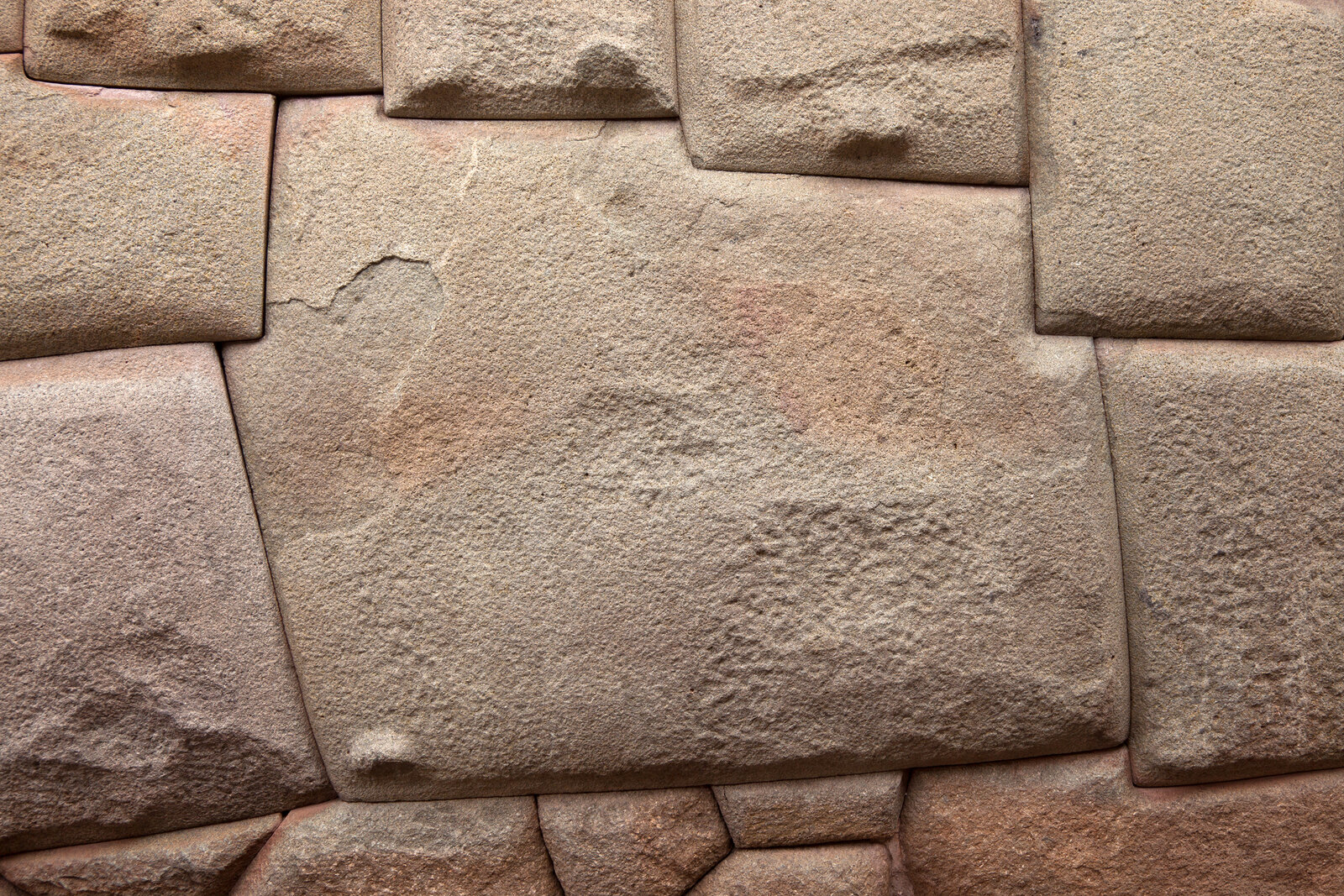
Look around first
What to notice
- Twelve-Angled Stone
- Twelve turns in the outline
- Six damaged areas of the surface
- Neighboring wall blocks
The story of the place
Among the tightly fitted stones of the outer wall of Inca Roca's palace, a block weighing about six tons stands out. Its edge is cut with twelve turns so that the block fits precisely between neighboring stones. It was never a separate sculpture: over time, passersby themselves began to notice this one stone among all the palace masonry.
Gabriel Mariano Roisi Melanio earned his living every day beside this wall. The thirty-year-old street artisan made and sold wire-and-thread crafts on Hatun Rumiyoc and near San Blas, and lived in a room a few minutes from here. On the night of February eighteenth, two thousand twenty-five, he returned to the familiar place intending to damage its main attraction.
At about one in the morning, Gabriel Mariano Roisi Melanio took out a hammer and struck the Twelve-Angled Stone several times. Later, his lawyer explained to the judge that the hammer with a rubber handle was the artisan's work tool: wire and thread were found during a search of his room. He brought to the stone where he usually looked for customers the tool with which he earned his living.
The famous block, weighing about six tons, forms part of the outer wall of Inca Roca's palace. The twelve angles are the twelve turns in its outline, cut so that the large stone would fit between neighboring blocks. No one erected it as a separate monument: one element of the masonry received its name after passersby gradually singled it out from the entire wall. That is why the blow struck the facing surface of an authentic palace block, rather than a later copy or a museum exhibit behind a barrier.
Municipal cameras recorded the attack. In the morning, police detained Gabriel Mariano Roisi Melanio nearby, in the San Blas neighborhood. Experts found six places where fragments had come off from the blows and indentations had appeared. The loss of stone material was deemed irreversible: cleaning or ordinary repair can no longer restore the surface to its former shape.
The court placed the artisan in pretrial detention for six months—this was a measure for the duration of the investigation, not a final sentence. At the hearing, he said he regretted it. A representative of the Ministry of Culture demanded five million three hundred fifty thousand soles in compensation from him, and after the attack city services introduced permanent surveillance at the wall and began preparing physical protection for the block.
All twelve angles remain intact. Beside them, six areas remain on the facing surface where stone is now missing.
Useful on site
Visible from the street; this is an exterior section of wall in a public passage.
Checked: June 15, 2026. Check the official source before visiting.Do not touch the stone or lean against the wall. If a group has gathered in front of it, wait to the side instead of blocking the street.