 Guide On Map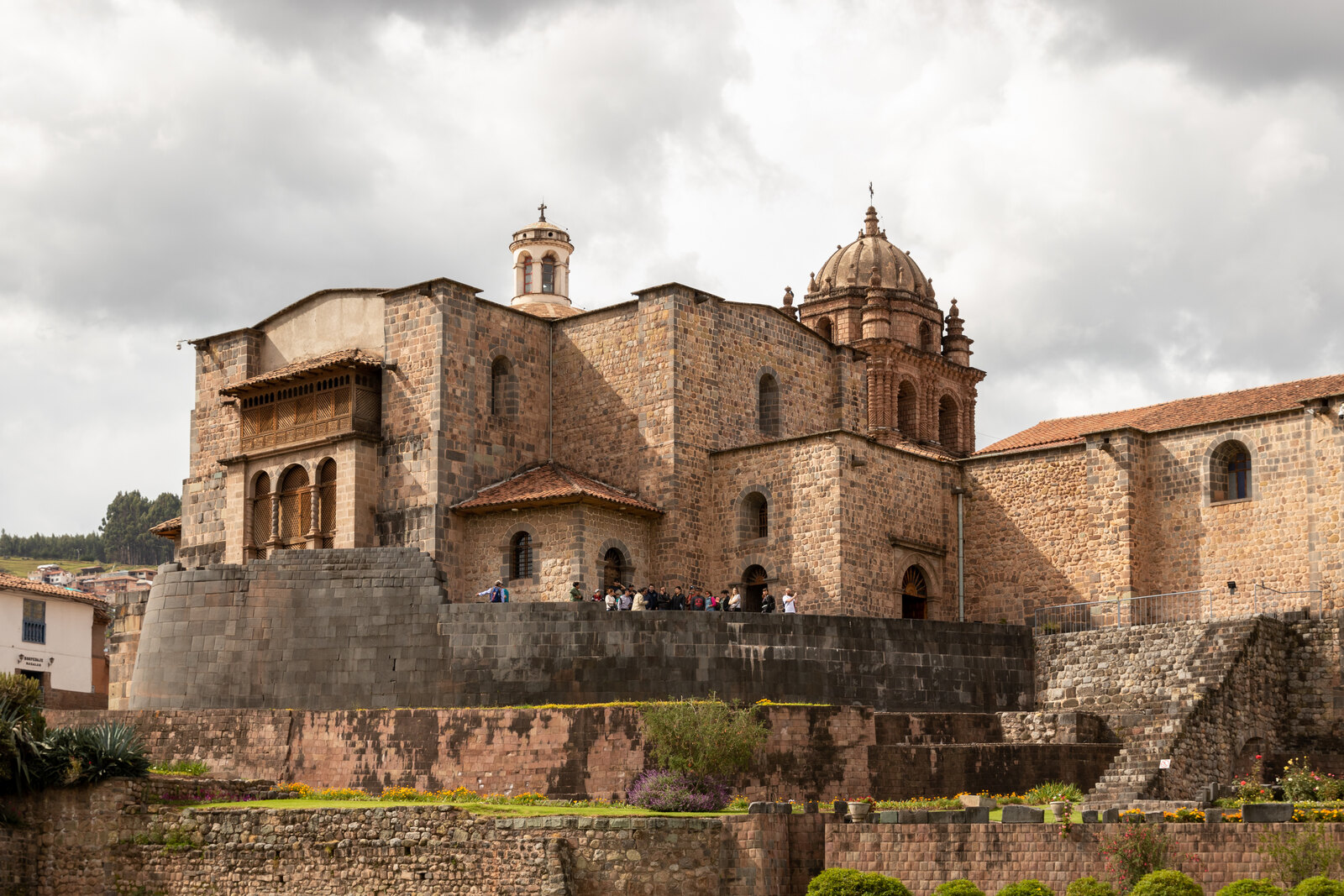
Look around first
What to notice
- The dark walls of Coricancha
- Trapezoidal rooms
- The Church and Convent of Santo Domingo above the Inca walls
- The convent's inner courtyard
The story of the place
The Dominican convent and the Church and Convent of Santo Domingo stand on the walls of Coricancha; the monks of Dominic de Guzmán's order brought the saint's name here. Beneath the church and beside the inner courtyard, dark stonework with trapezoidal rooms has survived. Coricancha once served as the principal Temple of the Sun in the Inca capital. In these halls, priests addressed Inti, kept sacred images, and performed ceremonies connected with the ruler and his ancestors.
At the beginning of fifteen thirty-three, the captive Inca ruler Atahualpa was trying to buy his freedom from the Spaniards. He promised Francisco Pizarro, commander of the detachment that had captured him, to fill a room with gold and provide a large quantity of silver. So that the treasures would reach Cajamarca more quickly, Atahualpa himself proposed sending Pizarro's men to Cusco for metal from Coricancha.
The choice of temple was clear to anyone who had seen it before the looting. Coricancha means “golden enclosure.” It was the principal Temple of the Sun in Inca Cusco: here priests served Inti, kept sacred images, and conducted rites connected with the ruler and his ancestors. Gold plates covered the doors and walls, and a broad gold band encircled the stone rooms. For the Incas, the metal was part of the temple furnishings and did not serve as currency. Pizarro's men immediately valued it by weight.
The journey required volunteers. One of them was Pedro Martín de Moguer, a sailor who had previously earned his living serving on ships and who expected a share of the booty from the expedition. With two companions, he set out across the Andes for the capital, where the troops of Atahualpa's supporters were stationed. The safety of the three men depended on the captive's order: his instructions were still obeyed even far from Cajamarca.
Atahualpa's representatives ordered the high priest and the city officials to hand over the metal needed for the ransom, but not to touch the burials of the former rulers. The three Spaniards watched as gold plates and the band that surrounded the temple were removed from the walls. Gold and silver vessels also became cargo. Everything that had served a religious function here was now measured by the number of porters.
The cargo was delivered to Cajamarca. Craftsmen melted down the temple objects for several weeks, after which Pizarro's men divided the ingots. Moguer and his companions received their shares and returned alive from the journey they had begun as three men among a foreign army. Atahualpa was not released: after the metal was divided, the Spaniards put him on trial and executed him that same year.
Then Pizarro's men divided up plots in Cusco. Coricancha went to Juan Pizarro, Francisco's brother, and he gave it to the Dominicans. The monks built a church and convent directly on the Inca walls. Santo Domingo is Dominic de Guzmán, a Castilian preacher and founder of their Order of Preachers. He never visited Cusco; his name appeared here with the monks of the order he had founded.
Today, a museum is open in the functioning convent, while the dark walls and trapezoidal rooms of Coricancha remain beneath the church and around the inner courtyard. The gold band is no longer on them. The stone remained in Cusco, the metal went to Cajamarca at Atahualpa's order, and Atahualpa himself never came back out from there.
Useful on site
The exterior and the walls can be viewed from the street and the plaza. The complex's indoor access arrangements had not been confirmed in a directly accessible operator source when the package was compiled, so the route does not require entry.
Checked: June 15, 2026. Check the official source before visiting.From outside, the principle of “a building on a building” is easy to see. The courtyard, paintings, and interior walls are accessible only with a separate visit.