 Guide On Map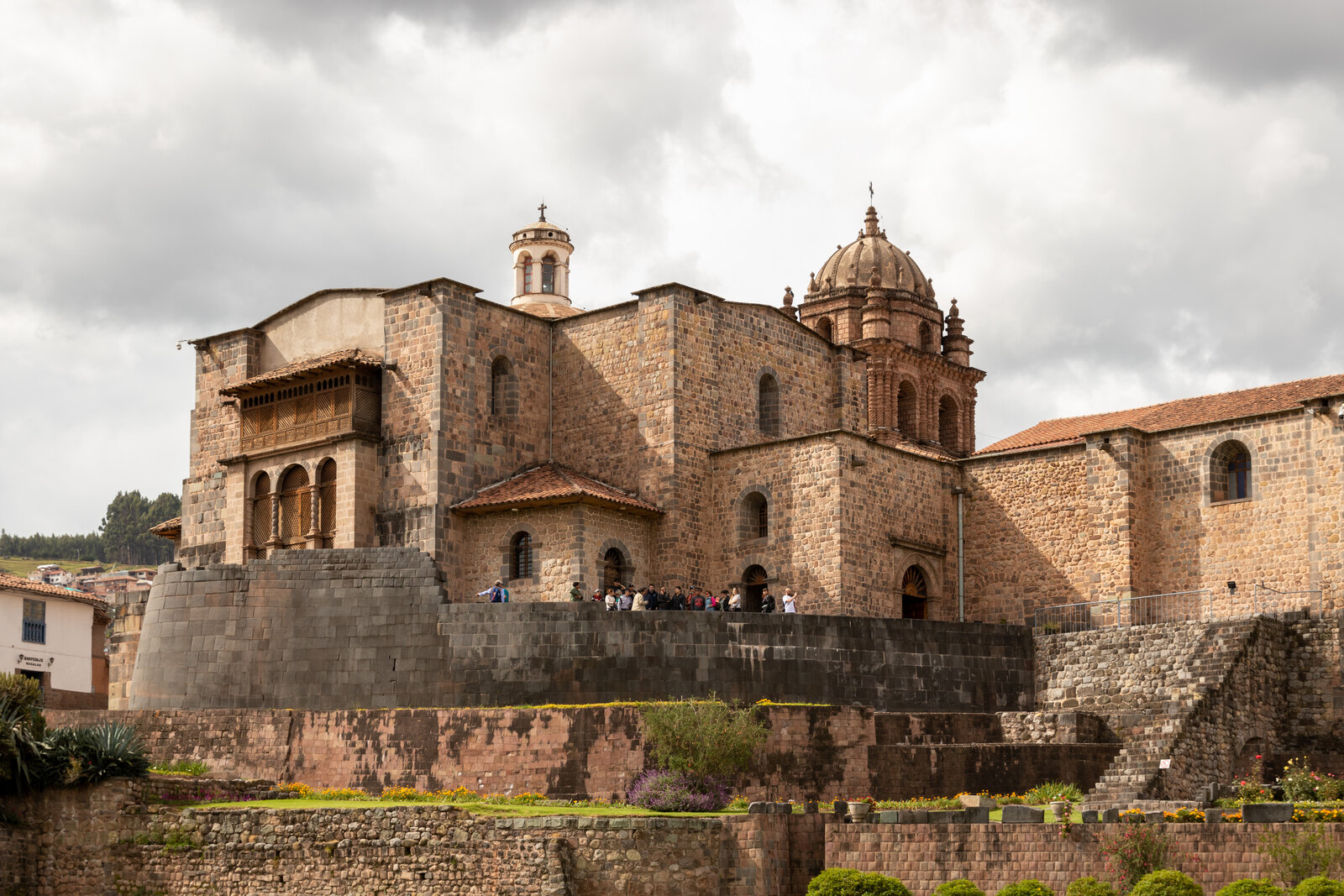
Look around first
What to notice
- The open space of the plaza
- The facade of the Church and Convent of Santo Domingo
- The entrance to the convent
The story of the place
By the facade of the Church and Convent of Santo Domingo, the open space of the former Intipampa remains, once lying before the main Inca sanctuary. During major ceremonies, regional rulers and delegations from different peoples gathered here; farther on, toward the sacred place, only the Inca ruler and his relatives were admitted. Later, the Church and Convent of Santo Domingo was established nearby, and the church of the Order of Preachers gave the plaza its present name.
The earliest story connected with this place begins with Copalimayta. He was a sinchi—a military leader—among the Sawasiray, the inhabitants of this section of the valley. Copalimayta came from elsewhere, but the Sawasiray accepted him into their community and entrusted him with defending their homes and land.
Another group of settlers was moving toward the valley. It was led by Manco Cápac and Mama Huaco, the future founders of Inca Cusco: they needed a place to settle. Copalimayta met them on the approaches, forbade them to enter Sawasiray land, and forced them to retreat.
A few months later, Manco Cápac and Mama Huaco returned. This time they suddenly attacked the settlement, killed many defenders, and captured Copalimayta. The captive expected to die and offered his homes and lands in exchange for his release. The chronicle says he was freed, but he does not appear again in the story. Manco Cápac's people occupied the abandoned land, settled between two rivers, and established here an early abode of the Sun—Inticancha.
This legend was recorded only in fifteen seventy-two. The colonial chronicler was carrying out the viceroy's commission and sought to portray the Incas as conquerors, so the details of the attack cannot be treated as eyewitness testimony. Archaeologists have indeed found traces beneath later structures of an earlier, pre-imperial settlement of the Killke culture, but archaeology cannot confirm either Copalimayta's name or the circumstances of his capture.
The Incas left an open space before the sanctuary—Intipampa. During major ceremonies, regional rulers and delegations from different peoples came here. Here they danced and removed their shoes; only the Inca ruler and his relatives could go farther. The plaza marked a boundary of access: the guests had already been admitted to the main sanctuary, but had not yet been allowed inside.
The name Santo Domingo appeared after the Church and Convent of Santo Domingo was established nearby in fifteen thirty-four. Dominic de Guzmán was a Castilian preacher who founded the Order of Preachers in the thirteenth century. He never visited Cusco: the plaza received his name from the church of his order.
The present plaza occupies the site of Intipampa. Nothing remains above ground here of the Sawasiray homes or the land with which Copalimayta bought his life.
Useful on site
An open city plaza and the approach to the Coricancha complex.
Checked: June 15, 2026. Check the official source before visiting.Stop where you do not obstruct passage, and compare the spaciousness of the plaza with the narrowness of Calle Loreto you have just passed through.