 Guide On Map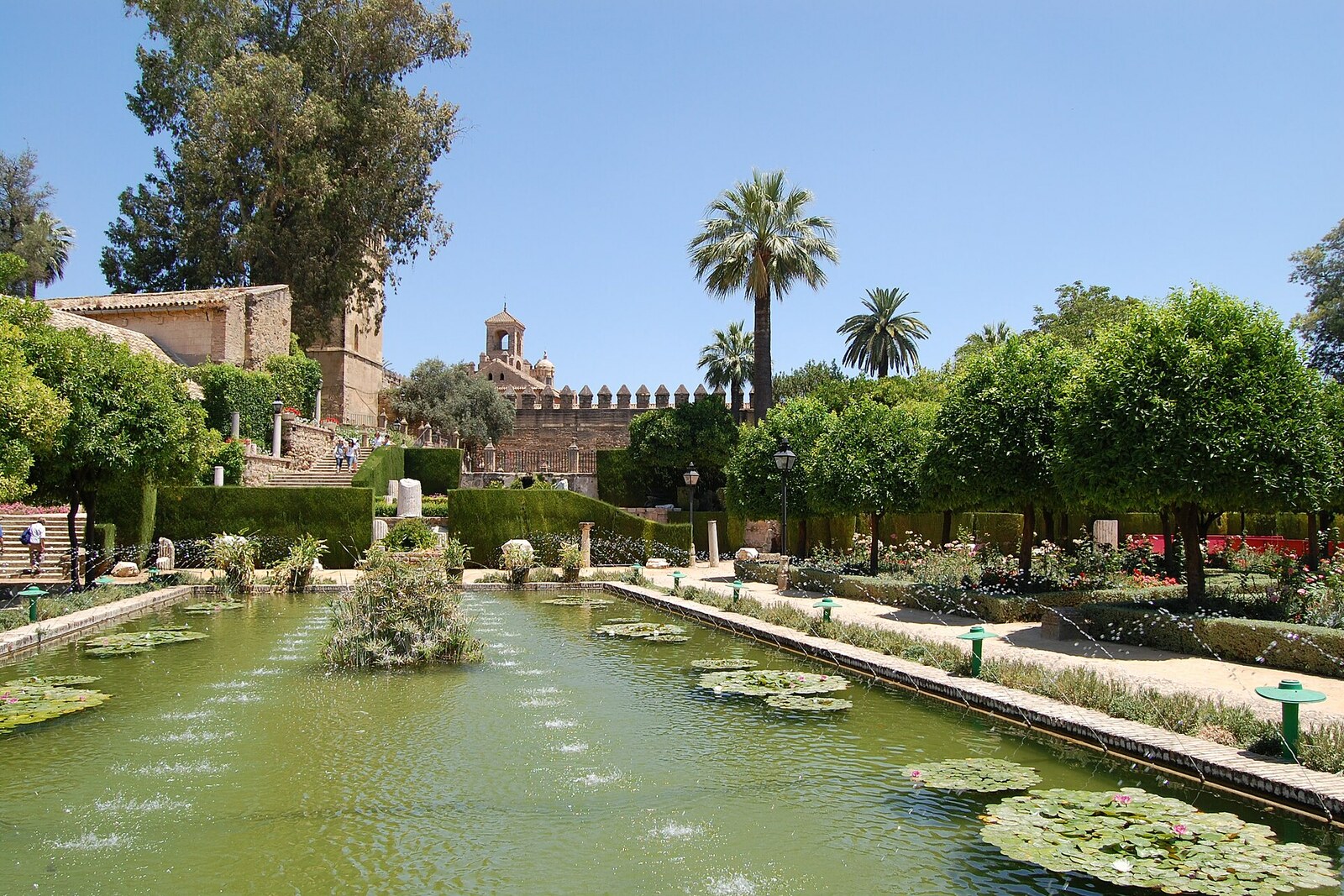
Look around first
What to notice
- Fortress walls
- Corner towers
- Inner courtyard
- Royal gardens
The story of the place
Near the frontier with Granada stands a fortress built as a royal residence; its walls with corner towers form a stone quadrangle. Inside it lie a courtyard and royal gardens. Alfonso XI of Castile ordered building here on part of an Umayyad palace complex, and later Ferdinand and Isabella placed the headquarters of their long war with the Emirate of Granada in the fortress. During the time of the Spanish Inquisition and the prison, the palace rooms were rebuilt many times, but the overall stone outline has survived.
In late August fourteen eighty-three, Muhammad XII (Boabdil), the young emir of Granada whom Christians called Boabdil, was brought to this Alcázar. He entered as a prisoner, but wanted to leave as a sovereign and regain the throne his own father had taken from him.
Boabdil seized the throne after a revolt against his father, Emir Muley Hacén. To keep his supporters convinced that he was a worthy ruler, he needed a military victory. His campaign against the Castilian town of Lucena ended in defeat and captivity. While Boabdil was held in the fortress of Porcuna, Muley Hacén returned to Granada and took the throne again.
The prisoner’s fate was decided here by Ferdinand II of Aragon, the king directing the war against the Emirate of Granada. His wife, Isabella I of Castile, was then in the north of the country; Ferdinand sent her the terms of the agreement and received her consent. Both sought the submission of the last Muslim state on the Iberian Peninsula.
Boabdil could have been left in the dungeon. Then the people of Granada would have united around his father. Ferdinand chose release: a second claimant to one throne was to return to Granada.
Here they agreed on the price. Boabdil recognized himself as a vassal of the Castilian Crown, promised to pay twelve thousand gold doblas annually, free four hundred Christian prisoners, and observe a two-year truce. His young son Ahmed became the guarantee. The boy, together with the sons of Granada’s nobles, was handed over as a hostage to the Christian court.
Boabdil returned to Granada with foreign military support and obligations to Ferdinand and Isabella. Muslim judges condemned his agreement with the enemy, and the struggle among the supporters of the son, the father, and the uncle continued. Meanwhile, Castilian troops took cities one by one. In fourteen ninety-two, Boabdil surrendered Granada. One condition of the capitulation was the return of Ahmed, who had remained a hostage since the Córdoba agreement.
This location was chosen because the Alcázar was a fortified royal residence near the Granada frontier. Alfonso XI of Castile ordered it built in thirteen twenty-eight on part of the former Umayyad palace complex. Ferdinand and Isabella later turned the Córdoba residence into the headquarters of a long war; they are the people primarily meant by “the Christian Monarchs” in its current name.
The exact room of the negotiations can no longer be identified: the Spanish Inquisition, and later the prison, extensively altered the palace rooms. What has survived is the fortress’s stone quadrangle, within which Boabdil was given a path back to his throne, leaving his son in his place.
Useful on site
From 16 June to 15 September Tuesday–Sunday 08:15–13:00. Only the gardens are currently open; the rest of the complex is being restored.
Checked: date not specified. Check the official source before visiting.Do not let the gardens obscure the fortress’s structure. If the interior is inaccessible, the towers and outer perimeter still preserve the point of this stop.