 Guide On Map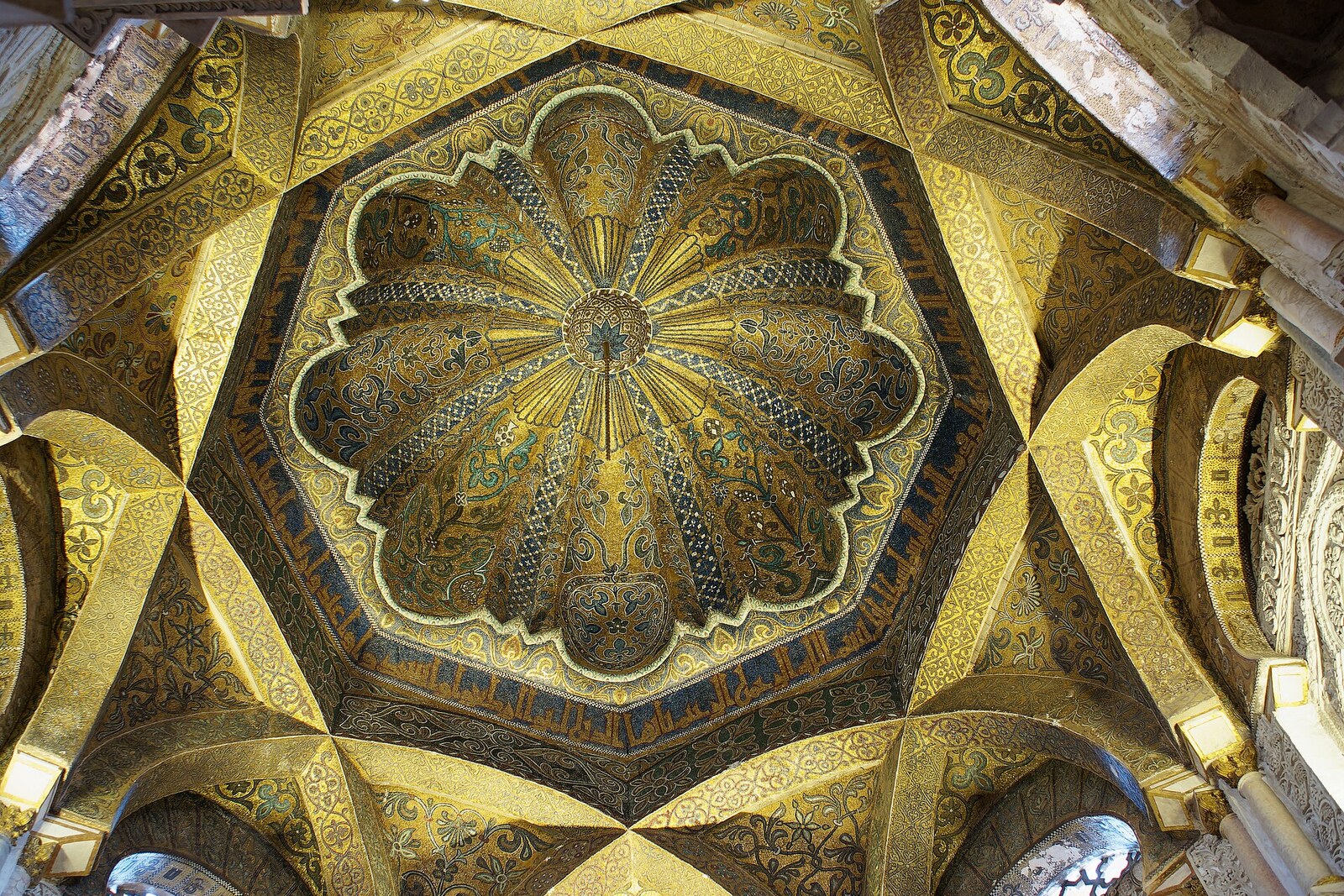
Look around first
What to notice
- Two-tiered red-and-white arches
- Main chapel
- Choir
- Inscription marking the beginning of work under Bishop Manrique
The story of the place
The red and light-colored bands of the two-tiered arches repeat above the rows of columns and run through the entire prayer hall. In the eighth century, an Umayyad ruler ordered a large Friday mosque built here; his successors enlarged the hall by adding new columns and arches. When Castile conquered Córdoba, the clergy consecrated the mosque in the name of the Virgin Mary and placed a Christian altar among these rows. One part of the church’s name refers to the mosque, the other to the cathedral.
On the twenty-ninth of April, fifteen twenty-three, workers began dismantling rows of arches in the center of this building. They were breaking apart sound stone masonry on the orders of Alonso Manrique, Bishop of Córdoba, who sought a new main chapel and choir in the form of a Latin cross. The work was directed by the cathedral master Hernán Ruiz I.
By then, Catholic services had been held here for almost three centuries. Around seven eighty-five, Abd al-Rahman I, the Umayyad ruler of Córdoba, ordered the construction of a large Friday mosque. His successors enlarged the prayer hall, extending the rows of columns and two-tiered red-and-white arches. After the Castilian conquest of the city in twelve thirty-six, the clergy of Ferdinand III consecrated the mosque in the name of the Virgin Mary and placed a Christian altar inside the former hall. The Spanish word “mezquita” means “mosque”; the second part of the present name came from this change of purpose.
Bishop Manrique wanted to move the main center of worship into a new, lofty space. To do so, the builders would have to remove part of the Umayyad arches. The very next day, the city council demanded that the dismantling stop until the king had decided. The councilors also defended the Royal Chapel and the family tombs of Córdoba’s nobility located here. In their record, they called the church unique in the world and warned that the dismantled work could no longer be restored to its former perfection.
On the fourth of May, the royal governor Luis de la Cerda, who headed the city administration, publicly announced a ban. Stonemasons, carpenters, carvers, and day laborers were threatened with death and confiscation of property if they continued the work. These were the people who earned their living in construction; the day laborers depended on pay for every working day. Now the bishop’s order gave them an income, while the city’s order turned the same labor into a crime.
Church judges responded by excommunicating the city officials. For Catholics of the sixteenth century, this meant exclusion from church life and a severe blow to social standing. Both sides appealed to Charles V—the Spanish king and emperor, who had to settle the dispute between the bishop and his own representatives in Córdoba. A royal charter forced the clergy to lift the excommunication, threatening the church judge with loss of income and a heavy fine. Charles did not forbid the construction. The city council saved its people from church punishment, but it failed to stop the dismantling of the central arches. The work continued, probably under a reduced plan, and was completed only almost ninety years later.
Three years later, Charles V came to Córdoba. He is credited with a rebuke: the builders had destroyed something unique in the world for the sake of what could have been built anywhere. This phrase should be regarded as a legend. There is no reliable record of the emperor’s words; researchers believe that the later account may have grown out of an authentic statement by the city council, in which the expression “unique in the world” appeared even before Charles’s decision.
Hernán Ruiz partially concealed the boundary of the new construction. Around the choir, he repeated Islamic arches, using stones, columns, and capitals removed during the dismantling. Above them rise Gothic vaults, a Renaissance transept, and the main chapel of the functioning Catholic cathedral. An inscription about the beginning of the work under Bishop Manrique survives on one of the arches, and Charles V is depicted in a vault. Beyond the choir walls, the rows of arches spread out again—the arches for which the city council threatened stonemasons with death.
Useful on site
On June 24, 2026, open 10:00–19:00; last entry 30 minutes before closing. Monday–Saturday, free individual entry may be possible 08:30–09:30, except during special services.
Checked: date not specified. Check the official source before visiting.For the full impression, a separate visit inside is needed. Keep quiet, and do not treat this functioning church as an ordinary exhibition hall.