 Guide On Map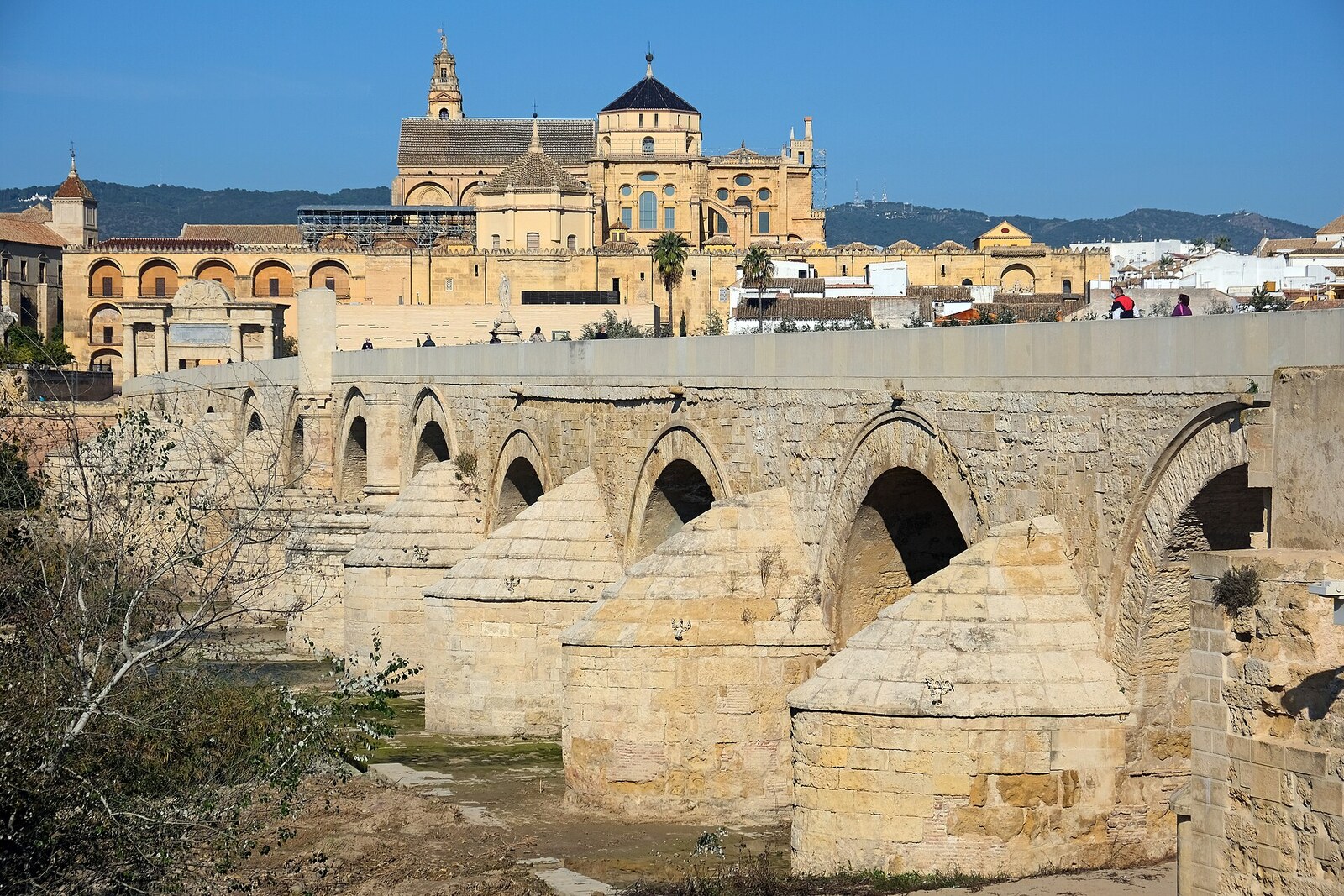
Look around first
What to notice
- Sixteen arches
- Stone masonry from different periods
- The Guadalquivir
- Puerta del Puente at the northern end
The story of the place
The name preserves the memory of the Roman crossing: around the first century, a stone crossing linked the growing Corduba with the southern road. The sixteen arches visible today were rebuilt after many floods and repairs, so medieval and later masonry lie side by side among the stones. Until the middle of the twentieth century, no other bridge across the Guadalquivir appeared in Córdoba.
In seven hundred ninety-four, Córdoba’s emir, Hisham I, ordered the builders of this bridge to be paid before his eyes. The emir was the ruler of al-Andalus, and the builders were restoring the crossing without which a substantial share of the people and goods from the south could not reach the city.
Sixteen years earlier, the Guadalquivir had risen to the vaults, loosened the supports, and destroyed several arches. The damaged section was simply left as it was. For farmers from the surrounding area, merchants on the roads from Cádiz and Almería, envoys, and soldiers, this meant a boat or a ford—and, when the water was high, no way to reach Córdoba from the south bank.
Hisham gave part of his share of war booty for the repair. Medieval chroniclers report that a great deal of money was spent and that the emir personally supervised the payments. The people of Córdoba, however, decided that their ruler was repairing the bridge for his own trips: across the river lay country estates and hunting grounds, where the Umayyad emirs rode with their retinues.
The rumor reached Hisham. He then swore to cross the restored bridge only when setting out on a military campaign or on some other useful business. It is impossible to verify whether he kept this promise on every trip. The chronicle preserved the oath itself—the ruler’s answer to people who wanted to understand why his share of the booty had been spent on the old arches. The repair was completed, and those for whose benefit Hisham had justified the expense again crossed the bridge: merchants, farmers, embassies, and armies.
It is called the Roman Bridge because of the crossing’s origin. The Romans established a stone crossing here around the first century, when Corduba expanded toward the river and the road from the south was brought here. But the present sixteen arches were rebuilt after many floods and repairs; most of the visible masonry dates from the Middle Ages and later periods.
The stones whose payment Hisham supervised can no longer be identified with confidence among this masonry. What remains is the site of his expense: the same route across the Guadalquivir from the southern road to the city entrance. No other bridge appeared in Córdoba until the middle of the twentieth century.
Useful on site
The pedestrian bridge is accessible around the clock; temporary restrictions are possible during works or emergency conditions.
Checked: date not specified. Check the official source before visiting.Compare the spans without stopping in the middle of the pedestrian flow; the Triumph of Saint Raphael is a convenient place for a short pause.