 Guide On Map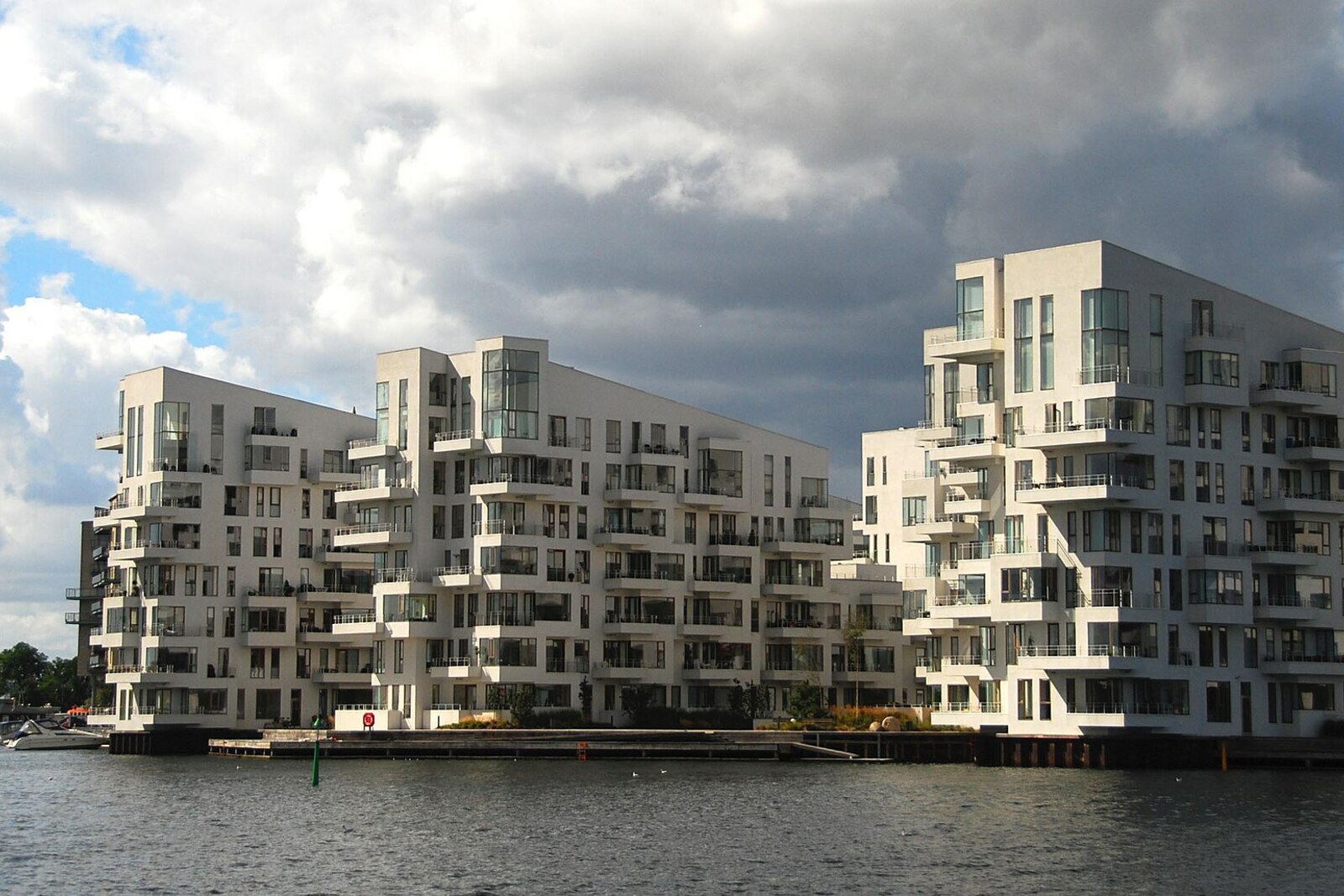
Look around first
What to notice
- White residential buildings
- Narrow canals
- The facade of the Fisketorvet shopping center
- The Havneholmen waterfront
The story of the place
Wholesale fish trade required the catch to be kept alive until it was taken to shops and restaurants, so floating fish pens with eels and flounder stood by the shore. On land, a spacious fish hall and an ice plant operated; the hall covered three thousand one hundred square meters. Havneholmen’s narrow canals run between the white residential buildings, and a waterfront promenade stretches along the water.
In nineteen fifty-eight, between three hundred and four hundred fish traders arrived here in a procession, wearing white work smocks. They came from central Copenhagen, from Gammel Strand, the old waterfront where catches had been sold for centuries. At the same time, another procession was moving on the water: floating wooden fish pens were tied into long rows and towed to Gasværkshavnen—the former gasworks harbor, on the site of what is now Havneholmen.
These perforated boxes held live eels and flounder. Wholesalers' income depended on the fish pens: the fish had to be kept alive until it was sold to shopkeepers and restaurant owners. At Gammel Strand, there had long been too little space for boats, boxes, and trading places. The move was discussed for one hundred fifty-two years, until the traders' association opened a three-thousand-one-hundred-square-meter hall here, with an ice plant beside it.
Not everyone agreed to leave. Fishwives who sold the catch one fish at a time directly on the old waterfront fought for the right to stay. They were granted a five-year extension, and one trading place remained there until two thousand eight. The wholesalers chose the new harbor: after the procession, they entered the hall here, where speeches, wine, and a wreath of marzipan pastries awaited them. The fish market then operated here for forty-one years.
In nineteen ninety-nine, the traders moved their businesses again—this time to Nordhavn, the Northern Harbor, where the premises were better suited to modern wholesale trade. The halls on this site were demolished. A year later, the neighboring shopping center opened and took the old name “Fisketorvet”—“the fish market.” The white residential buildings appeared later, between two thousand six and two thousand nine.
The municipality gave the district the name “Havneholmen,” meaning “harbor islet,” in two thousand three, replacing the former name of the warehouse road, Kalvebod Pladsvej. The narrow canals between the buildings were dug only with the new development. Nothing remains on the site of the fish market: no hall, no ice plant, and no floating fish pens; its name survives on the facade of the shopping center across the canal.
Useful on site
Public passages by the water are accessible as part of the district; please respect private terraces and courtyards as residential space.
Checked: June 26, 2026. Check the official source before visiting.Explore the district from the publicly accessible waterfront, and respect the privacy of the homes and courtyards.