 Guide On Map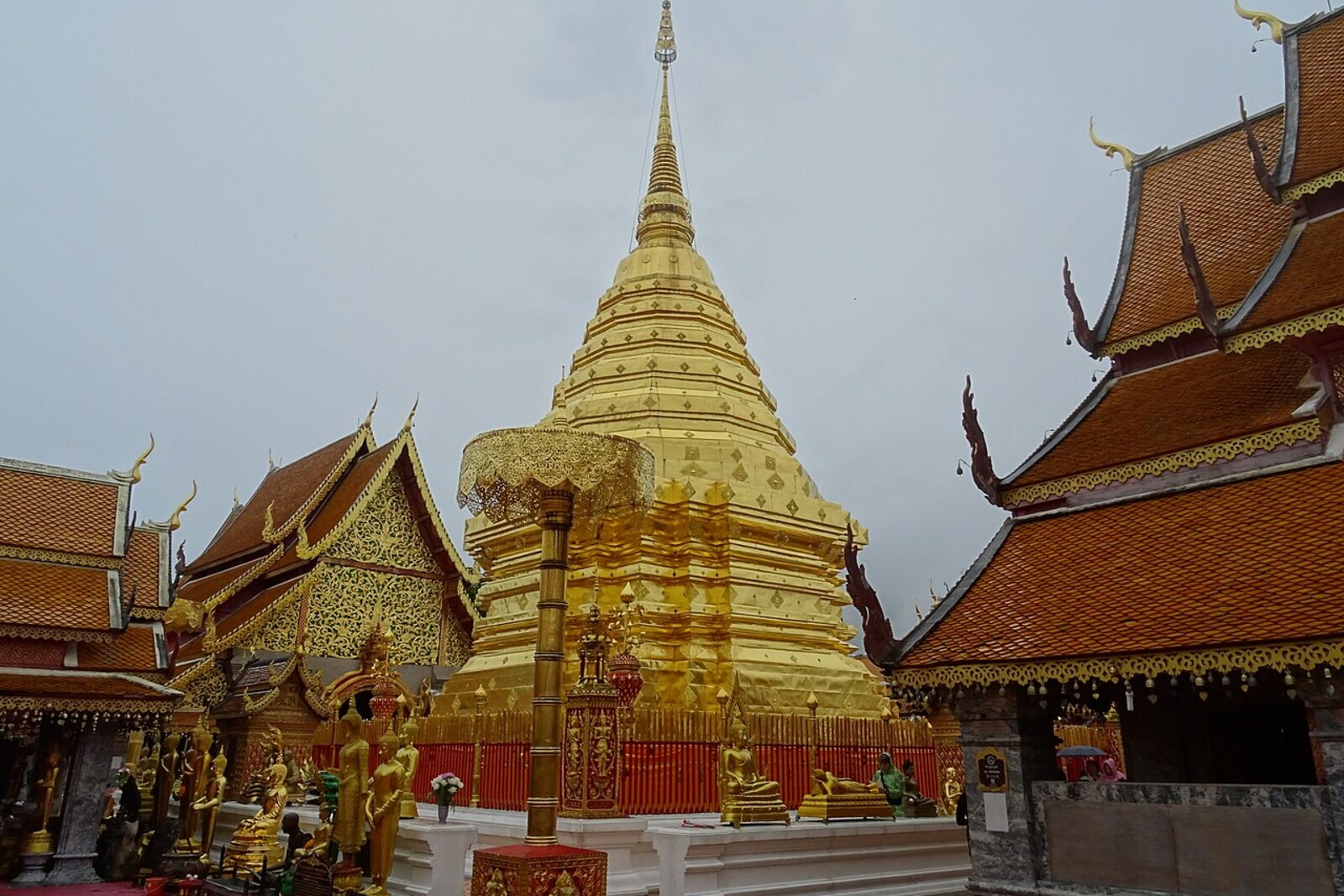
Look around first
What to notice
- The chedi’s gilded casing
- Metal plates
- The passage for ritual circumambulation
The story of the place
The golden cladding of this stupa was commissioned by a ruler who had five years left to live. In fifteen thirty-eight, Sai Kham gave craftsmen seventeen hundred baht of gold to forge thin plates and cover the chedi with them. In this record, a baht is a unit of weight for precious metal. In modern terms, it amounts to about twenty-six kilograms.
Sai Kham was the son of Mueang Ket Klao, the ruler and sought his throne. Some officials helped the prince depose his father and send him into exile. Having received the crown, Sai Kham ordered this very chedi to be gilded: inside the brick stupa was kept that very relic of the Buddha, for which, according to legend, a white elephant chose the site. For a ruler of Lanna, such a gift was the most conspicuous way to link his name with Chiang Mai’s main shrine.
The craftsmen clad the chedi in metal sheets and covered them with gold. This created the appearance for which it is now called the Golden Chedi. But the generous gift did not reconcile the people who had raised Sai Kham to the throne. The officials continued to divide influence among themselves, and uprisings took place in the city. Five years later, a group of nobles burst into a small palace and killed Sai Kham along with his household. Mueang Ket Klao—the father whom his son had deposed—was brought back from exile. Two years later, he too was killed.
The chedi’s covering has been repaired and renewed many times since then, so the current sheets cannot be considered Sai Kham’s untouched gold. The method chosen under him has endured: the brick reliquary remains hidden beneath a gilded metal casing. Pilgrims walk around it clockwise, making a reverent circuit around the relic. The name of the patron does not appear on the plates; from his five-year reign, the chedi’s golden appearance remains here, and from his family, no one who could hold the throne.
Useful on site
The sacred area is open during the temple complex’s hours; observe the dress code and remove your shoes before entering.
Checked: June 28, 2026. Check the official source before visiting.Remove your shoes where required, do not stand with your back directly against the shrine for a photograph, and move in the direction of the circumambulation.