 Guide On Map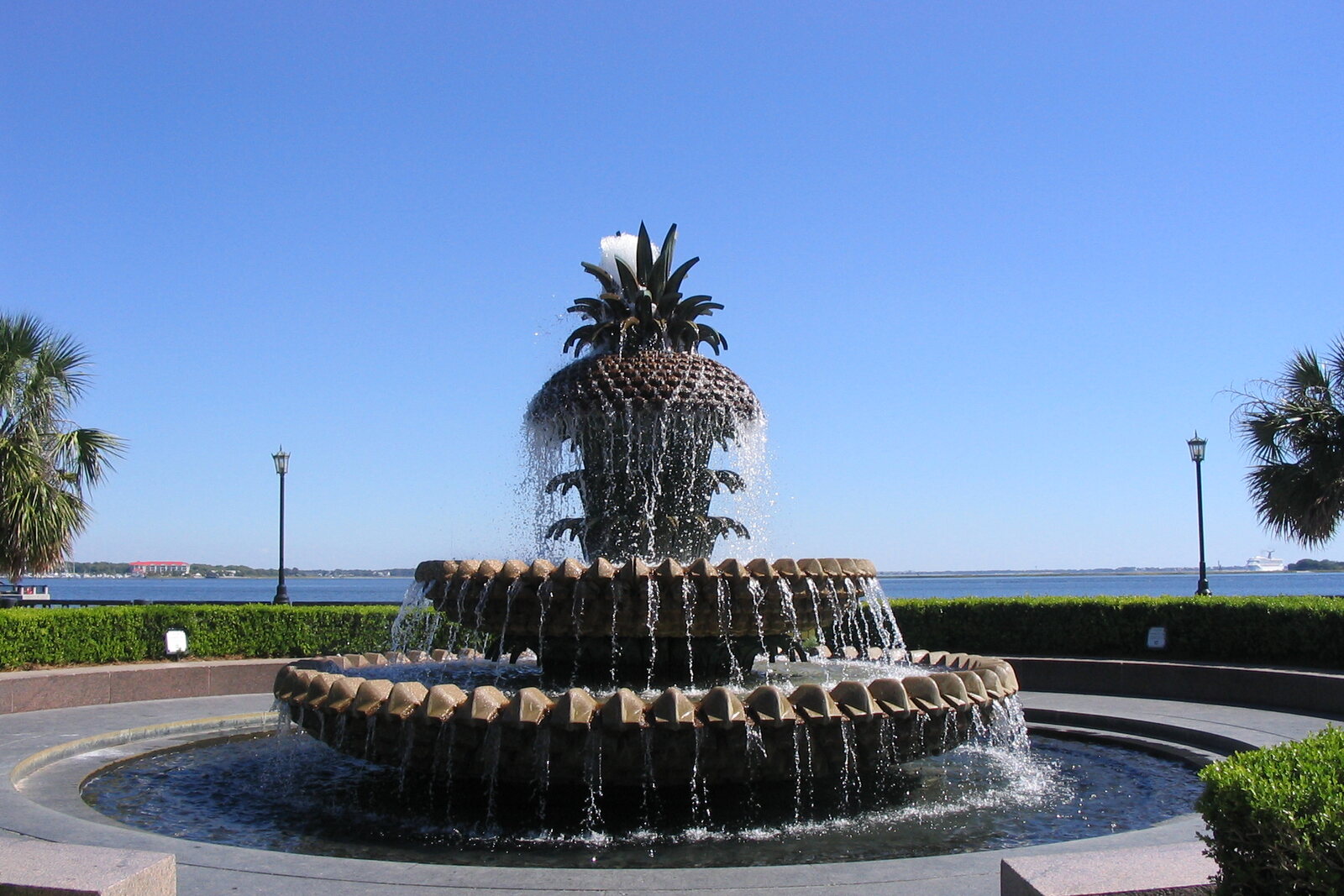
Look around first
What to notice
- Stone pineapple
- Bronze details
- Water cascades
- Lower fountain basin
The story of the place
Landscape architect Stuart Dawson, who was tasked with creating the main landmark of the new waterfront park, chose a pineapple. His team placed the fountain at the center of the open plaza in front of City Gallery at Waterfront Park and made it of cast stone and bronze. In May nineteen ninety, it began operating along with the park.
The designers drew on a sign of hospitality familiar in Charleston. Behind it lies the real history of an expensive imported fruit and a later legend that is often mistaken for a documented custom. In the eighteenth century, fresh pineapples were delivered to the English colonies from the tropics. A host serving such a fruit to guests showed that he had been able to pay for a rarity and preserve it until it reached the table. This is how the pineapple became associated with welcoming guests, although at first it spoke as much of prosperity as of hospitality.
According to a popular version, sailors returning from the Caribbean Sea placed a pineapple on a post by their home: neighbors supposedly understood that the captain was ashore again and ready to receive visitors. This is a legend. Historians have found no reliable evidence of such a custom; moreover, some old ornaments later taken for pineapples depicted pine cones.
Dawson and his colleagues used the already established meaning, but they intended a quite literal activity for the fountain. It was one of the so-called participating fountains: the designers expected people to step into the water rather than remain behind a barrier. The city allowed children and adults to splash in the basin. This is still done today: the stone pineapple serves as a landmark and a place for photographs, while its lower basin remains part of the public space that people can enter.
Useful on site
An outdoor stop in Joseph P. Riley Jr. Waterfront Park; water operation and access to adjacent areas may change because of maintenance and events.
Checked: June 29, 2026. Check the official source before visiting.The fountain is worth examining even when the water is turned off: its shape remains legible, although the familiar sound and coolness will be absent.