 Guide On Map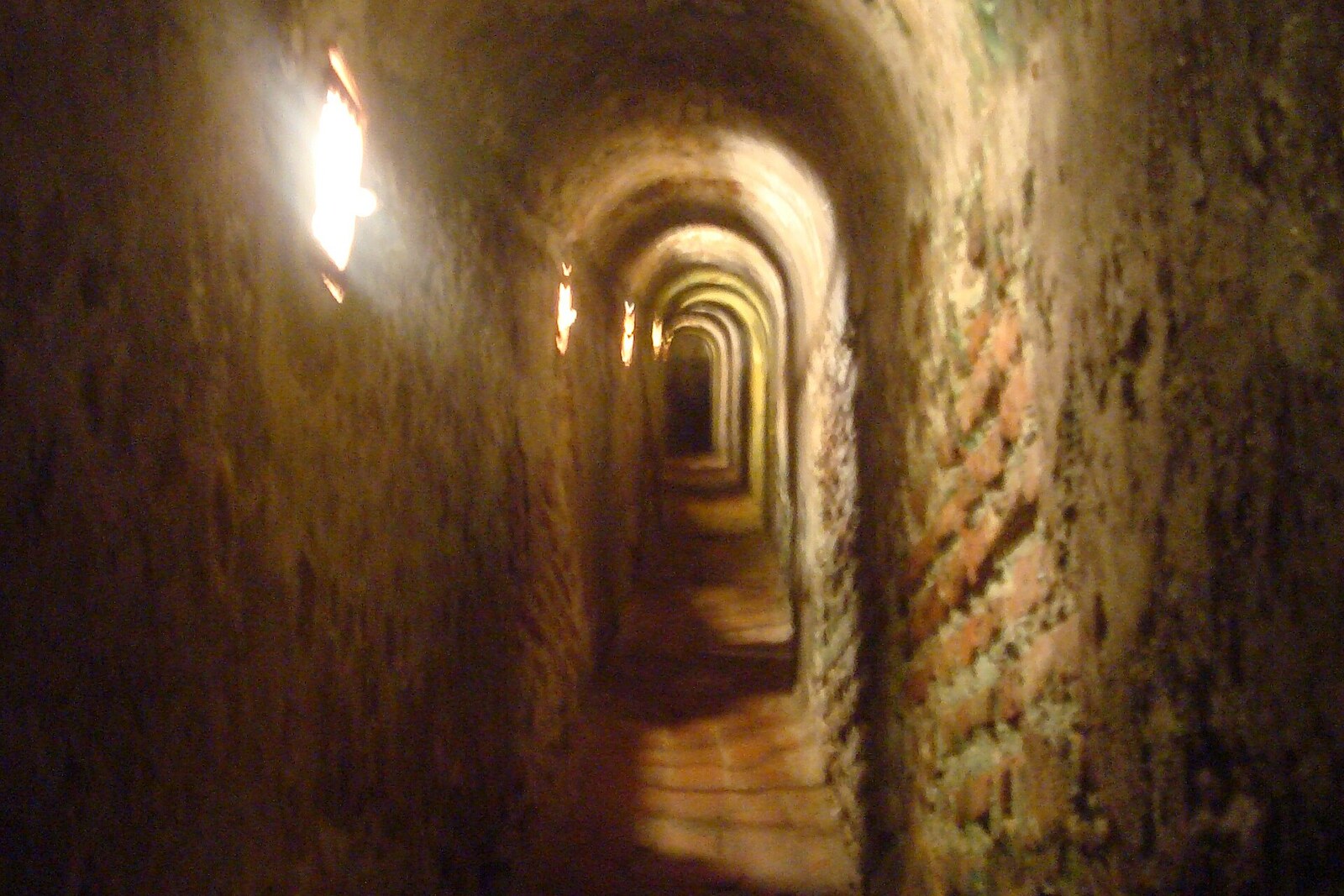
Look around first
What to notice
- Stone vaults
- Wide main corridor
- Low branches
- Terminal chambers
The story of the place
The underground galleries served the garrison as an internal road between the fortress batteries: ammunition was delivered through them, and soldiers moved from one firing position to another without going up onto the open slope. The main passage was made wide, while cramped branches run from it toward the outer slopes beneath stone vaults. At the end of each such passage, a chamber was built for barrels of gunpowder; the charge was intended for the ground above anyone who tried to tunnel toward the fortification. Brackish groundwater now stands in the low chambers, and the Perimeter Gallery runs at the base of the hill below today’s road.
In two thousand thirteen, architect Mario Zapatero Altamiranda, head of the Cartagena de Indias Workshop School’s work, sent his staff into the closed galleries of San Felipe. The restorers did not have a complete plan of the underground network. Before allowing visitors in, they needed to find out where the corridors led, whether the vaults had collapsed, and whether water was seeping in.
Over a month and a half, the group covered seven hundred thirty-three meters. Water was pumped from the low sections with two motor pumps, then the workers hauled away three truckloads of mud and trash. The Perimeter Gallery proved especially difficult: at its exit toward today’s Antonio de Arévalo Avenue, its floor lies half a meter below the road surface. The proximity of the sea had raised the level of brackish groundwater here; some sections remained almost completely flooded. The researchers were able to enter only after pumping it out and began drawing up topographical plans.
This work also restored the corridors’ precise purpose. Beneath San Felipe, there is no secret route to the cathedral or to the fortresses of Bocachica—such stories belong to urban legend. Military engineer Antonio de Arévalo laid out the galleries inside the hill when he was linking the surrounding batteries. Through the wide passageways, the garrison could carry ammunition and retreat from one position to another while remaining beneath stone vaults.
Low, narrow branches ran from the main gallery toward the outer slopes. They ended in chambers shaped like a hammerhead in plan. Soldiers were to roll barrels of gunpowder into them. If enemy sappers began digging a tunnel or infantry gathered for an assault above such a chamber, the defenders would ignite the charge and blast the ground beneath their feet. Hence the military term: mines and countermines. Some sappers dug an underground passage toward the fortification; others tried to intercept them underground.
After the galleries were completed, San Felipe no longer had to repel an assault. None of the prepared charges was detonated here. The Perimeter Corridor still runs inside the base of the hill; its outer branches end where barrels of gunpowder were meant to lie. Brackish groundwater has filled the lowest chambers instead of gunpowder.
Useful on site
Inside the fortress; individual passageways may close because of weather, work, or safety.
Checked: June 26, 2026. Check the official source before visiting.Enter only corridors open to visitors, and do not cross grilles or barriers. Move slowly, let oncoming visitors pass, and go outside if the confined space, darkness, or slippery floor makes you uncomfortable.