 Guide On Map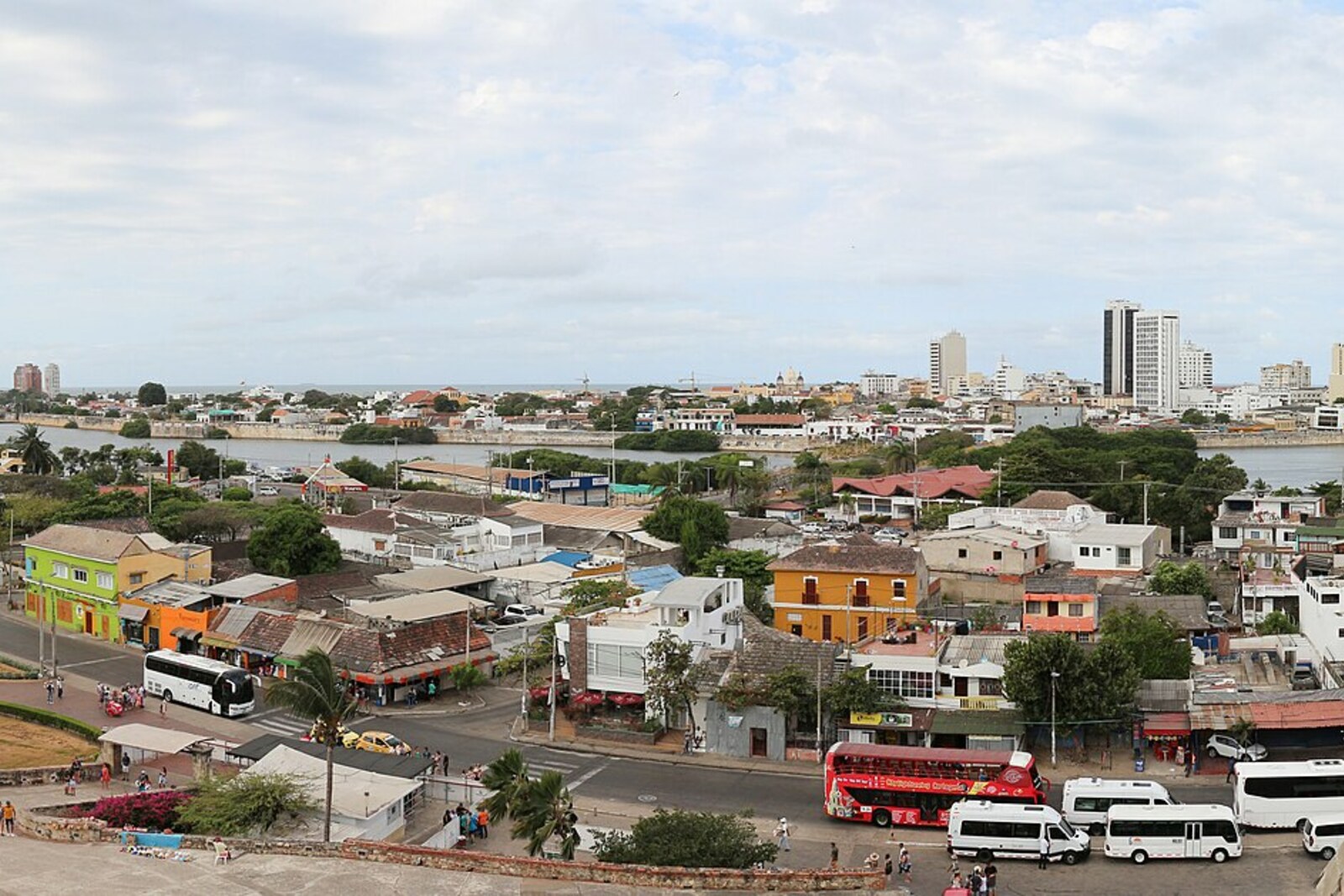
Look around first
What to notice
- Uneven triangular platform
- Three projections of the bonnet
- Parapet of the upper fort
The story of the place
Behind the parapet of the upper platform lies the outline of the earliest fortification on the hill: the later fortress grew around it rather than replacing it completely. When the royal treasury failed for years to release money for construction, Governor Pedro Zapata de Mendoza gave his annual salary to the project, while the city’s merchants raised the remainder. The fort received the name San Felipe in honor of the Spanish king, while Barajas recalls the title held by his ancestors; the monarch himself never visited Cartagena. The uneven edges of the platform inside the stone parapets remain from that small fortification, from which the entire fortress later unfolded.
Captain Juan Miguel de Robles, a Spanish officer who took command of the abandoned redoubt, died on this summit on the twentieth of April, sixteen ninety-seven. The lower batteries did not yet exist. The entire fortress fit here, on an uneven triangular platform with three projections and eight cannons. Such a fort was called a “bonnet,” because it resembled a triangular cap worn by the clergy.
The first bonnet was completed in sixteen fifty-seven. Earlier governors of Cartagena had pressed for its construction for almost twenty years, but the treasury provided no money. Governor Pedro Zapata de Mendoza contributed three thousand pesos—his annual salary—and raised the rest from the city’s merchants. He named the fort San Felipe in honor of King Philip IV, while Barajas recalled the title of count held by the governor’s ancestors. The king never came here; the name was given by the governor who paid for part of the construction from his own pocket.
Forty years later, the French admiral Baron de Pointis came for Cartagena. His fleet had already broken into the inner bay, and his men had occupied the neighboring hill of La Popa. Now the French needed this summit: from here, they could place cannons against Media Luna, the city’s land gate.
The fort’s commander, Juan de Berrío, who was required to hold the position, abandoned it and fled behind the city walls. Governor Diego de los Ríos placed him under arrest, but released him the very next day. Robles took command. Officer José Márquez and about one hundred fifty Black defenders remained with him.
The men had almost no gunpowder or ammunition. Robles sent messengers and signaled with a bell, asking the governor to send reinforcements. In response, de los Ríos ordered Márquez to lead away some of the fighters, but sent no gunpowder. The defenders held out for about thirty hours. Robles was killed, and on the twentieth of April the French, together with Jean-Baptiste Ducasse’s buccaneers, occupied the summit.
Over the next four days, de Pointis’s men brought heavy guns up here. They then fired down on Media Luna from above, breached a passage, stormed Getsemaní, and forced Cartagena to surrender. After the surrender, de Pointis ordered the inhabitants to hand over their gold and silver to the French; the city was plundered.
The outline of that bonnet survives within the later fortress. The uneven triangle of the upper platform was all of San Felipe de Barajas that Robles defended. From here, too, after his death, French artillerymen aimed their guns at Media Luna.
Useful on site
Inside the fortress; access according to the current schedule of Castillo de San Felipe de Barajas.
Checked: June 26, 2026. Check the official source before visiting.The platform is exposed to sun and wind; pause at a safe edge of the viewpoint, without leaning on the low parapets. For the descent, use only the active visitor route.