 Guide On Map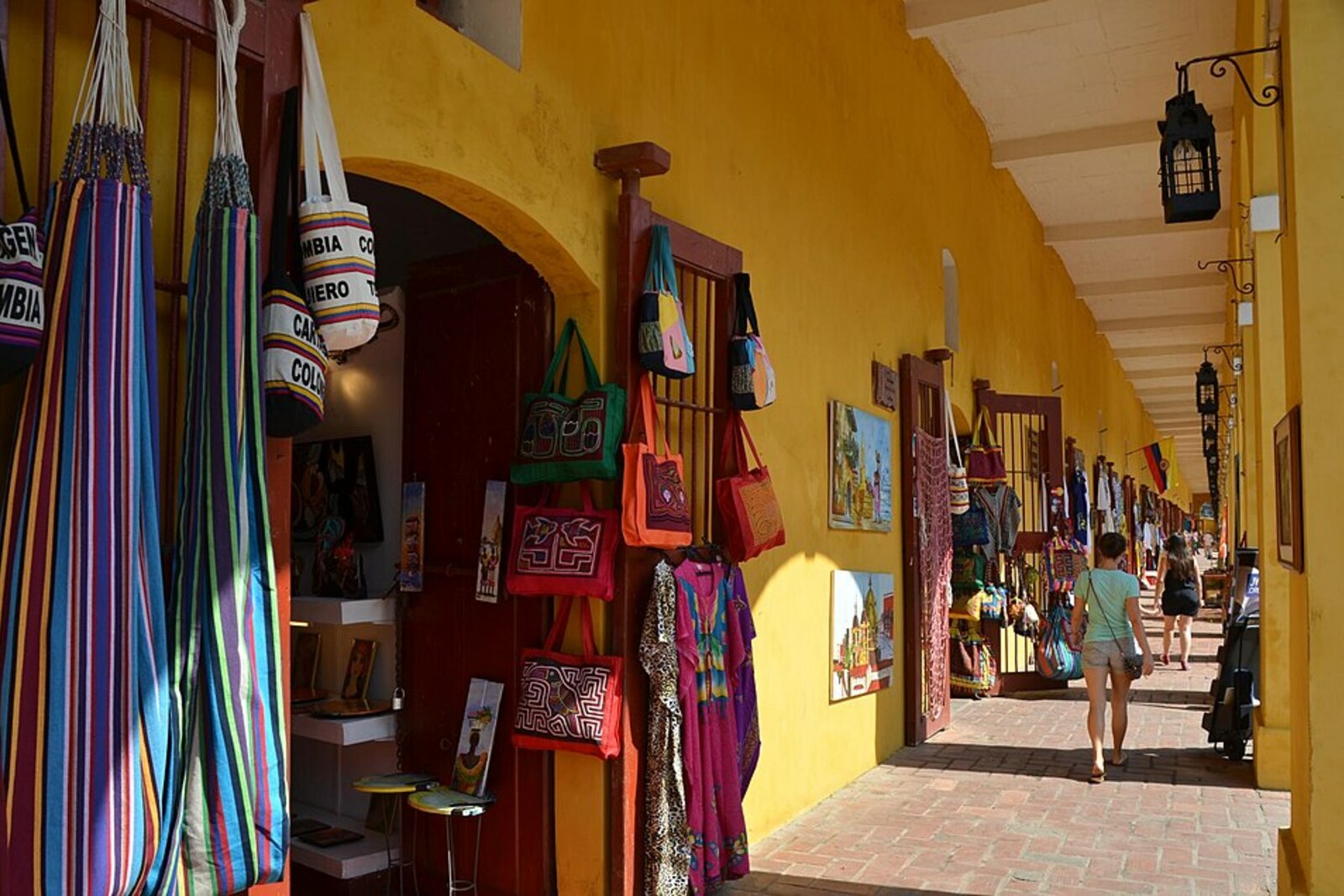
Look around first
What to notice
- Gallery of 47 brick arches
- Spanish coat of arms
- Date 1798 beneath the coat of arms
- Entrances to vaulted chambers
The story of the place
Las Bóvedas means “vaults.” Behind the gallery with forty-seven brick arches stand twenty-three vaulted chambers designed to withstand a bomb strike. They were built for the expanded garrison, to accommodate soldiers, supplies, weapons, and ammunition. The embrasures faced the sea, and guns were positioned above.
In nineteen seventy-two, architect Alberto Samudio Trallero was trying to find tenants for the recently restored Las Bóvedas. He headed the Cartagena branch of the National Tourism Corporation and wanted to keep the vacant spaces from turning into a dump again. The monthly rent was lowered to two hundred pesos—a sum Samudio himself called laughable. There were still no takers. This edge of San Diego was considered remote, the street remained unpaved, and some compartments had no doors. When the first tenants opened a room, they had to wait for bats to fly out.
No one designed these rooms for trade. The Spanish word “bóvedas” means “vaults.” At the end of the eighteenth century, military engineer Antonio de Arévalo created twenty-three vaulted chambers here, capable of withstanding a bomb strike. They were intended to house soldiers of the expanded garrison and store food, weapons, and ammunition. It was possible to fire through the embrasures on the sea-facing side, while artillery was positioned on the upper platform. On the city side, the chambers were connected by a gallery of forty-seven brick arches. The work was completed in seventeen ninety-eight—this date still stands beneath the Spanish coat of arms above the central passage.
After the restoration, the thick walls were waterproofed, and a toilet was even installed in every compartment. Samudio housed the University Coral Museum in one of them and gave another to a bullfighting enthusiasts' club: after performances at the neighboring La Serrezuela arena, toreros and spectators came there. This is how the empty arcade gained its first visitors.
Among the first tenants was writer and actress Petra Villalobos. She grew up in the poor district of El Boquetillo, which at the time adjoined the outer side of the wall, and leased the ninth vault for three hundred pesos. At first, Petra installed foosball there. The business had to close for an unexpected reason: students from the neighboring Salesian school stayed to play and missed classes, the rector complained to Samudio, and he asked her to replace the machines.
For Petra, this meant a loss of income, but the contract had already been signed. She paid the rent from her salary at a jewelry store. On a friend's advice, Petra invested another three hundred pesos in pottery, maracas, and palm-leaf fans. Then she began sewing fashionable hippie-style outfits; some customers were married in her clothes. In the same room, she held exhibitions by students of the Escuela de Bellas Artes and Saturday puppet shows.
Samudio recalled that after roughly two years, all the vaults had already been rented. Later, cruise-ship passengers began to be brought here, and the former barracks turned into Cartagena's main row of souvenir and craft shops. The ninth compartment still bears the name “El Artesano”—the shop grew out of the three hundred pesos Petra used to buy her first pottery, maracas, and palm-leaf fans.
Useful on site
The gallery and shops operate according to the sellers' actual daytime schedules; the upper section of the wall may be restricted for safety, weather, or city events.
Checked: July 1, 2026. Check the official source before visiting.You may browse the shops freely, but the retail spaces remain working businesses. Step back from the display windows to see the overall rhythm of the gallery and the thickness of the masonry.