 Guide On Map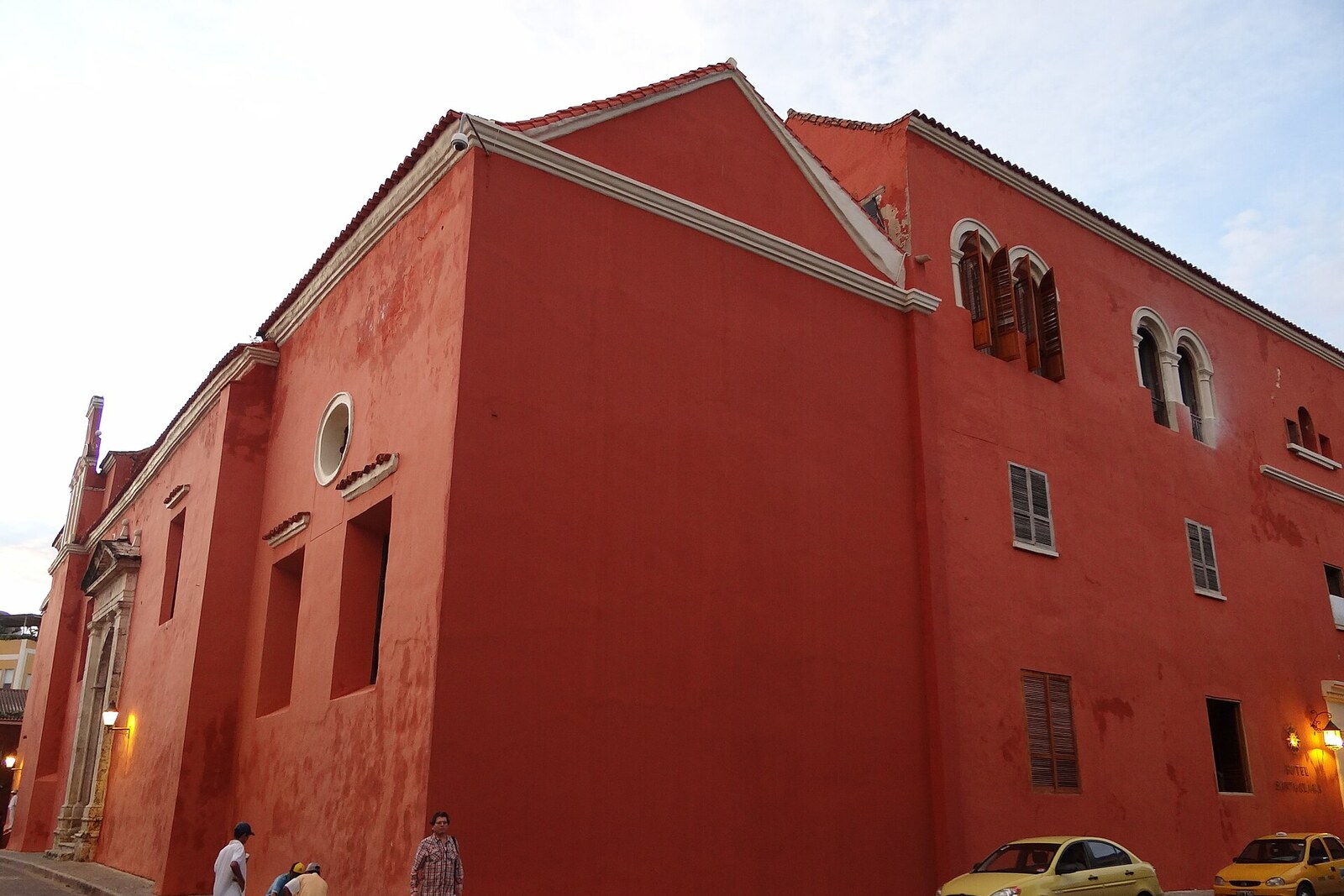
Look around first
What to notice
- Santa Clara cloister
- Former chapel
- Old crypts
The story of the place
The cloister, with its inner courtyard and galleries, recalls that the hotel buildings once formed an enclosed convent. After the sisters left, prisoners were housed here, and then a hospital of mercy opened. The old complex was later adapted as a hotel, but crypts from the former convent remain in the former chapel.
Santa Clara is Saint Clare of Assisi, companion of Saint Francis of Assisi and founder of the community of Poor Sisters, later called the Poor Clares. Her name appeared in Cartagena thanks to Catalina de Cabrera. A wealthy townswoman bequeathed two thousand five hundred pesos for a convent for women. The Franciscan Guillén de Peraza brought three Poor Clares from Seville to carry out her will. By sixteen twenty-one, this cloister had been built for the sisters. They lived here for two hundred forty years.
In eighteen sixty-one, the government confiscated the property of religious communities, and the Poor Clares left for Havana. Prisoners were housed in their buildings at first; then, in eighteen eighty-four, a hospital of mercy opened there. It was as a hospital that the young Gabriel García Márquez encountered Santa Clara.
Twenty-two-year-old Márquez was then learning the ropes of his first permanent newspaper job at Cartagena's El Universal. He came here often: he was friends with interns and medical students, even went into the operating room, and saw a Caesarean section here for the first time. Later, the writer said that he was drawn to hospital life.
Forty-five years later, Márquez gave those visits a different biography. He prefaced the novel Of Love and Other Demons with a scene that supposedly took place here on October twenty-sixth, nineteen forty-nine. In Márquez's account, editor Clemente Manuel Zabala sent the aspiring reporter to Santa Clara: it had been a slow news day, and burial niches were being opened in the former convent.
In the third niche, the workers supposedly found a child's skull. Copper-colored hair, twenty-two meters and eleven centimeters long, spilled from it. The find reminded Márquez of his grandmother's legend about a twelve-year-old marquise: the girl died of rabies after a dog bite, and people on the Caribbean coast venerated her as a miracle worker. This is how the fictional Sierva María de Todos los Ángeles came into being. In the novel, her relatives and the clergy mistake her illness for possession and lock the girl in this convent; the priest appointed to cast out demons tries to save her, but they are separated, and Sierva María dies during the exorcism rite.
After the book was published, Márquez admitted in an interview that he had invented the story of opening the tombs entirely. No bishops' remains had been removed at the hospital, and no one had documented the identity of the copper-haired girl. Even the hotel, for which they planned to demolish the convent in the literary prologue, appeared much later: investors acquired the dilapidated complex only in the early nineteen nineties and asked architects to adapt it as a hotel.
Old crypts survive in the present hotel's former chapel. They belong to the history of the Convent of Santa Clara. Sierva María de Todos los Ángeles belongs to the novel.
Useful on site
Operating hotel; the façade is visible from the street, while the inner courtyards are accessible only to guests and visitors to the on-site establishments with security permission.
Checked: July 1, 2026. Check the official source before visiting.Remember that this is an operating hotel, not a museum. Enter public areas only with staff permission; do not explore private courtyards or rooms on your own.