 Guide On Map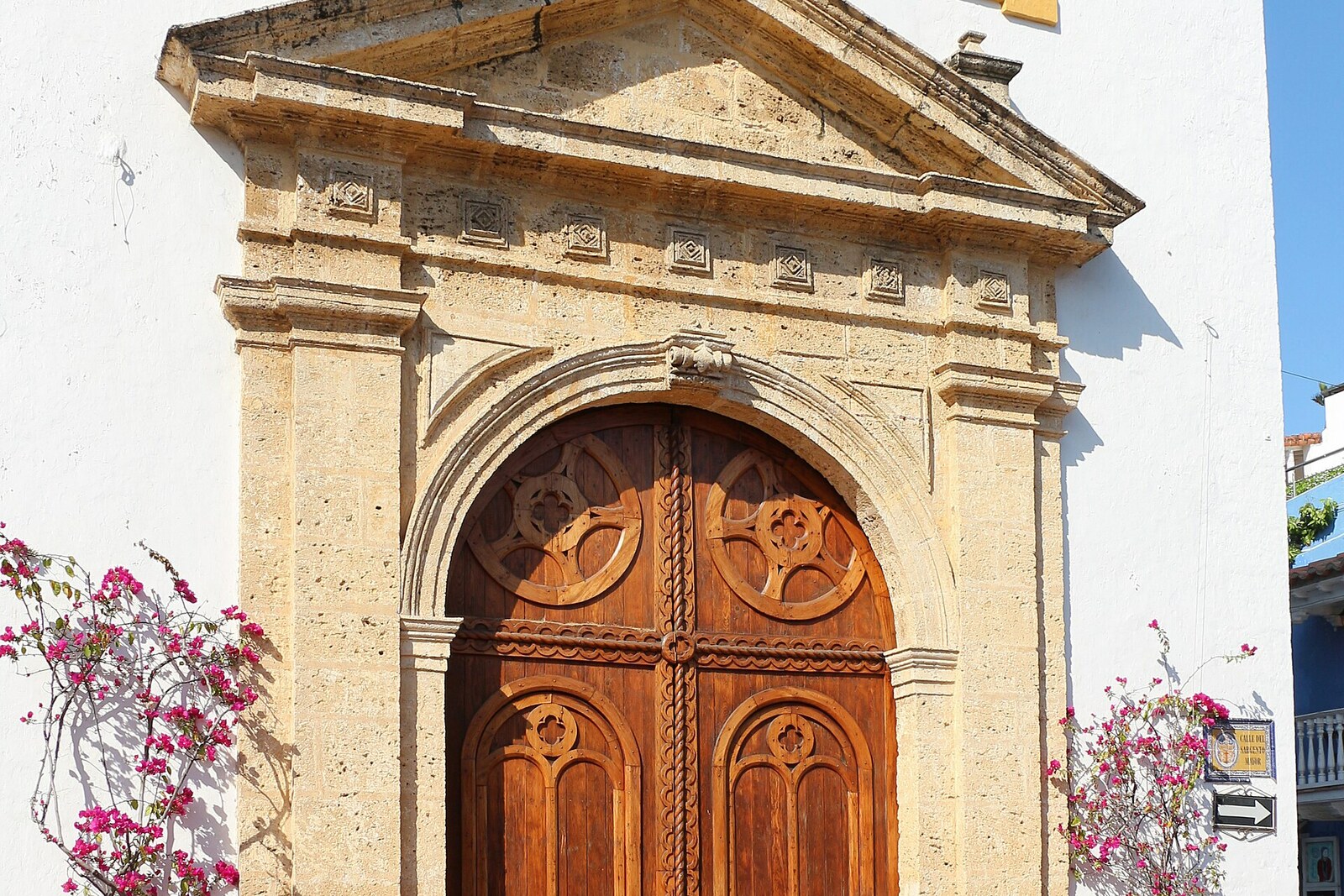
Look around first
What to notice
- Niche on the facade
- Image of Santo Toribio de Mogrovejo
- Cannonball under glass
The story of the place
The stones beneath these walls waited their turn for more than sixty years: residents’ donations once covered only the foundation of the future church. Later, walls were raised above the old foundation and a roof was built, so families from a neighborhood far from the center would not have to look for a parish far from home. In a niche on the facade stands an image of the saint whose name the church bears.
On April twenty-seventh, seventeen forty-one, a Mass in honor of Santo Toribio de Mogrovejo was celebrated in this church. Beyond the walls, the British admiral Edward Vernon had already been trying to capture Cartagena for more than a month. He had brought a huge fleet from Jamaica and ordered the city shelled. One of the shells flew into the church and fell among the parishioners. No one was injured; according to the chronicles, even the building was undamaged. The faithful saw what happened as the mercy of their saint and kept the cannonball. Vernon’s expedition ended in retreat.
By then, the church was only a few years old. As early as sixteen sixty-six, residents had collected donations for the Church of Santo Tomás de Villanueva, but the money was enough only for the foundation. The stones lay in the ground for more than sixty years.
They had to return to them because of a disaster. In seventeen thirty, a severe epidemic began in Cartagena. The priests at the cathedral and Trinidad Parish could not keep up with all the burials; it was especially difficult for families from the neighborhood near Los Jagüeyes Square, which was remote at the time. The new bishop of Cartagena, Gregorio de Molledo y Clerque, decided to establish a separate parish here. He resumed construction and paid for the church’s completion from his own funds. By seventeen thirty-three, the walls and roof were ready.
Molledo wanted to give the church a different name. Before arriving in Cartagena, this native of Lima had represented the cause of Santo Toribio de Mogrovejo’s canonization in Rome. For many years, the process could not get through a vote of the church commission; Molledo brought it to completion, and in seventeen twenty-six Pope Benedict XIII canonized Toribio.
Toribio himself was the second Archbishop of Lima. He traveled throughout his vast diocese, established parishes, and required priests to learn Indigenous languages so they could speak with their flock without interpreters. On his way to Peru, he stopped briefly in Cartagena, but he was neither the local bishop nor the founder of this parish. His name appeared here thanks to Molledo—the man who first secured his canonization and then built a church dedicated to him.
Governor Antonio de Salas, who had long been in dispute with the bishop, refused to authorize the consecration. He insisted on the former name, Santo Tomás de Villanueva, and argued that the change required the king’s consent. The completed building remained unconsecrated while the dispute was sent across the Atlantic Ocean. In seventeen thirty-four, a royal charter authorized the ceremony and confirmed the name Santo Toribio de Mogrovejo. Two years later, the church was consecrated under that name.
Five years later, on the feast day of its patron saint, a British shell struck here. A likeness of Toribio stands in a niche on the facade, and inside, under glass, is the cannonball that parishioners picked up from the floor after Mass.
Useful on site
Active church; the interior is accessible only when the doors are open, around services and the parish schedule. Check the notices at the entrance.
Checked: July 1, 2026. Check the official source before visiting.If the church is open, enter quietly and do not disturb the service. If the doors are closed, the story works fully from the facade.