 Guide On Map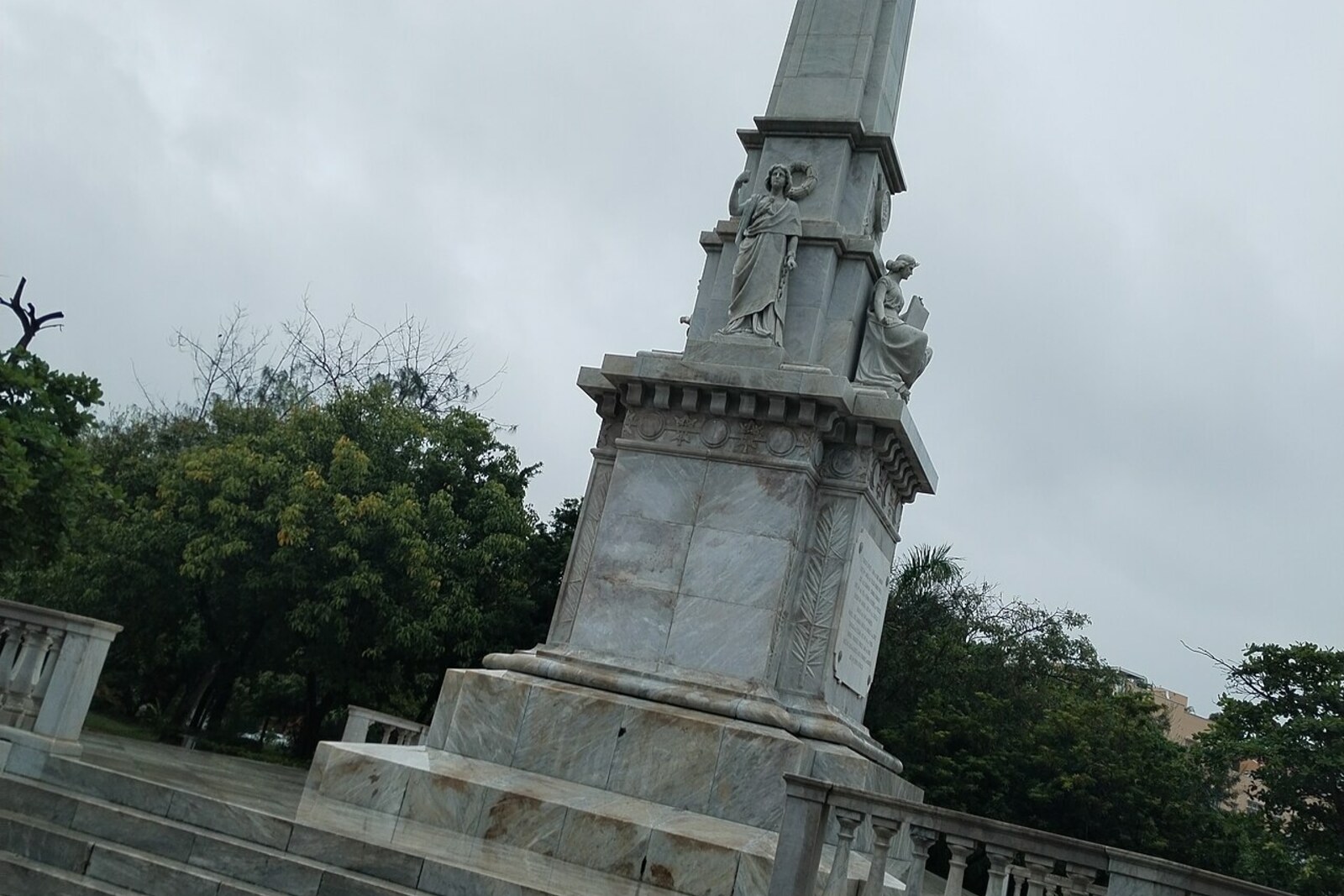
Look around first
What to notice
- Marble obelisk
- Figure of Labor above the entrance arch
- Eight converging avenues
The story of the place
There was once a large open square between Getsemaní and the gates of the fortified city, where people walked from the suburb toward old Cartagena. Later it was set aside for an anniversary garden, funded by city donations and opened while still unfinished. The entrance arches and paths radiating through the park still keep this place open, like a passage between the neighborhood and the walls.
After the park was restored in late two thousand twenty-five, book and handicraft vendors are again at work here, and the sports court and skating track are open. Eight avenues converge on a marble obelisk. A figure of Labor stands above one of the entrance arches. Between these two monuments lies a hidden dispute over whom Cartagena intended to thank for its independence.
The word “Centenario” means centenary. The park opened on November eleventh, nineteen eleven—exactly one hundred years after Cartagena broke with Spain. Pedro Romero, a master blacksmith and contractor for the naval arsenal, was largely responsible for the outcome of that day. His workshop provided work to other artisans, and he himself commanded a militia of free Black people and mixed-race townspeople armed with pikes. Romero sought to ensure that the province would no longer be governed in the name of the Spanish king.
On the morning of November eleventh, eighteen eleven, Romero led his people from Getsemaní to the government palace. Their route crossed this large open square between the suburb and the gates of the fortified city. The Provincial Junta of Cartagena—a council that governed Cartagena—was about to discuss its future relations with Spain. Romero and his supporters demanded full independence. Under pressure from the armed crowd, the members of the junta signed the act, and the following year a constituent assembly adopted the Constitution of the Free State of Cartagena.
Romero was not listed among those who signed the act. After Spanish troops returned, he left the besieged city with his family. The vessel reached Haiti two months later; in early eighteen sixteen, Romero died from the hardships he had endured during the siege and the passage.
One hundred years later, a municipal committee was preparing an anniversary park on this site. Pedro Malabet’s design was chosen in a competition, and Luis Felipe Jaspe directed the construction. Funds were raised by subscription, but they were insufficient: about fifty members of the Sociedad de Artesanos de Cartagena offered money and one hour of free work each day to finish the park by the anniversary. In return, they wanted to install a statue here of Romero—the blacksmith who led the artisans’ militia to the junta and secured the decision on independence.
The anniversary committee excluded Romero’s statue and the ceremony to unveil it from the overall program. The artisans were allowed to place an allegorical figure of Labor above the entrance. The park was opened unfinished nevertheless. At its center, they installed an obelisk made in Genoa in honor of those who signed the act of eighteen eleven.
The obelisk and the figure of Labor have survived. There is no statue of Pedro Romero in Parque del Centenario.
Useful on site
Public park; actual access depends on gates, works, and city restrictions—check on site.
Checked: June 30, 2026. Check the official source before visiting.Look up, but do not approach sloths, monkeys, or other animals; feeding them and touching them for photographs harms them.