 Guide On Map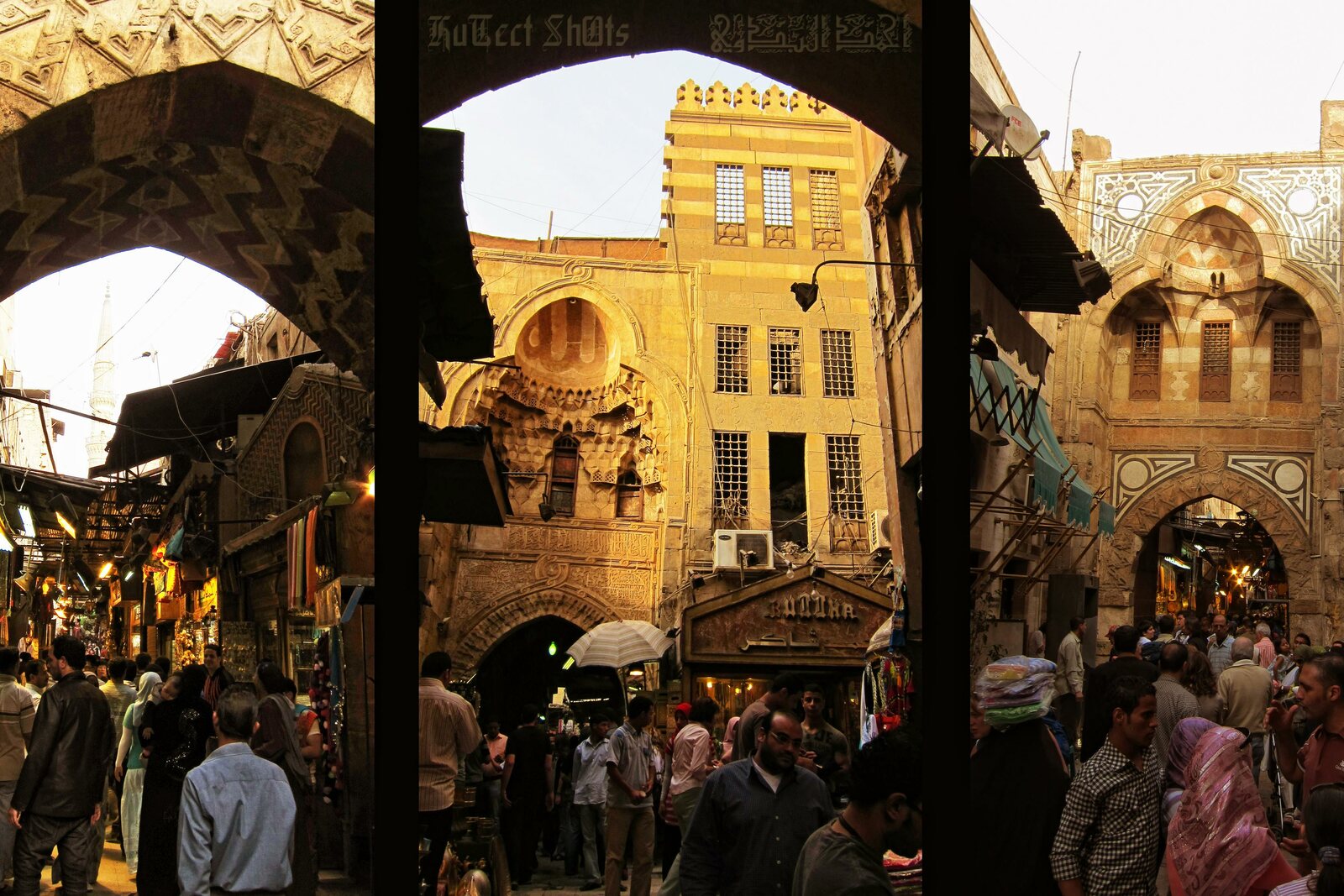
Look around first
What to notice
- Stone gates near al-Husayn Shrine
- Jewelry shops
- Rows of commercial premises
- Courtyards of trading houses
The story of the place
Khan el-Khalili means “the trading courtyard of al-Khalili.” The courtyard itself has been gone for a long time, but the name of its patron first passed to the market, and then to the entire quarter. Al-Khalili was Jaharkas al-Khalili, the chief overseer of Sultan Barquq's stables. He made his fortune through trade with other countries and, at the end of the fourteenth century, decided to build a large khan in central Cairo: shops opened onto the street, goods were stored around an inner courtyard, and merchants stayed in rooms on the upper floor.
There were almost no vacant plots left near the main trading street. Jaharkas chose land east of what is now Al-Muizz Street, beside al-Husayn Shrine. It only seemed empty. Turbat al-Za'faran stood here—the “Saffron Mausoleum,” the family cemetery of the Fatimid dynasty, which founded Cairo. Caliphs, their children, and their wives lay there.
Muslim graves could not be cleared away like construction debris. Jaharkas obtained a fatwa that declared the Shiite Fatimid dynasty heretical and, on that basis, denied them the right to remain in their tombs. After that, he ordered the burials opened. The bones were carried out in baskets and thrown onto rubbish hills beyond the eastern edge of the city. Builders erected the khan on the cleared land.
The calculation paid off. Merchants gained warehouses and lodging in the very center of trading Cairo; other trading courtyards and rows of shops appeared around it. By the end of the fifteenth century, this area had become the city's main center of foreign trade. The name of one building—Khan el-Khalili—gradually spread to the neighboring streets.
In fifteen eleven, Sultan Qansuh al-Ghuri ordered this first khan demolished as well. By his order, new warehouses, shops, rental rooms, and trading courtyards were built here; the streets were made more regular, and the passages were closed with monumental stone gates. Two such gates have survived near al-Husayn Shrine, but they appeared more than a century after Jaharkas.
Today, shops selling jewelry, antiques, and goods for visitors operate along the edge of Khan el-Khalili; the neighboring goldsmiths' market also serves Cairo residents themselves, while some workshops remain in courtyards and on upper floors. Nothing survives of Jaharkas's building. Nothing survives of the Saffron Mausoleum either. On signs and city maps remains the name of the man who ordered it removed for the sake of a trading courtyard.
Useful on site
The market area is lively and changes with the days, holidays, and shop schedules; for this route, walking along its edge is enough. Checked 2026-06-25.
Checked: date not specified. Check the official source before visiting.Stay along the edge of the market if you want to keep the route's pace. You do not have to buy anything; it is best to photograph people and vendors up close only after asking permission.