 Guide On Map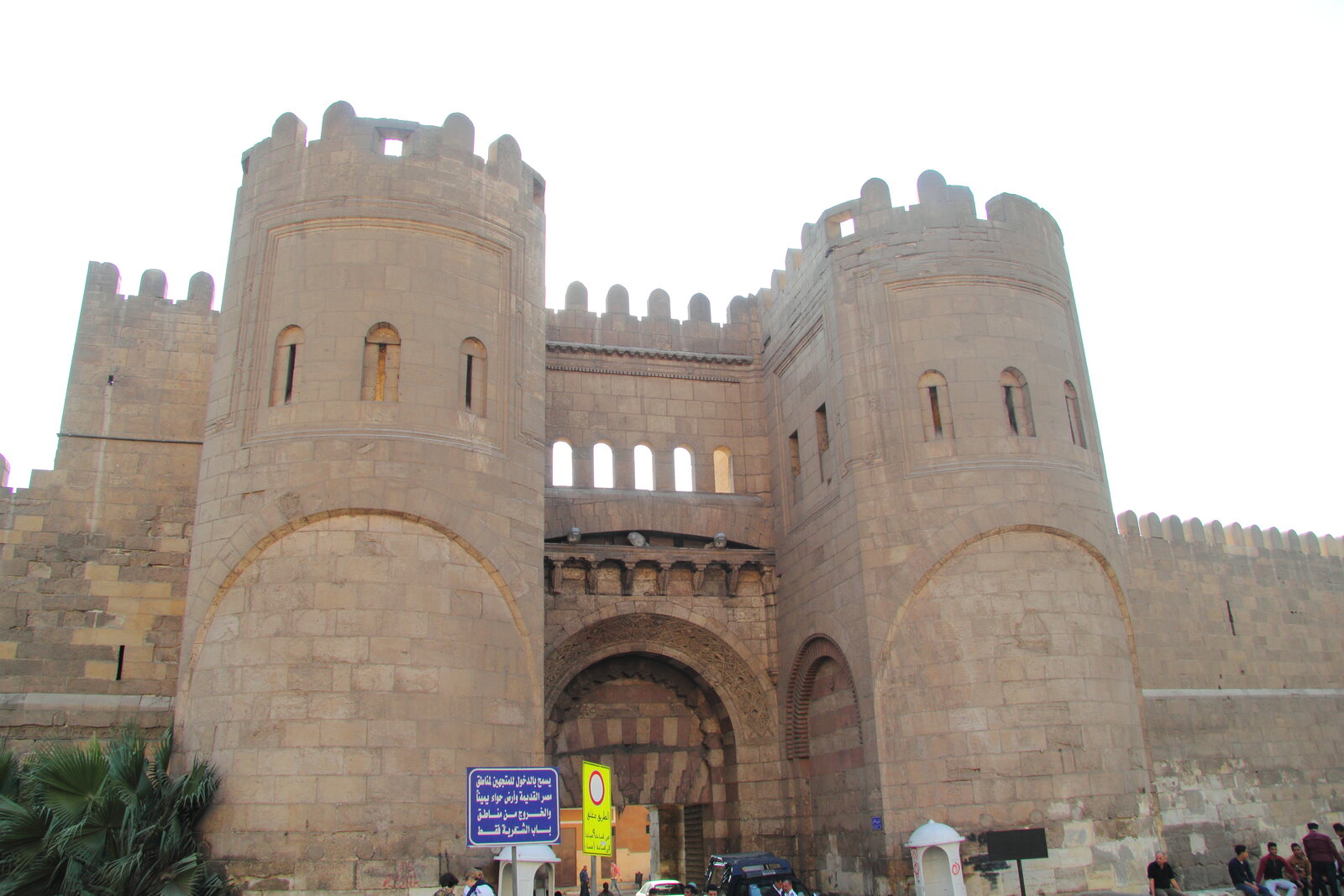
Look around first
What to notice
- Round stone towers
- Construction inscription
- Passage between the towers
- Openings above the passage
The story of the place
Two round towers frame the northern entrance to old Cairo; between them remains a narrow passage that a small garrison could hold from the upper rooms. The lower levels were deliberately made solid, while higher up there were arrow slits along the wall and openings through which boiling liquid was dropped onto besiegers. These stone gates were built north of the former city boundary, so Al-Hakim Mosque ended up inside the expanded city, although it had previously stood outside. One name survives on the plaque, but the residents preserved another, older one: it was transferred here from the vanished brick passage through which Fatimid troops once departed.
In ten seventy-four, the Fatimid caliph al-Mustansir secretly summoned Badr al-Jamali to Cairo, his governor in coastal Acre. The caliph needed someone capable of bringing the army corps under control; they had already been fighting one another within the capital itself. Low Nile floods brought crop failures, the soldiers stopped being paid, and they looted the palace storehouses. The spoils were sold for whatever money was offered. Al-Mustansir retained the title of head of the Shiite Fatimid dynasty, but he could no longer command his own army.
Badr agreed to come on one condition: his Armenian soldiers would enter with him, and he would not take the Cairo units under his command. For him, it was a matter of survival. Armenian by origin and once sold into military slavery, Badr had risen from soldier to governor through his personal contingent; he had no hereditary standing that could have protected him in a foreign capital.
He transported his men from Acre by sea in the midst of winter storms, entered Cairo, and persuaded the local commanders that he had come without hostile intentions. He then invited them to a feast and ordered them killed. After this massacre, al-Mustansir appointed Badr vizier, commander-in-chief, and chief judge. The caliph retained the throne and the dynasty, but handed over the government of the country to the man he had summoned for help. Badr remained the de facto ruler until his death, and after him the office went to his son.
Thirteen years later, Badr ordered Cairo's northern boundary to be redrawn. The old enclosure, built of mud brick when the city was founded, was already falling apart. The new line was moved farther north and ran outside Al-Hakim Mosque; before that, the mosque had stood beyond the city wall. That is why Bab al-Futuh stands here, north of its vanished predecessor.
The passage between the two round towers was designed so that a small garrison could block the entrance. The lower parts of the towers were built solid; rooms for the defenders were placed higher up. From there they could shoot along the wall, and through openings above the passage they could pour boiling liquid onto attackers. Badr defended the restored order with the building tradition he knew from Syria: dressed stone, vaults, and towers projecting in front of the wall line.
In the construction inscription, the new gate was given the name Bab al-Iqbal—the Gates of Prosperity. Cairo's residents continued to call it by the name of the former passage: Bab al-Futuh, the Gates of Conquests. Fatimid detachments had set out on campaigns through the old northern gate, and the word “conquests” referred specifically to them, not to a single commander. The official name remained in the inscription; the residents established the name in common use.
The round stone towers date from ten eighty-seven. The warriors who gave the gate its name passed through a different brick arch a little farther south. That arch vanished, and Cairo's residents transferred its name here.
Useful on site
Street viewing at any time; access to the upper levels/interiors may depend on the site's current operating arrangements. Checked 2026-06-25.
Checked: date not specified. Check the official source before visiting.Look at the gate from outside and from within the passage, without lingering in the path of pedestrians and traffic. Access to the upper levels is not needed for this account.