 Guide On Map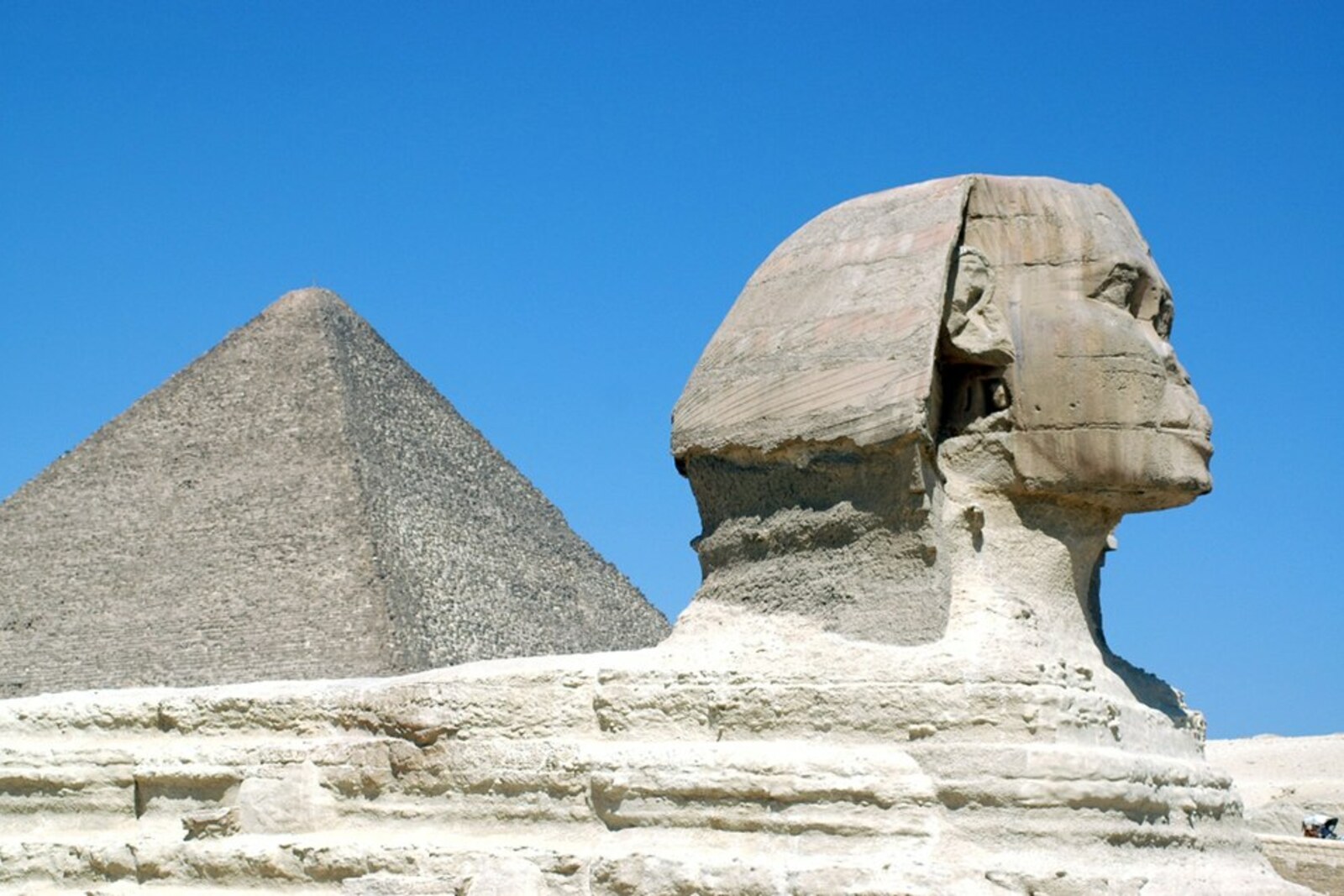
Look around first
What to notice
- Granite stele
- Front paws
- Stone masonry
- Door grooves on the reverse of the stele
The story of the place
A tall slab of red granite stands between the front paws of the Great Sphinx of Giza. Thutmose IV had it installed in the first year of his reign. For the new pharaoh, it was important to explain why the Egyptian gods had chosen him in particular.
The inscription takes Thutmose back to the time when he was one of the sons of King Amenhotep II. The prince hunted on the plateau and rode a chariot here. At noon, he lay down to rest in the Sphinx's shade. Sand had already covered the statue's body; above it rose the head in a royal headdress.
What happened next is known only from Thutmose's own words. In a dream, the Sphinx spoke to him and called itself Horemakhet—Horus on the Horizon. The god complained about the sand and promised the prince the Egyptian throne if he freed its body.
The dream cannot be verified. The stele was carved only after Thutmose became pharaoh. Historians cannot say with confidence whether he had been designated heir in advance: his lineage allowed him to lay claim to the crown, but did not in itself guarantee it. In the account on the slab, the dispute over succession is settled by the voice of a god—Horemakhet personally names the future king.
Having obtained the throne, Thutmose fulfilled the recorded promise. On his orders, workers cleared the Sphinx, reinforced damaged parts with stone masonry, and made a small shrine between its paws. Archaeologists believe that for the stele, they took a granite lintel from the neighboring pyramid temple of Khafre, turned it upright, and covered one side with hieroglyphs. On the reverse, sockets remain where a wooden door once pivoted.
By then, the Sphinx had already stood here for about one thousand years. The builders of King Khafre carved the lion's body and human head directly from the limestone bedrock in the twenty-sixth century BCE. The statue stood at the lower part of Khafre's funerary complex, beside the road to his pyramid, and portrayed the king as a mighty lion guarding the necropolis. The name “sphinx” was later given to similar figures by the Greeks. For Thutmose, what stood before him was Horemakhet, a sun god with the body of an ancient king.
The clearing brought priests and princes back here: offerings were made to the Sphinx, new slabs were placed beside it, and chapels were built. Little survives of Thutmose's shrine, but the main slab still stands where he ordered it raised. On the front, the pharaoh offers gifts to Horemakhet; on the reverse, grooves from the door of Khafre's temple remain.
Useful on site
Access with a Giza Plateau ticket; close approach is restricted by barriers and security rules.
Checked: June 28, 2026. Check the official source before visiting.Most details must be viewed from the observation area, so magnifying optics will be useful. Do not count on a close approach, access to tunnels, or a view without other visitors.