 Guide On Map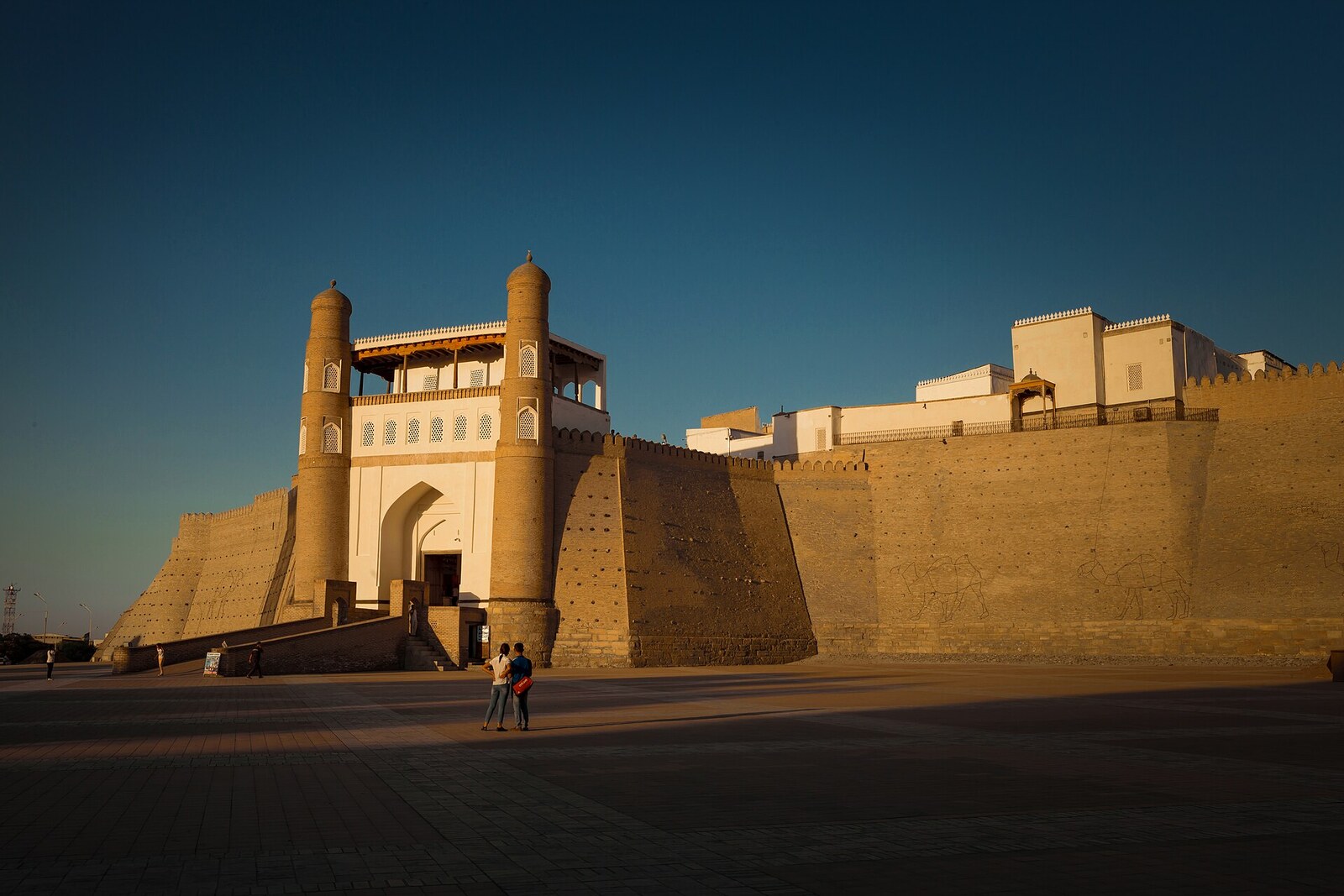
Look around first
What to notice
- Western gates
- Reception courtyard
- Friday Mosque
- Ruined eastern half
The story of the place
The fortress wall of the Ark of Bukhara encloses the western ceremonial gates, the reception courtyard, and the Friday Mosque. This part contained the residence of the emirs of Bukhara, and museum displays now occupy some of the old rooms. In the east of the fortress lies an archaeological reserve: this place was once densely built up.
On August thirty-first, nineteen twenty, the last emir of Bukhara, Sayyid Alim Khan, left the city. Behind the walls of the Ark of Bukhara remained his palace, treasury, arsenal, reception halls, and the homes of courtiers. About three thousand people lived here: officials, military personnel, craftsmen, the emir's relatives, and servants. For Sayyid Alim Khan, losing the Ark of Bukhara meant losing both his home and the dynasty's main support.
The events of the preceding years led to this. The Young Bukharans—local reformers seeking the emir's overthrow—appealed to the Bolsheviks for military assistance. Mikhail Frunze, commander of the Turkestan Front, decided to take Bukhara and prevent Sayyid Alim Khan from gathering new forces. The citadel became the main target: money and weapons were stored here, the Emirate of Bukhara was governed from here, and defenders converged here in case of danger.
At the end of August, units of the Red Army approached the city walls. The fortifications delayed the first attacks. Frunze then ordered the use of heavy artillery and aircraft. The strikes hit the city and the Ark of Bukhara. Most of the internal structures stood on wooden frames; the fire that broke out destroyed entire courtyards and rooms of the citadel.
Sayyid Alim Khan went east with a detachment of supporters. He avoided capture, tried to continue the struggle, then moved to Afghanistan and ended his life in Kabul, never returning to Bukhara. The remaining defenders of the Ark of Bukhara were commanded by the kushbegi—the emir's chief dignitary. On September second, after further shelling and air raids, he surrendered the citadel. Soon the Emirate of Bukhara ceased to exist, and the Young Bukharans led the proclaimed republic.
The ceremonial western gates, the reception courtyard, the Friday Mosque, and the kushbegi's quarters have survived; they now house museum displays. The eastern half of the Ark of Bukhara, where courtyards and residential buildings stood crowded together until nineteen twenty, remained in ruins. Behind the high wall is an archaeological reserve—the empty space occupies most of the former city within a city.
Useful on site
Exterior viewing is available at all times. The museum website lists hours of 09:00–18:00, a shortened Tuesday and closure on Wednesday, but the page appears not to have been updated for a long time—confirm the hours and ticket-office operation on the day of your visit.
Checked: date not specified. Check the official source before visiting.Exterior viewing already reveals the fortress's relationship with the square. If the interior spaces are accessible, regard them as an addition: a significant part of the former city within has been lost.