 Guide On Map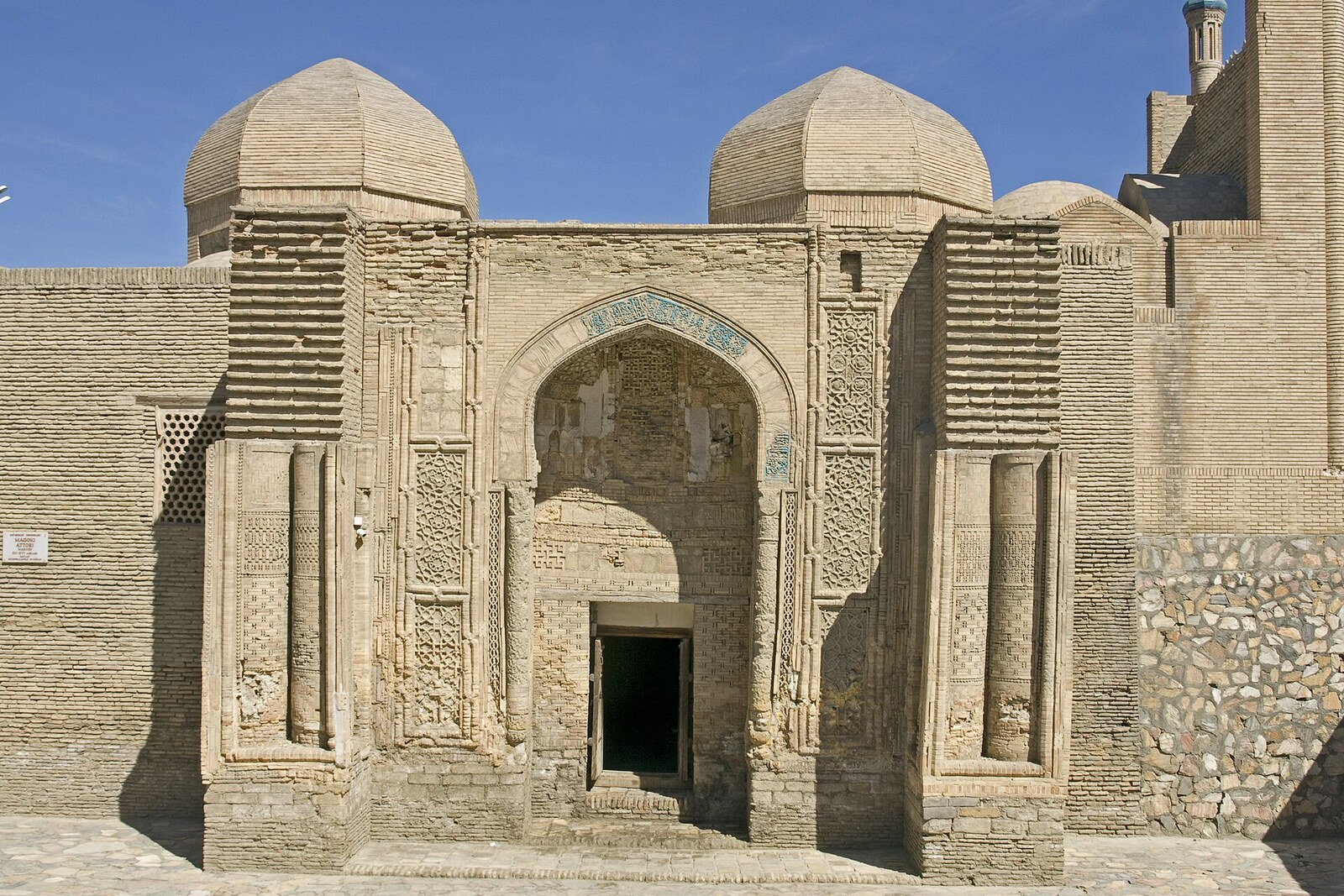
Look around first
What to notice
- Twelfth-century southern portal
- Eastern staircase
- Domed ceilings
- Carpets in the sunken hall
The story of the place
The southern portal with carved terracotta leads to an old mosque whose hall lies noticeably below the present roadway. Inside, round supports were once replaced with square ones, and the ceilings were formed into domes; outside, the eastern staircase descends to the hall. In the twentieth century, archaeologists cleared the southern entrance of the layers surrounding it, and it is now visible again beside the later portal.
Before you is a former neighborhood mosque; since nineteen ninety-one, it has housed a carpet museum. Its name refers to the earlier life of this site. “Magok” means a depression, while “attori” points to the attars—merchants dealing in medicinal preparations, spices, and incense. Their shops stood in the bazaar surrounding the mosque. Sellers and buyers came here for daily prayer.
The building’s foundation now lies four and a half meters below the street. The mosque did not sink: over the centuries, people repeatedly rebuilt the neighboring quarters and laid new surfaces, raising the city level around it. By the beginning of the sixteenth century, the southern portal had been partly destroyed, and the mosque itself was almost hidden beneath later layers.
In fifteen forty-one, Abdulaziz Khan, 16th-century Ruler of Bukhara, began a major rebuilding of this part of the city and intended to demolish the dilapidated building. Ahmad Kasani, known as Makhdumi Azam—the Great Mentor—objected to him. He led the Naqshbandi Sufis and sought to preserve the mosque where he himself liked to pray and remain in contemplation. The site did not belong to him, and he had no authority over the construction work: the khan could simply have refused his request. Makhdumi Azam relied only on his authority as a religious mentor, whose views rulers took into account.
Abdulaziz Khan abandoned the demolition. Makhdumi Azam died in fifteen forty-two and did not see the work completed. A few years later, craftsmen restored the mosque according to its earlier plan, but replaced the round supports with square ones and installed new domed ceilings. They did not raise the old floor to the level of the expanded city. Instead, they made an entrance in the upper part of the eastern wall and connected it by a staircase to the hall below.
By the beginning of the twentieth century, only the domes and part of the later portal protruded from the ground. In the nineteen thirties, archaeologists removed the layers surrounding the building and reopened the twelfth-century southern entrance with carved terracotta and brick ornament. Carpets now lie and hang inside, the eastern staircase leads into the sunken hall, and on the south side the old portal that survived the canceled demolition is open.
Useful on site
The exterior can be viewed at all times; inside, there is a carpet museum, but the current hours and ticket office should be confirmed on site.
Checked: date not specified. Check the official source before visiting.View the exposed levels only from accessible platforms, and do not go beyond the barriers. Even if the interior is closed, the difference in elevation can be seen from outside.