 Guide On Map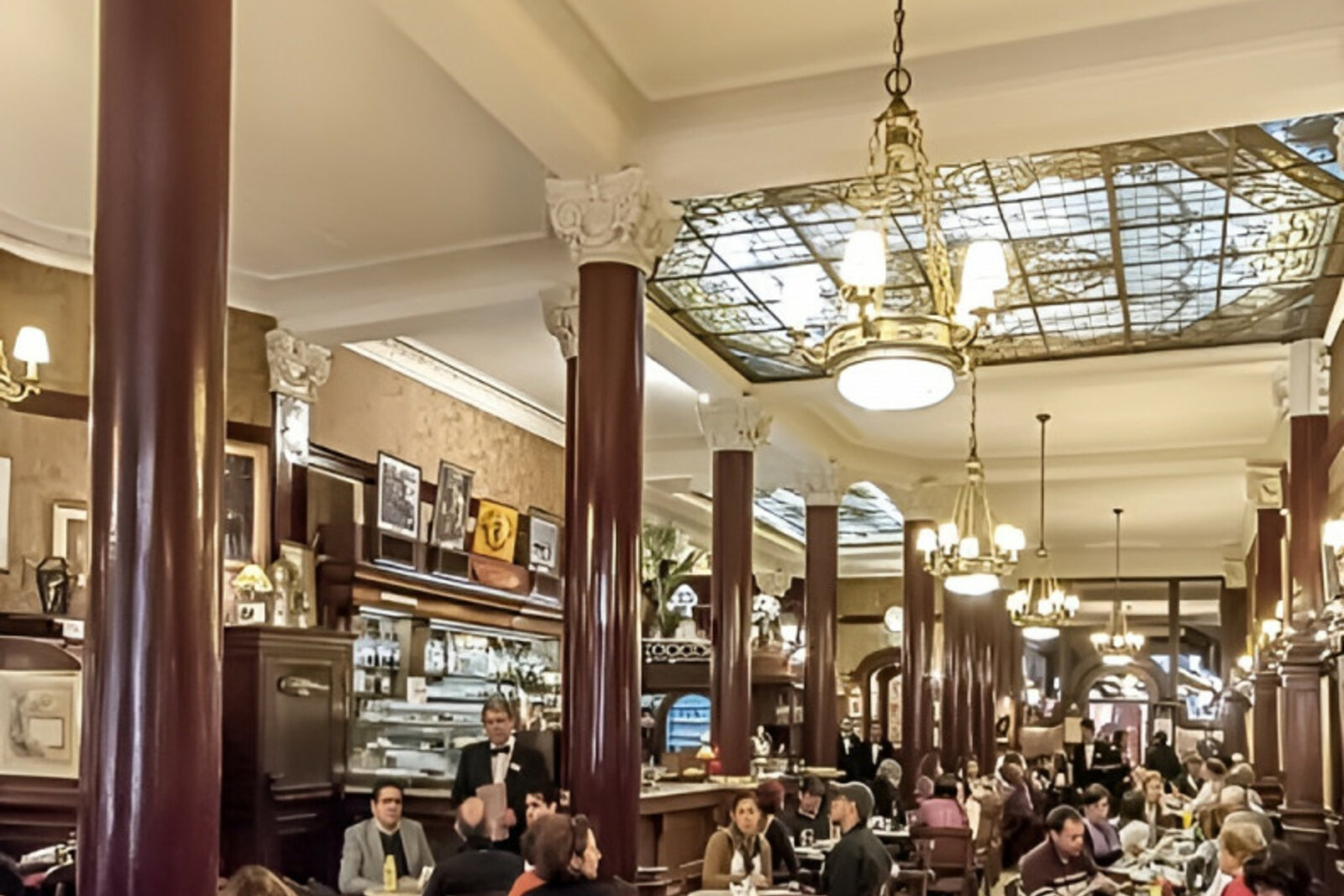
Look around first
What to notice
- The façade on the Avenida de Mayo side
- The main entrance
- La Bodega hall
The story of the place
The façade of Café Tortoni faces Avenida de Mayo. Beneath the hall was once a wine cellar where supplies were kept; it was cleared out, repaired, and adapted for exhibitions and performances. The basement is now called La Bodega, and tango and other cultural evenings are still held there.
In eighteen fifty-eight, the French émigré Jean Touan named his Buenos Aires café after the Parisian Tortoni. The Paris establishment bore the surname of François-Xavier Tortoni, an Italian who began there as manager, then became the owner and made the ice cream café a fashionable meeting place. The Buenos Aires Tortoni was initially located at the intersection of Rivadavia Avenue and Esmeralda. Its next owner, Celestino Curutchet, a Basque man from France, moved it to the present building. After Avenida de Mayo opened, he created an entrance on the side of the new street; it is now considered the main entrance.
In the nineteen twenties, the artist Benito Quinquela Martín brought painters, poets, and musicians together at the neighboring café La Cosechera. They needed a place where they could exhibit their work, perform, and meet one another without an invitation from an academy or a wealthy salon. One day the whole group moved to Café Tortoni. People took the best tables, the number of participants grew, and the regular hall could no longer hold them.
At the time, the café was run by Pedro Curutchet, Celestino's son. He expected the well-known artists to bring new visitors to the establishment, and he offered the group the wine cellar in the basement. For the owner, it was a utility room with supplies, not a ready-made concert hall. Quinquela and his companions cleared out, repaired, and adapted the basement themselves for exhibitions and performances.
On May twenty-fourth, nineteen twenty-six, they founded Agrupación Gente de Arte y Letras La Peña here. A peña was a fellowship whose members met regularly for shared work and public evenings. The charter stated that the club was to become a neutral venue for artists and people interested in art.
For the next seventeen years, exhibitions, concerts, plays, readings, and debates were held in the former wine cellar. In June nineteen twenty-seven, members honored the Italian playwright Luigi Pirandello here when he came to Buenos Aires. The singer Carlos Gardel concluded the evening: he performed several tangos for the guest. This gave the members their own stage, and the café a cultural program that drew people here independently of its food and drinks.
In nineteen forty-three, the association ceased to exist. The basement that its members had transformed with their own hands remained. It is now called La Bodega, or Quinquela Martín Hall; tango performances and other cultural events are still held there.
Useful on site
Daily 08:00–21:00 according to the official website; check shows, lines, and access to the halls separately.
Checked: June 28, 2026. Check the official source before visiting.A line does not guarantee quick entry, so decide in advance whether you want a full visit. The basement of the former La Peña should not be considered freely accessible: check events and visiting arrangements separately.