 Guide On Map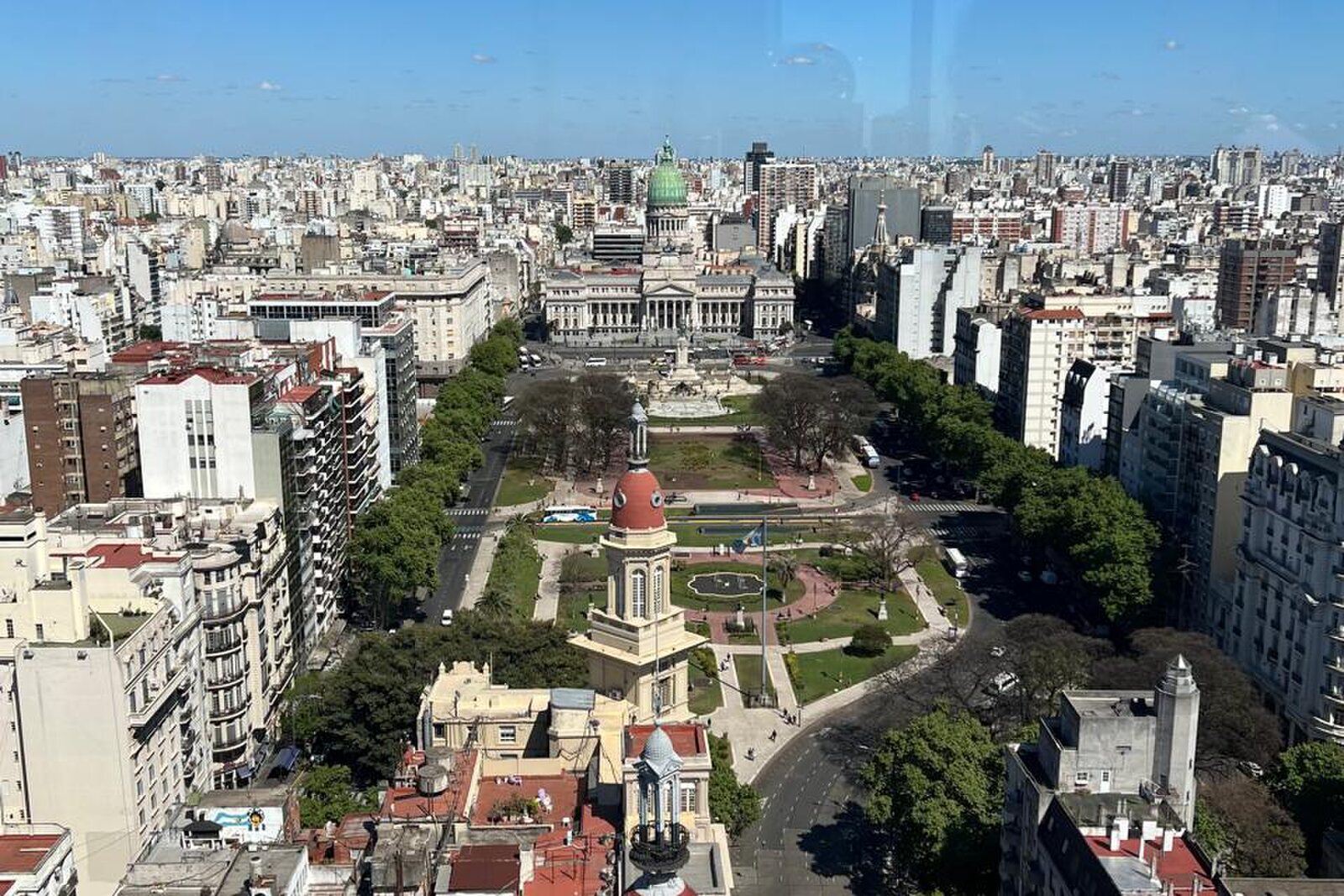
Look around first
What to notice
- Facade of the Palace of the Argentine National Congress
- Monument of the Two Congresses
- Two bronze female figures
- The plaza in front of the palace
The story of the place
The plaza in front of the palace is often called the Plaza of the Two Congresses, although its official name is Congressional Plaza. “The Two Congresses” is the name of the Monument of the Two Congresses at Entre Ríos Avenue. Landscape architect Carlos Thays combined three neighboring small parks here for the centennial of the May Revolution, celebrated in nineteen ten. Four years later, the monument was installed in front of the palace. Two bronze women on either side of the pedestal represent assemblies that met in entirely different places: delegates of the Assembly of eighteen thirteen approved the coat of arms and the anthem, abolished noble titles and torture; deputies of the Congress of Tucumán declared the country’s independence in eighteen sixteen. The plaza itself was named after the palace behind the monument—this is where the Senate and the Chamber of Deputies meet.
On July twenty-third, nineteen thirty-five, Enzo Bordabehere came to the Senate Chamber, although he had not yet become a senator. The legislature of Santa Fe Province had already elected him to a vacant seat, but confirmation of his credentials was postponed until the end of the protracted dispute over the meat trade. Bordabehere waited for his seat in the very room where, a few hours later, he would be shot.
Lisandro de la Torre, senator for Santa Fe and leader of the opposition Progressive Democrats, began the dispute. He pressed for a parliamentary investigation into the agreement with Great Britain, concluded in nineteen thirty-three. Great Britain agreed to continue buying Argentine beef, but eighty-five percent of shipments had to pass through foreign meatpacking companies. For a herd owner, this meant dependence on a few buyers: they decided how much to pay for a bull and whose lot would make it to export at all.
The executives of Anglo refused to show the commission the real accounts. The investigators then boarded the British vessel Norman Star and found account books in crates marked as meat shipments. Based on these papers, de la Torre accused the companies of keeping double books and evading taxes, and Agriculture Minister Luis Duhau and Finance Minister Federico Pinedo of protecting the exporters. Both ministers came to the Senate to reject the accusations. The sessions continued for nearly two weeks.
On the last day, de la Torre called the ministers’ explanations lies. He left his seat and approached their table. Duhau pushed the seventy-year-old senator, who fell between the rows. Bordabehere rushed to him. Behind them stood Ramón Valdez Cora, a former police commissioner connected to the ruling Conservative Party. He drew a revolver and fired; three bullets struck Bordabehere in the back and chest.
The wounded man was carried to a first-aid room, then sent to Ramos Mejía Hospital. He died that same day, without ever taking the senatorial oath. Valdez Cora tried to escape through the palace corridors, ran into the stenographers’ room, and was detained there. He claimed that he had acted alone, wishing to protect political friends. The court did not identify the person who ordered it; the shooter was sentenced to twenty years in prison and released in nineteen fifty-three for good behavior. The debates over the meat trade were closed, and de la Torre resigned his Senate seat in nineteen thirty-seven.
The Senate Chamber behind the facade has survived and is part of the palace tour route. In two thousand twenty-five, Senate staff compared photographs and eyewitness accounts to reconstruct the participants’ movements precisely: where de la Torre fell, where Bordabehere approached from, and where Valdez Cora ran after the shots. Bordabehere died in the chamber where he had only been awaiting official admission; now visitors are shown his final steps in that same room.
Useful on site
The plaza and facade are accessible from outside; tours of Congress are free by reservation, with an ID card or passport, and may change or be canceled depending on the parliamentary agenda.
Checked: June 28, 2026. Check the official source before visiting.Walk around the plaza to see the building head-on and from the side. Arrange a tour inside Congress separately, and check the requirements in advance; access may change during sessions, ceremonies, or protests.