 Guide On Map
Power in Buenos Aires: From Plaza de Mayo to Congress
Through Casa Rosada, the Cabildo, and Avenida de Mayo
Guide On Map on your phone
Open the walk like a regular app
It takes about 10 seconds to install. No app store needed.
The whole path
Route map
About the walk
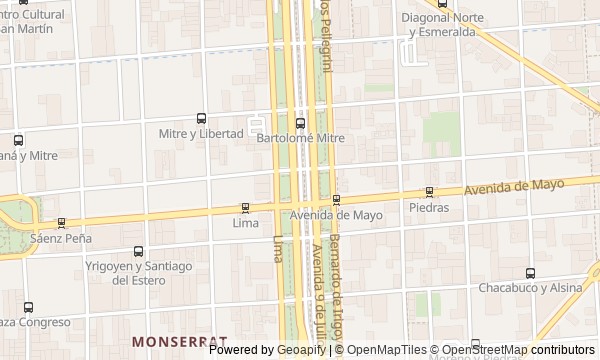
You will walk from Plaza de Mayo to Congress along the straight line of Avenida de Mayo. At the start, the route gathers the city council, the presidential palace, and the cathedral around you. Then the plaza falls behind, and the ceremonial avenue leads through what were once private plots toward the Palace of the Argentine National Congress.
This is not a walk through the facades of power, but through its vulnerable points. You will find out why one person signed a petition for six hundred, why two greeters were argued over at the cathedral doors, and what could have stopped the city from taking land for a new street. An old café raises another question: how did a wine cellar become a stage?
The story rests on documents, decisions, and small actions with large consequences. No grand rhetoric. By the end, you will be able to read this center as an argument: who gets the right to speak for Buenos Aires, and what trace does that right leave in the plaza, the Cabildo's five arches, and the avenue's straight line.
Why this order
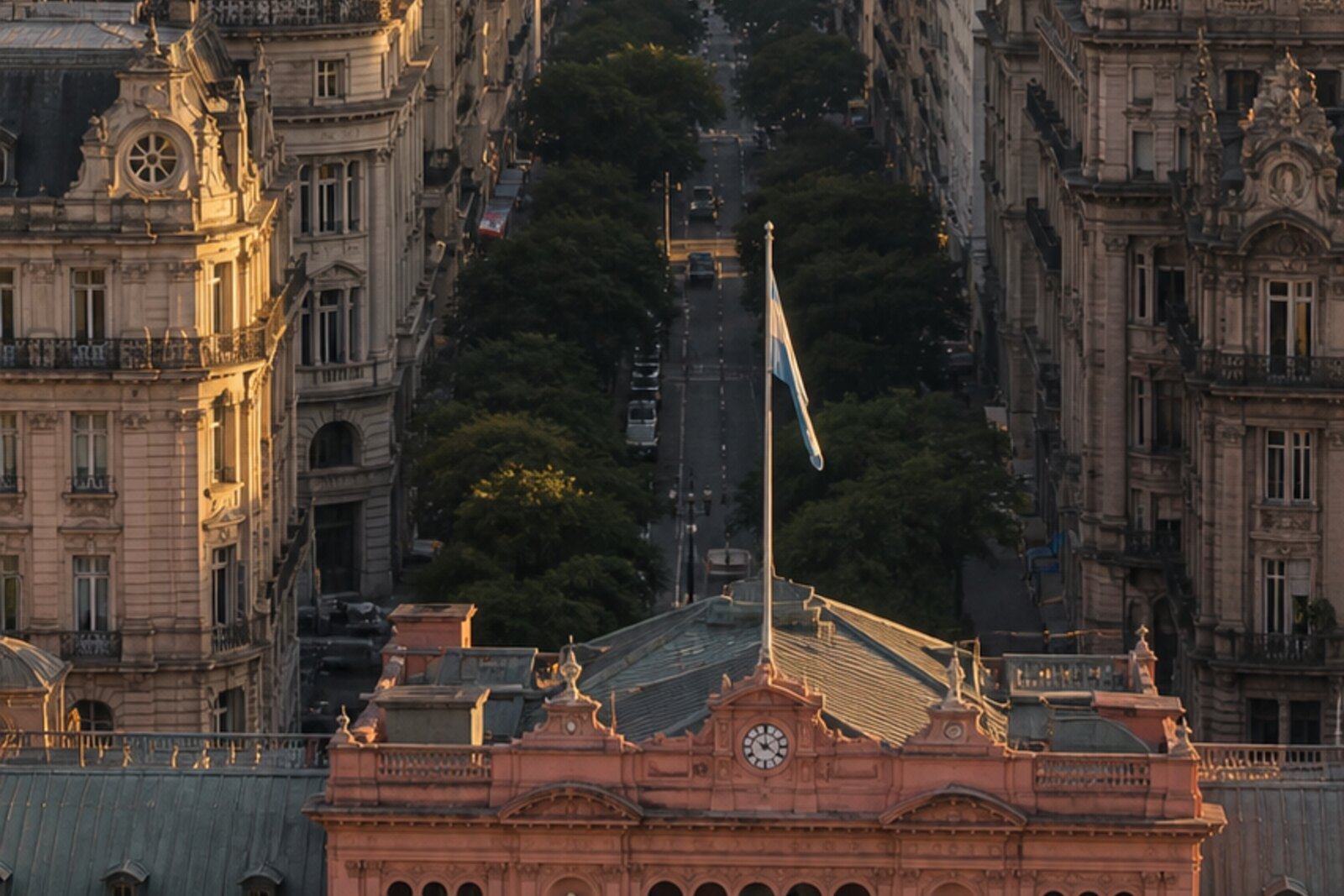
Plaza de Mayo first reveals the open space from which residents pressed the Cabildo. Casa Rosada on its eastern side moves the conversation from the colonial council to presidential power and an attempt to seize it by force. The cathedral next door follows naturally: after a change of government, it mattered not only to occupy the offices but to gain public recognition. Crossing the plaza to the Cabildo brings you back to the local authority itself, and to streets it once turned into a defense. Behind the shortened facade begins Avenida de Mayo: its construction explains why the old building lost its arches and at what cost the city created a straight road toward the future Congress. The café midway along the avenue shows that an independent cultural life also emerged beside this line of state power. The final stretch leads to Congressional Plaza and the Senate Chamber, where political conflict no longer fit within parliamentary procedure.
Those who want to understand the historic center through decisions and conflicts rather than a list of monuments Those interested in documents, urban disputes, and the fate of public spaces Those who enjoy a sequential route with one thread running through it
Those looking above all for a walk about tango, food, and everyday neighborhood life Those who find it difficult to hear about military violence and political murder Those who prefer a light overview of architectural styles
Before you go
Before setting out, check access separately for the National Historical Museum of the Cabildo and the May Revolution, the Buenos Aires Metropolitan Cathedral, the Casa Rosada Museum, Café Tortoni, and tours of the Palace of the Argentine National Congress: each place keeps its own schedule, and state events and services can change it. Nearly the entire idea of the route remains intact from the outside, so a closed interior is no reason to cancel the walk. Bring water and protection from sun or rain: the open plazas offer little shelter. Watch for notices of demonstrations and street closures, and do not plan around a single fixed entry time.
When to go
Choose daylight, when the sculptures, arcades, and the avenue's long perspective are easy to make out. On a weekday, the working life of the administrative center feels more present; at quieter times, it is easier to listen to the stories and study the details. Leave extra time for checking interiors, waiting at the café, and pauses in both plazas.
Backup plan
If individual buildings are closed, walk the entire axis from outside: the Cabildo's seven arches, the cathedral colonnade, the seam of Casa Rosada's central arch, the facades of Avenida de Mayo, and the Congress dome make a route in their own right. If the line at Café Tortoni is long, limit yourself to the facade and keep walking—the basement La Peña is not ordinarily open for casual visits anyway. If the plaza is blocked by a demonstration, ceremony, or police cordon, do not try to pass through the barriers: move to an open side street and return to the axis only where passage is clearly allowed.
Route conditions
Surface. Paved — 2.7 km (data covers 95% of the route)
Facilities. Drinking water — 2
Elevation. Ascent — 50 m; descent — 40 m
OpenStreetMap extract of June 18, 2026: database data, not a check on the ground. Data © OpenStreetMap contributors, ODbL licence
Walk plan
Open in maps ↗- 1
Plaza de Mayo
Here you will see how people outside forced the city council to change a decision made behind closed doors. - 2
Casa Rosada
The presidential palace would become the center of a rebellion in which the air attack and the ground assault produced different results. - 3
Buenos Aires Metropolitan Cathedral
This stop explains why the new government needed a church ceremony, places of honor, and a reception at the doors. - 4
Cabildo
From here, the city council organized the defense that turned the blocks around the square into a system of fortified lines. - 5
Avenida de Mayo
A straight street will help explain the judicial boundary between a city project and private property. - 6
Café Tortoni
A former wine cellar will show how a regular group of visitors created its own stage and program. - 7
Congress and Congressional Plaza
The finale takes the route into the Senate Chamber, where a dispute over the meat trade ended in gunfire and an unidentified person who ordered it.
Route features
Everything you need stays in the browser
Progress, saves and your trip plan are stored on this device.
Add Guide On Map to your home screen so the walk opens outside the browser.
How we handle sources, maps and corrections: our editorial standards