 Guide On Map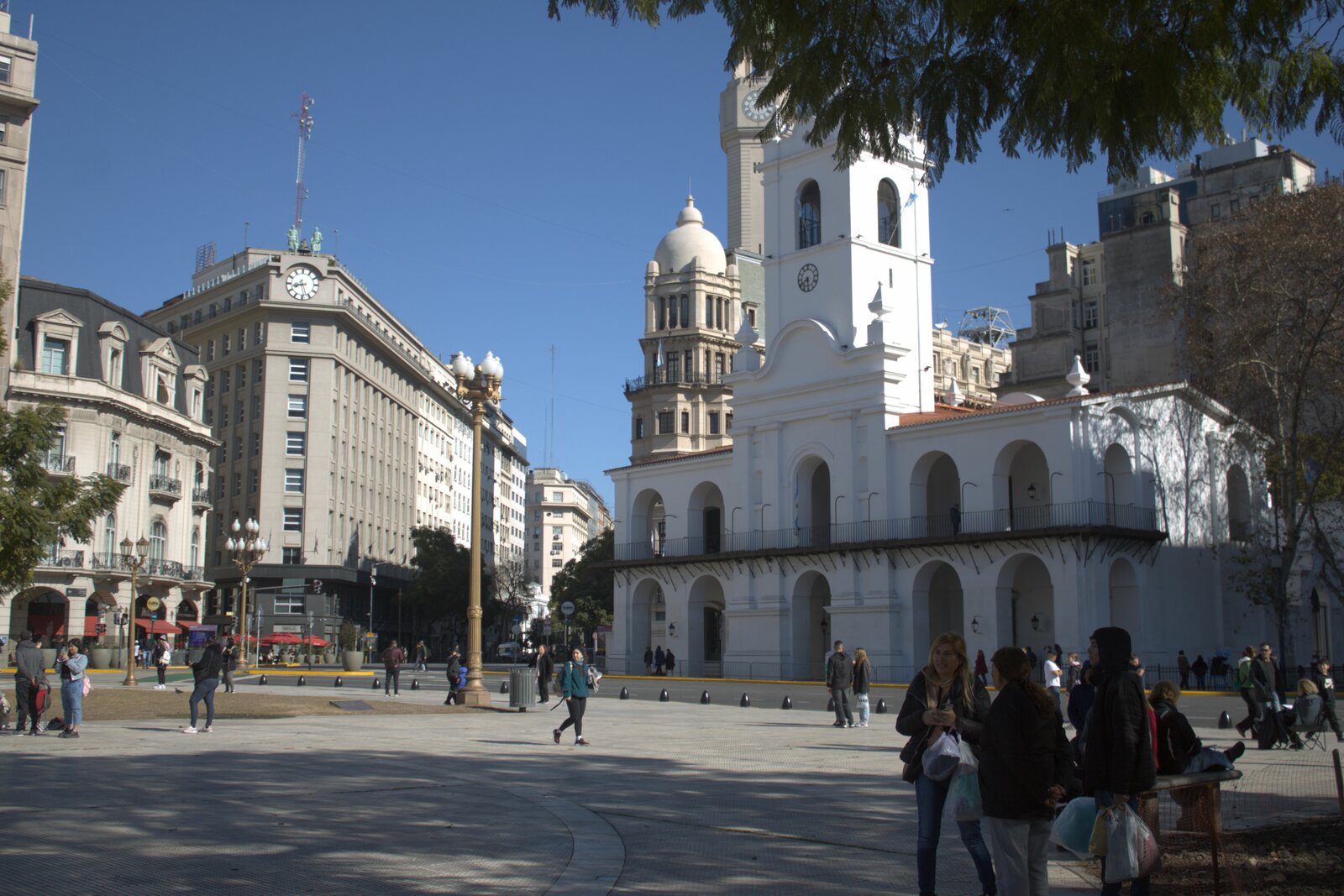
Look around first
What to notice
- Five facade arches
- Colonial facade
- The building's arcades
- Prison cell
The story of the place
The five arches on the facade remain from a much longer building: there were once eleven. Behind these arcades worked the city's only body elected in Buenos Aires itself, although only recognized homeowners had the vote. Here, supplies and order were overseen, court cases were heard, and a prison was kept; the museum now displays one of its cells. The facade regained its colonial appearance in a reconstruction in nineteen forty.
Beside the square stands the Cabildo—the building where the city council met. On July second, eighteen oh seven, acting viceroy Santiago de Liniers lost a battle against the British on the approaches to Buenos Aires. French by birth and a naval officer in Spanish service, he tried to halt the advance in open country. His detachment was scattered, and General John Whitelocke's army moved toward the city center.
Martín de Álzaga refused to discuss capitulation. He was a wealthy merchant and the senior alcalde, the elected head of the Cabildo. He had no military career: Álzaga had acquired his position and wealth through trade. Now, in the event of defeat, he would have to answer to the occupying army as the man who had organized the resistance.
Cabildo was the name both of the city council and of the building where the council met. It was the only local body whose members were elected in Buenos Aires itself. Far from all residents were considered voters; only full-fledged “neighbors”—homeowners of recognized standing—could vote. The council oversaw supplies and order and heard court cases; a prison was housed in the same building. Álzaga could therefore command the city's stores, gather people, and turn streets into defensive lines.
A year earlier, the British had already captured Buenos Aires. Viceroy Rafael de Sobremonte, appointed from Spain, left the city with the treasury, which the invaders intercepted anyway. Liniers gathered troops in Montevideo and retook the capital. Then an open meeting in this Cabildo demanded that he be given military command in place of Sobremonte. The formation of volunteer regiments began because the British fleet remained on the River Plate and a second attack was expected.
When it came and Liniers's field defense collapsed, Álzaga gathered people and weapons at the Cabildo. He ordered a fortified trench built in front of every corner on the approaches to the square. Cannons and riflemen were placed behind barricades, while fighters were also stationed on rooftops and at windows. Liniers, who had returned with a thousand soldiers, accepted this plan.
On July fifth, Whitelocke sent thirteen separate columns into the city. Each was to reach the main square by its own street. Here, the British had to advance through blocked intersections under fire from houses. Liniers directed the final stage of the battle from the Cabildo's arcades. The columns lost men and contact with one another; several had to lay down their arms without ever joining up at the square.
On July seventh, Whitelocke signed the capitulation. His army undertook to leave Buenos Aires within two days, and Montevideo, occupied by the British, within two months. In London, a military tribunal tried the general and dismissed him from service. Liniers retained the post of viceroy, while merchant Álzaga's decision to fight inside the blocks proved stronger than the advance of a regular army.
The building was then almost twice as long: its facade had eleven arches. Later, three arches were removed for Avenida de Mayo and another three for Diagonal Sur; the facade regained its present colonial appearance in a reconstruction in nineteen forty. Inside, the museum displays the meeting hall and one of the prison cells. Of the eleven arches toward which Whitelocke's columns converged, five remain in front of the square.
Useful on site
National Historical Museum of the Cabildo and the May Revolution: Wed–Sun 10:30–17:40; Mon–Tue closed; check special days and holidays separately.
Checked: June 28, 2026. Check the official source before visiting.The shortened facade is clearly visible from outside. Enter the museum only after checking its current schedule; inside, do not skip the rooms connected with the prison if they are open to visitors.