 Guide On Map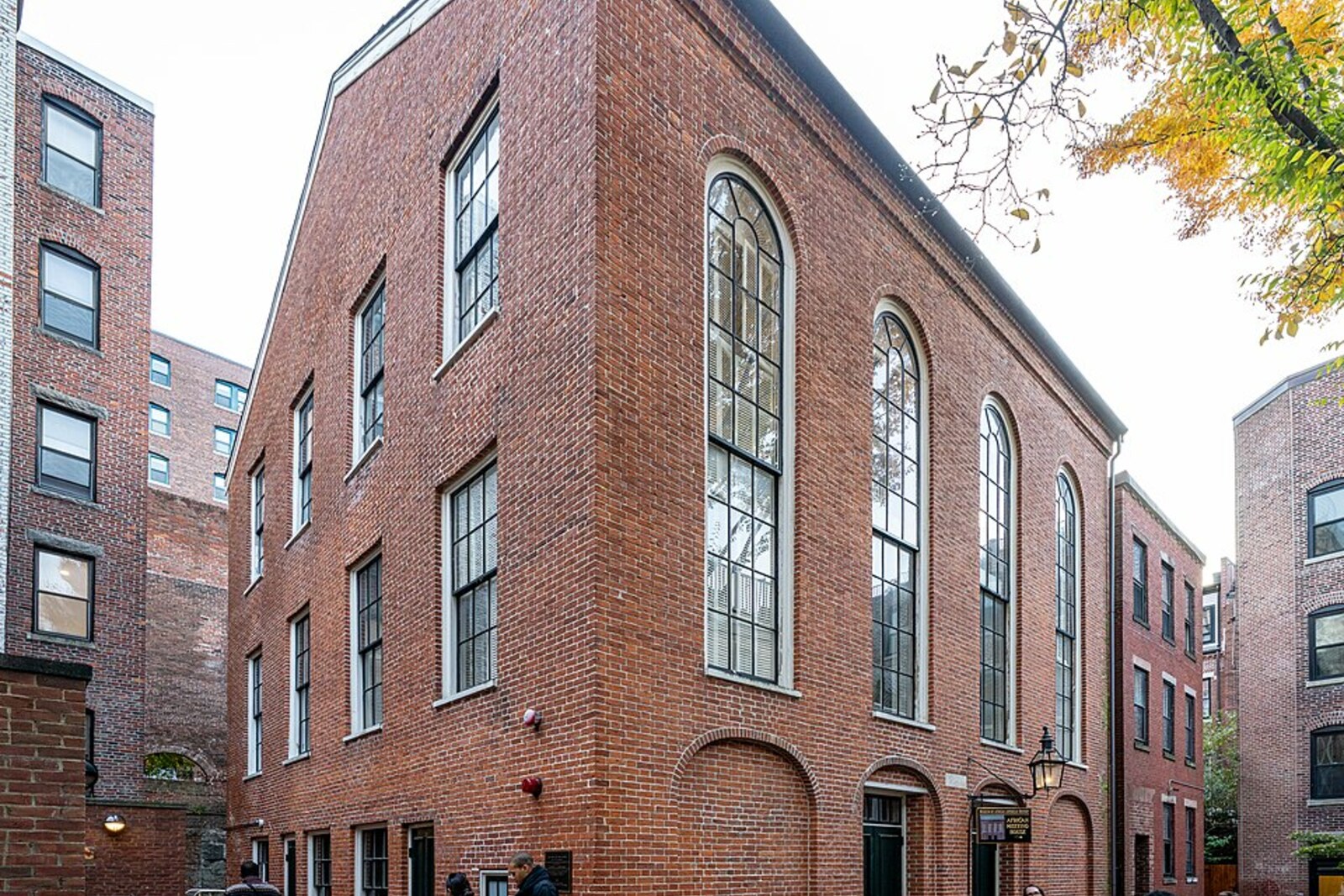
Look around first
What to notice
- Brick facade
- Tall arched windows
- Entrance portal
- Inscription with Cato Gardner's name
The story of the place
The brick facade with tall arched windows survives from the former church. Worship services and general meetings took place in the upper hall, and a school for Black children later opened downstairs; abolitionists then spoke here, and opponents of slavery gathered here. After the Baptist congregation moved away, the building became a synagogue, and then the Museum of African American History acquired it. Above the entrance portal, an inscription remains with the name of the blacksmith Cato Gardner, who raised funds for the construction.
In the early nineteenth century, a Black Bostonian might be admitted to a white Baptist church, but seated only in the gallery and not allowed to vote on the congregation's affairs. Thomas Paul, a Black preacher from New Hampshire, wanted to create a congregation in which its members would choose their own ministers and manage the money they collected.
In August eighteen oh five, Paul and his supporters founded the First African Baptist Church. At the time, the word “African” referred to the community of Black Bostonians. Of its first twenty-four members, fifteen were women. They now needed a home of their own.
Cato Gardner was among those entrusted with raising money. He was born in Africa, had previously been enslaved, and earned a living in Boston as a blacksmith. Gardner raised fifteen hundred dollars—almost as much as the building lot cost. The congregants sold seats in the future pews in advance, resold the remaining structures on the lot, and asked for donations in neighboring states. Black masons and carpenters did most of the work. The costs still exceeded the funds raised; the building committee paid off the debts only thirteen years later.
On December sixth, eighteen oh six, the church opened. At the public ceremony, the pews in the main hall were reserved for white benefactors, while the Black founders sat in the gallery of their own church. That is how the dedication day itself passed. Afterward, Thomas Paul's independent congregation operated here.
The building had several functions from the start. Worship services and general meetings took place upstairs, and in eighteen oh eight a school for Black children opened downstairs. Later, abolitionists spoke in the same hall, and organizations fighting against slavery met there. That is why it came to be called the African Meeting House: the church occupied only one part of the life for which it had been built.
At the end of the nineteenth century, the Baptist congregation moved away, and the former church was turned into a synagogue. In nineteen seventy-two, the Museum of African American History bought the building. It is now the oldest surviving building in the United States built for a Black church. Above the entrance, the blacksmith's name still stands: “Cato Gardner, first organizer of this building, eighteen oh six.”
Useful on site
A museum site of the Museum of African American History; as of the check date, hours are listed as 10:00 to 16:00 Tuesday through Sunday, with entry slots at 10:00, 12:00, and 14:00.
Checked: July 1, 2026. Check the official source before visiting.Viewing from the street completes the route without additional requirements. To visit the interior, check museum access in advance and follow the site's rules.