 Guide On Map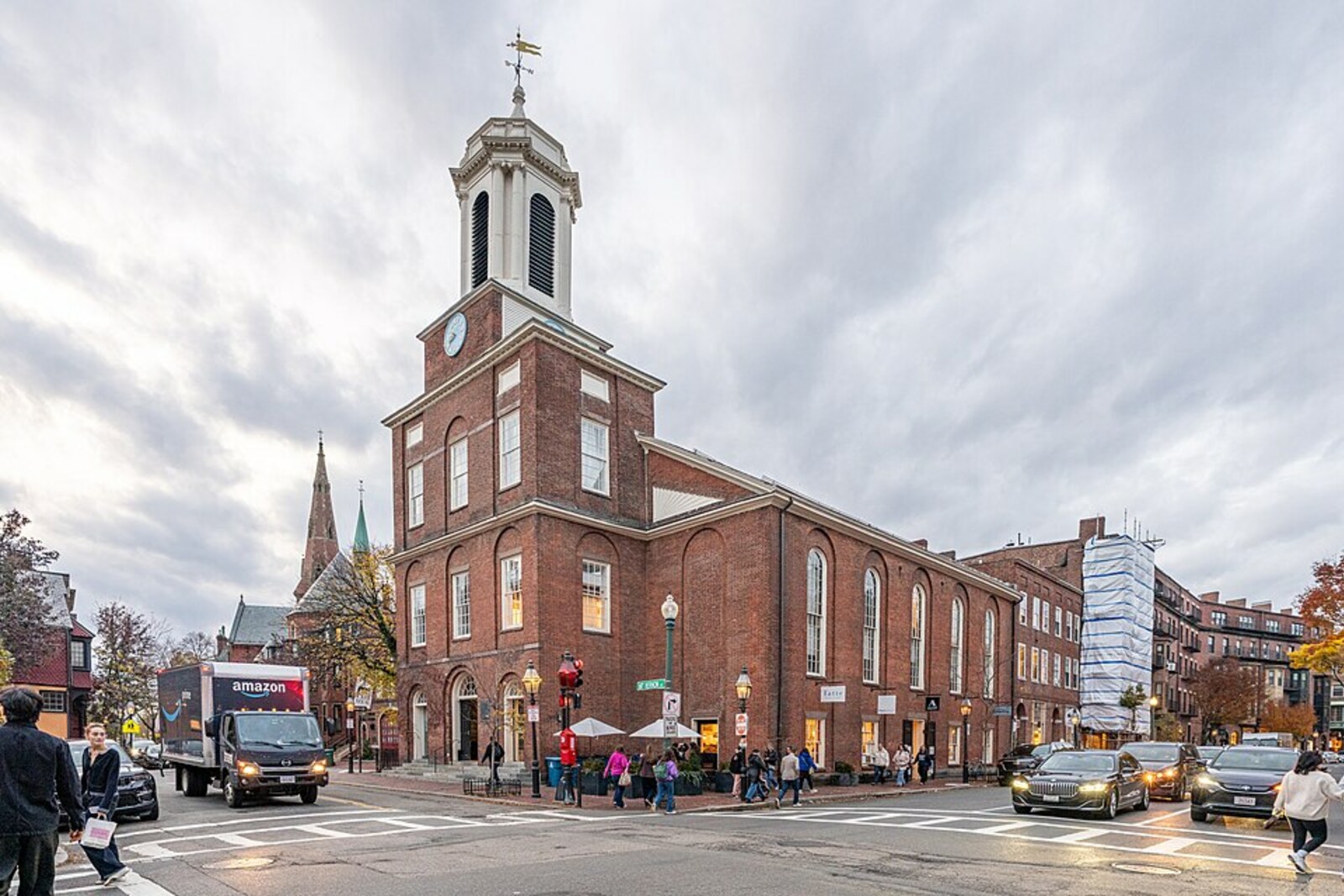
Look around first
What to notice
- Brick facade
- White steeple
- Tall windows
The story of the place
In nineteen nineteen, Boston decided to widen Charles Street, and this church ended up on the new street line. Pastor Montrose Thornton pressed to sell the building; most of the church trustees supported him. Nearly all the congregants had already moved to the South End and Lower Roxbury, so the old meeting house required money and long trips across the city.
The sale was opposed by physician and trustee William Worthy. He wanted to preserve the building that the community had paid dearly for and had managed to make its own. This was the First African Methodist Episcopal Church—a Black Boston congregation that bought this house of worship in eighteen seventy-six for forty thousand dollars.
Before them, the white Third Baptist Church gathered here. The building was erected in eighteen seven at what was then the bank of the Charles River: the Baptists needed water for baptism by full immersion. Later, when Back Bay was filled in, the shore was moved far to the west. Inside, white congregants owned the pews in the main hall, while Black people were assigned the first two rows of the gallery on the Charles Street side. Then the Black congregation bought the entire building.
Now it had to decide whether the former segregated church was worth saving. Worthy persuaded most congregants to vote for preservation. They raised money, and in nineteen twenty contractors lifted the brick building and moved it ten feet—about three meters. After that, the congregation continued traveling here for services from other neighborhoods for another nineteen years.
In nineteen thirty-nine, the congregants finally moved to Roxbury. Their church became the last major Black institution to leave Beacon Hill, but it kept Charles Street in its name. The old building was acquired by the Charles Street Meeting House Preservation Society; later, the interior worship hall was divided into floors with offices and retail spaces.
The facade with its white steeple stands exactly where William Worthy's congregants moved it. And the congregation that saved it from demolition still bears the name of the street it left for Roxbury.
Useful on site
Private building on the Black Heritage Trail; there is no public interior access for this route.
Checked: July 1, 2026. Check the official source before visiting.Treat this point as an exterior-only stop unless you have separately confirmed access. Do not try to enter by following the building's visitors.