 Guide On Map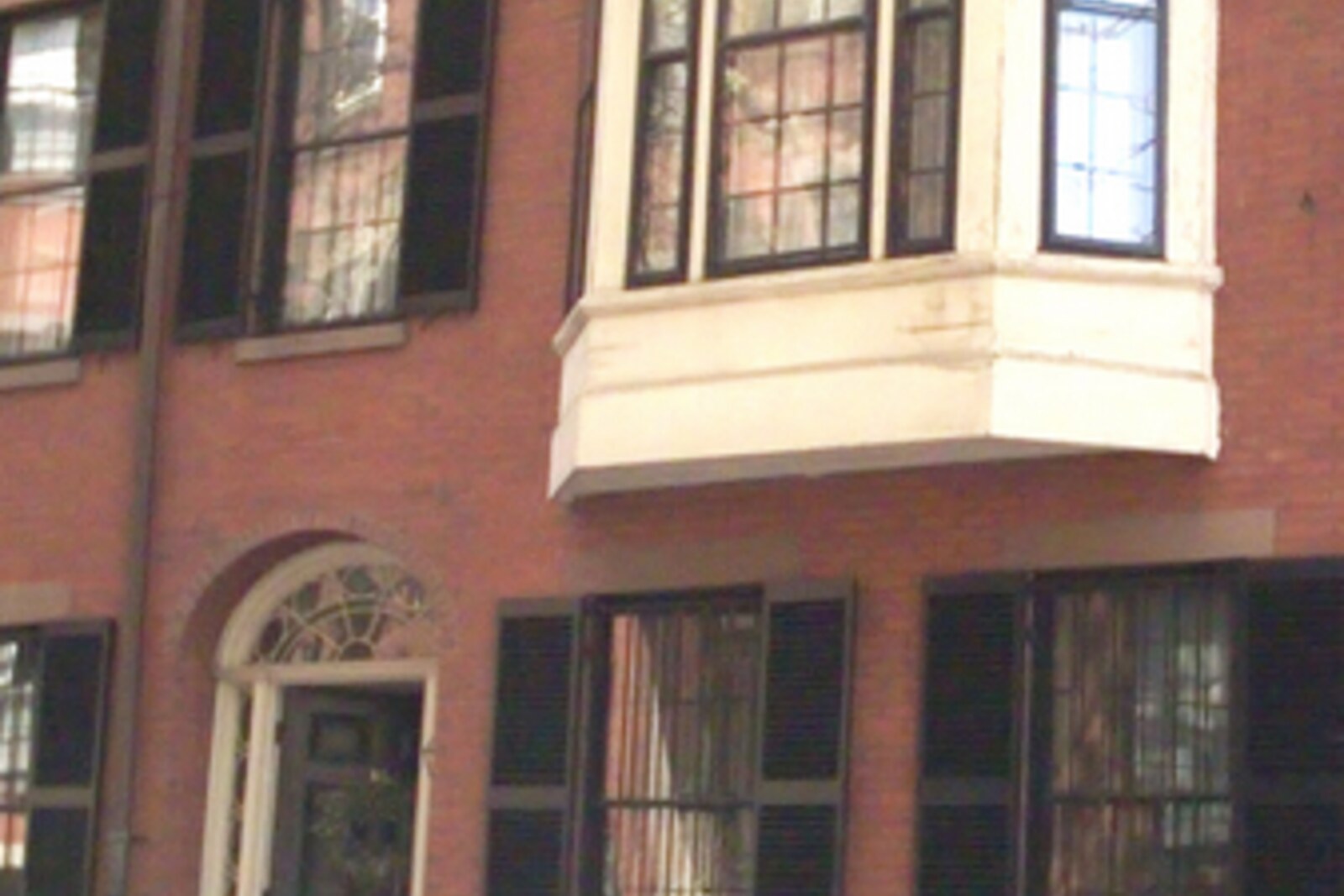
Look around first
What to notice
- Brick façade
- White bay window
- Black shutters
The story of the place
In eighteen seventy-eight, John James Smith settled in this brick house on Pinckney Street. At the time, he supported his family with a restaurant inside the Massachusetts State House. That same year, the residents of his district elected Smith to the Boston Common Council—a chamber of the city legislature at the time.
Smith pressed for Black Bostonians to begin being admitted to municipal service. His own path to this seat began in a barbershop: there he earned his living, held meetings of opponents of slavery, and helped people fleeing from the South. Now he had a voice in deciding the city’s affairs.
At that time, Horatio Julius Homer worked as a janitor at the Globe Theatre. He had no intention of becoming a police officer. Several influential acquaintances suggested that he run for the position; Smith was among those who promoted the appointment. Before that, there had been no Black employees in the Boston police force.
On December twenty-fourth, eighteen seventy-eight, Homer was sworn in. He left his theater job and received a post at the entrance to the Police Commissioners’ Office in Pemberton Square; on Sundays and holidays, he went out on foot patrol. Beginning in a position that had effectively not existed before for a Black Bostonian, Homer served for forty years. In eighteen ninety-five, he became the first Black sergeant in the city police force and did not retire until nineteen nineteen.
The appointment itself did not take place in the rooms of this house. This was Smith’s home address in the year when he secured Homer’s appointment. Smith lived on Pinckney Street until eighteen ninety-three. His barbershop and the former shelters for fugitives were in other locations. John J. Smith House remains a private residence today: visitors are not allowed inside. What survives on the route is the former barber’s address from his later years—an address that appeared in city directories at the same time as the beginning of Horatio Homer’s forty-year service.
Useful on site
Private residence and a Black Heritage Trail site; the National Park Service states that the house is not open to the public.
Checked: July 1, 2026. Check the official source before visiting.This is a private house. Stay on the public sidewalk, do not go up to the door, and do not take close-up photographs of the windows.