 Guide On Map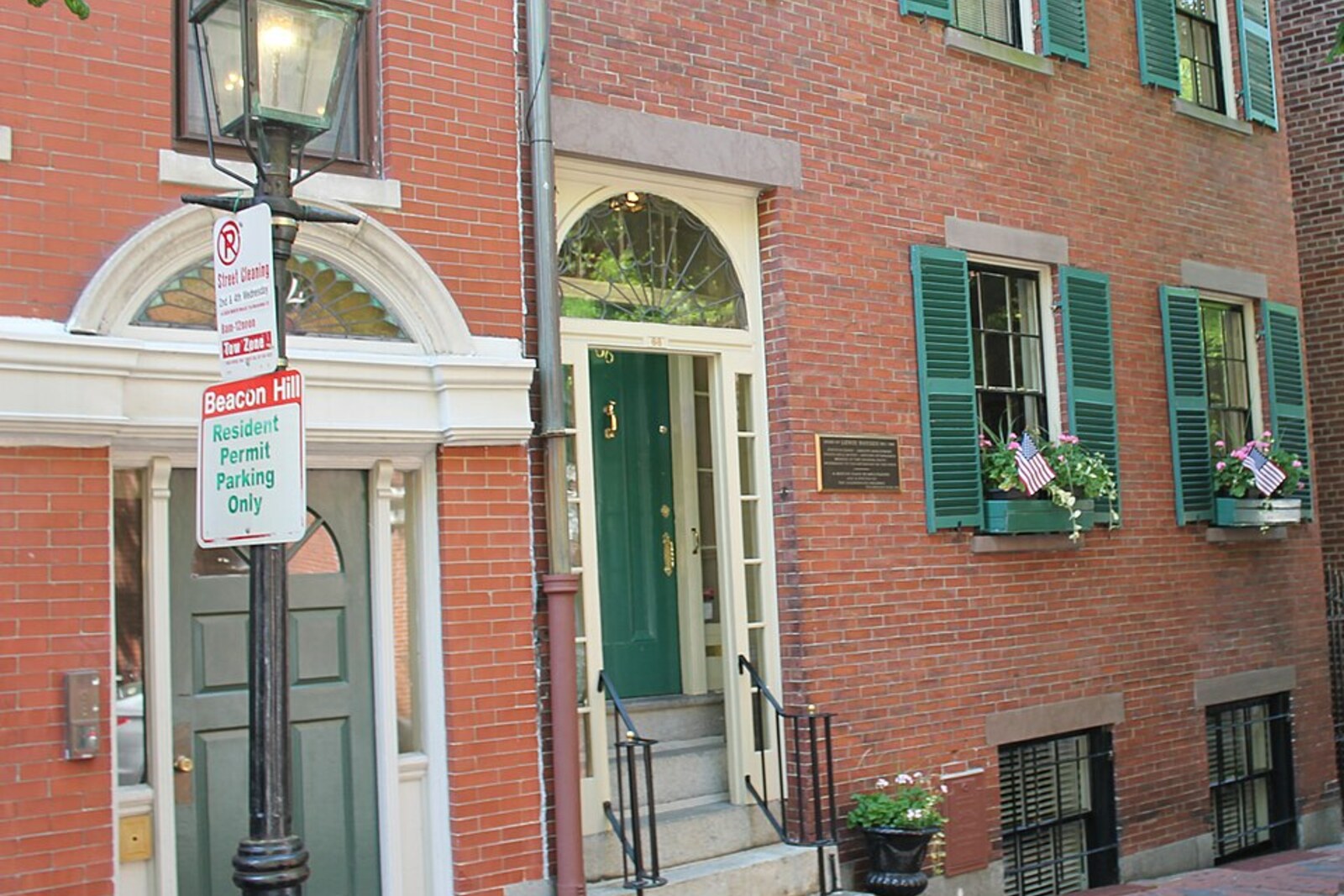
Look around first
What to notice
- Green door
- Green shutters
- Bronze plaque
- Brick wall
The story of the place
In late October eighteen fifty, a barrel of gunpowder with a fuse already attached lay in the basement of this house. It had been prepared by the homeowner, Lewis Hayden, and William Craft, who was hiding with him. If federal marshals entered to seize Craft, the two planned to light the fuse.
House number sixty-six stood then on Southac Street—later renamed Phillips Street. Lewis and Harriet Hayden lived here, a married couple who had themselves escaped slavery in Kentucky six years earlier. Lewis earned a living selling clothing on nearby Cambridge Street. Harriet ran a boardinghouse in the home: she housed boarders, prepared food, and cared for people who needed to hide. People involved in the Underground Railroad passed through these rooms—the name given to a network of houses, guides, and routes that helped fugitives reach a safe place. Lewis supplied them with clothing, hired carriages, and paid for the onward journey; the day-to-day refuge rested on Harriet.
Among the boarders were William and Ellen Craft, a married couple who had escaped slavery in Georgia and were trying to begin a life in Boston. William worked as a cabinetmaker, Ellen as a seamstress. The census conducted in August eighteen fifty recorded both of them specifically at the Hayden house.
A month later, Congress passed the new Fugitive Slave Act of 1850. A federal commissioner could order a person returned to an enslaver, and anyone who interfered with an arrest faced up to six months in prison and a fine of up to one thousand dollars. Agents from the city of Macon came to Boston with orders to take the Crafts back to Georgia. On October twenty-fifth, they obtained an arrest warrant.
Ellen was moved from one safe house to another. William first barricaded himself in his workshop, then returned here, to the Haydens. He was offered the chance to buy his freedom if he allowed himself to be arrested. William refused: he believed that his consent would leave hundreds of other fugitives without protection—people with no money to pay and no one to defend them.
The doors in the house were locked and reinforced, and the windows were blocked. Armed Black Bostonians kept watch at a table. The gunpowder waited beneath the floor. Lewis risked his house, his business, his freedom, and his own family; Harriet continued to run the boardinghouse that federal law had turned into criminal evidence.
At the same time, supporters of the Crafts watched the agents in the streets, disrupted their attempts to approach, and several times secured their detention on other charges. The agents did not dare pass through this guard. On November first, they left Boston without William and Ellen. Soon afterward, the Crafts left the United States, reached England, lived there for almost twenty years, and raised five children.
After that, the Haydens did not close the boardinghouse. Records of the Boston Vigilance Committee show that over the following decade, they gave shelter, clothing, or a journey north here to dozens of people. That is why the house bears both names: Lewis defended the entrance and arranged the onward route, while Harriet turned living rooms into a refuge every day.
The brick house survives and remains a residence. It was beneath this very house at number sixty-six that William Craft and Lewis Hayden once left a barrel of gunpowder with a fuse already attached.
Useful on site
Private residence and a Black Heritage Trail site; the National Park Service states that the house is not open to the public.
Checked: July 1, 2026. Check the official source before visiting.Listen from the opposite side of the street or wherever you do not disturb residents. The porch and interior are not part of the public route.