 Guide On Map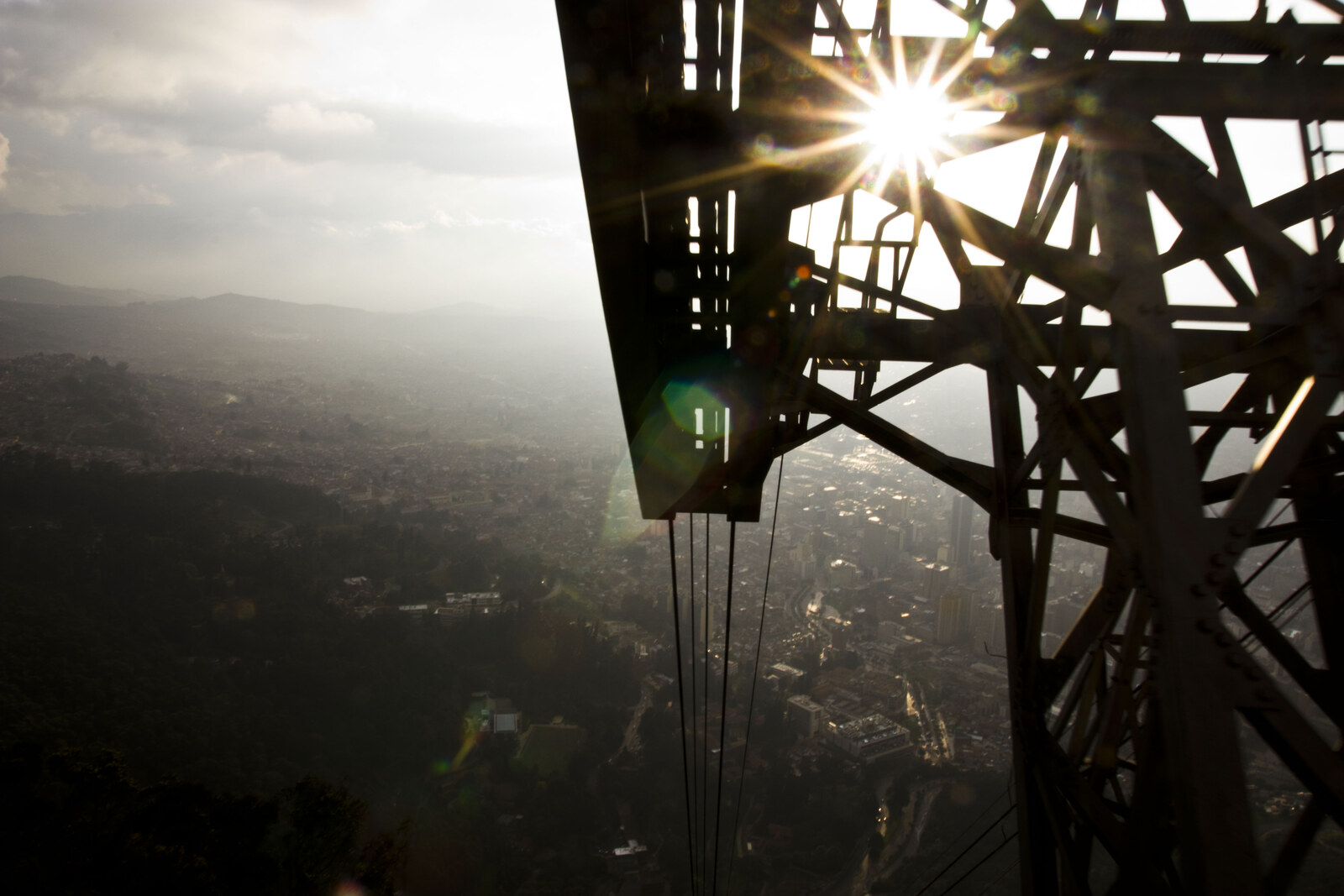
Look around first
What to notice
- Funicular tracks
- Cable car cables
- The lower-station building
- Cars and suspended cabins
The story of the place
From this station, the funicular tracks head uphill, while the cables of the Monserrate Cable Car are strung beside them. The funicular pulls a car up the slope; suspended cabins appeared later. The first line was laid for pilgrims, who had previously faced a long and dangerous climb on foot.
In nineteen twenty-five, a new, more spacious church was completed at the summit. Gregorio Ocampo, the chaplain of Monserrate, pressed for the growing stream of worshippers to be able to reach it without a journey of many hours along the steep trail. He was supported by Bernardo Herrera Restrepo, Archbishop of Bogotá. A joint-stock company was created for the construction, and thirty thousand shares at ten pesos each were issued. The buyers invested in a railway that did not yet exist: ahead lay a steep slope, a rock near the summit, and a tunnel that had yet to be cut through it.
The technical work was entrusted to Karl Marthaler, a Swiss engineer. The engine, hauling cable, and cars were delivered from Switzerland; installation lasted almost three years. On the Sunday morning of August eighteenth, nineteen twenty-nine, city officials, shareholders, and pilgrims gathered at the lower station. Colombian and Swiss flags were raised above the building, Archbishop Ismael Perdomo blessed the railway and entered the first car. The journey, which took about three hours on foot, took eight minutes.
However, the machine immediately divided those assembled. First-class seats, intended for shareholders, were located in the center of the car. Second-class passengers traveled standing at the front and rear. A round-trip ticket cost them fifty centavos. Pilgrims who did not have even that sum continued to climb on foot in alpargatas, as they had done before the line opened. The people who paid for the construction were the first to receive seats; the people for whom Ocampo had pressed for a safe ascent could use it only to the extent their means allowed.
In nineteen fifty-five, the Monserrate Cable Car was built beside it: the funicular alone was no longer enough for the increased number of passengers. Thus, two boarding areas appeared at the lower station. The suspended cabins travel above the slope, while the funicular car still climbs on the tracks and enters the tunnel, cut during the first construction, before the summit. It no longer has central seats for shareholders.
Useful on site
Mon–Sat 6:30-22:00; Sun 5:30-17:00; holidays 6:30-17:00, changes possible.
Checked: June 28, 2026. Check the official source before visiting.Before choosing how to go up, check the condition of both lines and the trail on site; transport tickets are purchased separately.