 Guide On Map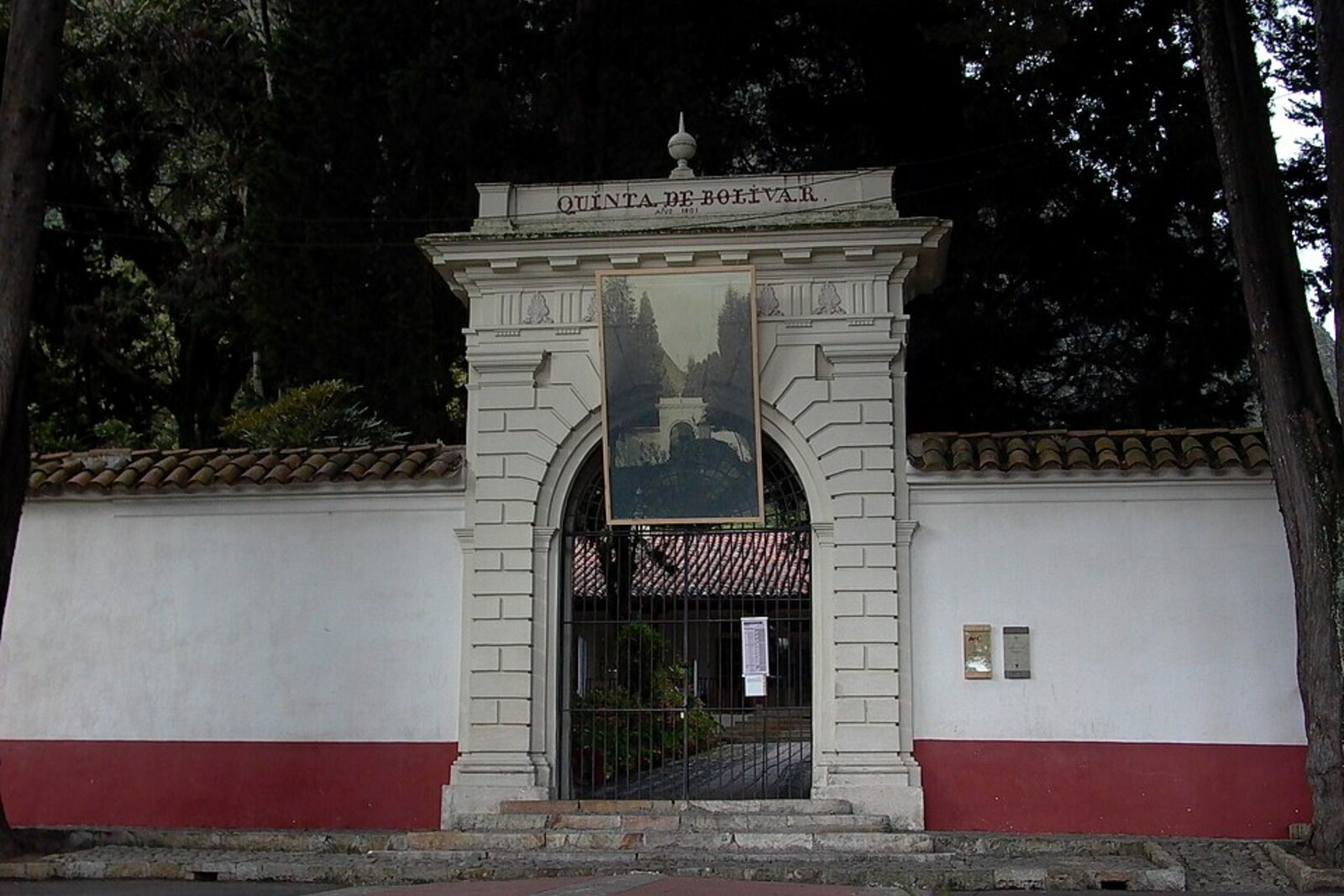
Look around first
What to notice
- Dining room
- Marble-imitation wall painting
- Garland of leaves and fruit
The story of the place
The government of Cundinamarca bought the country estate and gave it to the leader of the country's liberation; since then, the house has borne its present name. It was intended for rest between campaigns and meetings with fellow supporters without palace ceremony, but over ten years its owner spent only four hundred twenty-three days here. A museum now operates here: most of the furniture was selected later, but the dining room preserves a marble-imitation wall painting and a garland of leaves and fruit discovered during restoration.
Francisco de Paula Santander—the vice president of the young republic and Bolívar's closest administrative ally—ordered the dining room of this country estate to be built. Five years later, at a celebration in this house, soldiers shot an effigy bearing Santander's name.
The government of Cundinamarca bought the estate in eighteen twenty and gave it to Bolívar in gratitude for the country's liberation. It was then given its present name: Quinta de Bolívar, Bolívar's country house. He owned it for ten years, but because of military campaigns he spent a total of only four hundred twenty-three days here.
While Bolívar was in the south of the continent, the house fell into disrepair. In eighteen twenty-three, he wrote to Santander from Cuenca and asked him to prepare the estate: after the campaign, Bolívar, who was ill, intended to live here. Santander ordered the rooms repaired and a dining room added for about thirty guests. The work cost nearly two thousand pesos; the money was deducted from the salary the republic owed its president. Santander was arranging for his friend a home where he could recover and receive fellow supporters without palace ceremony.
By eighteen twenty-eight, the former allies were already disputing how to preserve the Republic of Colombia—a state that united the territories of present-day Colombia, Venezuela, Ecuador, and Panama. Bolívar sought strong central leadership and expanded presidential powers. Santander and his supporters insisted on constitutional limits and greater autonomy for the provinces. An assembly convened in the city of Ocaña to amend the constitution ended in a split.
On July twenty-fourth, Bolívar's birthday was celebrated at the Quinta. Manuela Sáenz—his close companion and political ally, who gathered the president's supporters here—acted as hostess. Soldiers from the Grenadiers Battalion were among the guests. At the height of the celebration, participants made an effigy, gave it Santander's name, and staged a mock execution by firing squad. One of the generals loyal to Bolívar found the performance unacceptable and told him what had happened. Bolívar called the act of his supporters stupid and pathetic; he intended to remove the commander of the grenadiers from the battalion and exile Manuela from Bogotá.
Manuela remained. Two months later, conspirators burst into the presidential San Carlos Palace to kill Bolívar. She delayed the attackers and gave him time to escape through a window. After the assassination attempt, Bolívar moved here, to the Quinta, and began spending long periods living alongside Manuela. The country estate, intended for rest after campaigns, became his guarded refuge.
Santander was accused of involvement in the conspiracy; he denied his guilt. The court sentenced the former vice president to death, but Bolívar commuted the execution to exile. Some of the conspirators were shot, and Santander left the country. After Bolívar's death and the breakup of the Republic of Colombia, he returned and in eighteen thirty-two became president of New Granada.
The effigy has not survived, but the dining room ordered by Santander remains part of the house. During restoration, a marble-imitation wall painting and a garland of leaves and fruit were discovered here; they are attributed to the repair work ordered by him. The museum selected most of the furniture on display later to recreate the setting. The dining room itself is a tangible trace of the man whose name the party participants fired upon in the courtyard of this estate.
Useful on site
Tue–Sun 9:00-17:00; Mon closed, including holidays.
Checked: June 28, 2026. Check the official source before visiting.Even without visiting the interiors, you can examine the estate and its position at the foot of the slope; plan the museum entrance separately.