 Guide On Map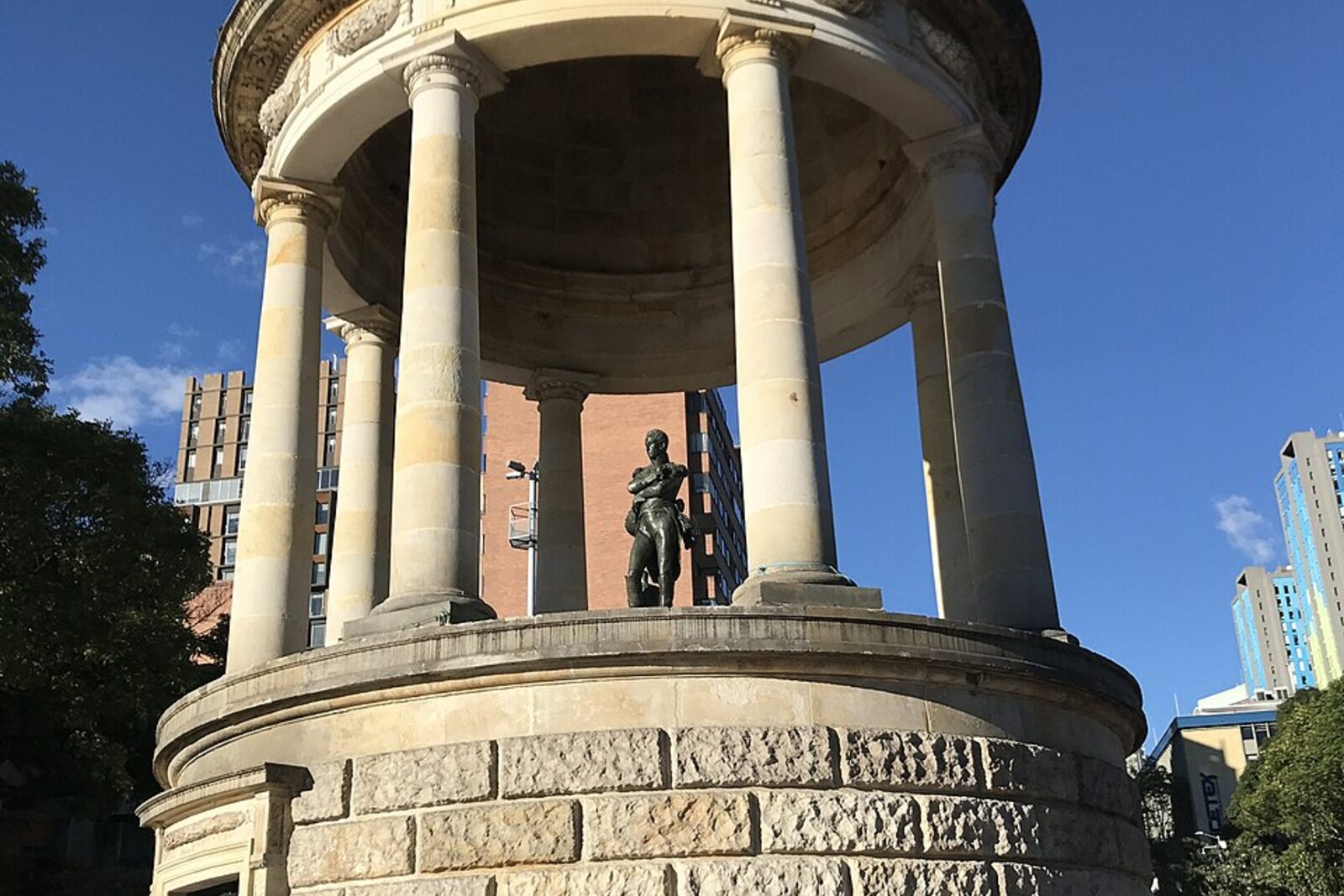
Look around first
What to notice
- Bolívar Pavilion
- Statue of Simón Bolívar
- Curved facade of the Monserrate building
The story of the place
The park’s name came from the Bogotá Journalists' Circle, founded in nineteen forty-five by thirty newspaper workers from five Bogotá publications to defend freedom of the press and seek equal pay for reporters from the capital and the provinces. City Hall gave the Circle land near Avenida Jiménez de Quesada and Carrera 3 for its building, but the plot later passed to the Colombian Academy of Language, and nothing remained of the headquarters. In the nineteen sixties, newspaper workers, poets, and writers continued to gather in the open square, which is why the place received its official name. The central pavilion once stood in the destroyed Centenary Park; it was moved here in nineteen fifty-eight, and beneath its arches stands a statue of Simón Bolívar, where people still arrange meetings and hold fairs.
At the park’s western edge, beyond Carrera 4, the Monserrate building curves in an arc. Until nineteen sixty-three, it housed the editorial office of El Espectador. In the spring of nineteen fifty-five, the naval seaman Luis Alejandro Velasco came to the office of its director, Guillermo Cano. He had already become famous as the only survivor among eight sailors swept overboard from the destroyer Caldas.
Cano initially sent the visitor away: newspapers had long since retold the official version about a storm, and Velasco had made money from advertisements for watches and tennis shoes. But the director could not explain to himself why he had dismissed a man who had spent ten days on a raft. He told the doorman to bring the sailor back and assigned the interview to staff reporter Gabriel García Márquez.
The reporter resisted. The story seemed exhausted to him, and he could not refuse the assignment—the newspaper salary was his income—but he did not want to put his name to it. Cano then suggested printing the account in the first person, in Velasco’s name. This accidental stubbornness determined the form of a future book: the reader found himself on the raft with the sailor, without explanations from a newspaper author.
For three weeks, Velasco came every day to García Márquez’s desk in the editorial office. The reporter checked the sequence of events, turned the next portion of the conversation into text in the evening, and the following day the newspaper printed the continuation. The first installment appeared on April fifth, nineteen fifty-five, and sold out within a few hours.
With the third publication, the version with which Velasco had returned as a hero fell apart. There had been no storm. Refrigerators, washing machines, and stoves, bought by the sailors after their withheld wages had been paid, were being carried on the deck of the naval vessel. The crates blocked the passageways and were poorly secured. When the ship listed in a strong wind, the cargo broke loose and dragged people overboard. Seven died.
The military regime continued to insist there had been a storm, and after fourteen installments, pressure on the editorial office increased. The newspaper’s managers sent García Márquez to Europe as a correspondent. A few months later, the regime closed El Espectador, and the reporter remained in Paris without a salary, fell behind on rent for his attic room, and in this poverty finished the novella No One Writes to the Colonel. Velasco no longer suited the role of a model hero and was soon forgotten by the public. His account, by contrast, outlived the newspaper sensation and was later published as a separate book.
At that time, García Márquez was specifically a journalist. He would become a Nobel Prize winner almost three decades later. After his death, in nineteen fourteen, the city added his name to the park’s name. It ended up beside the editorial office where daily work for a salary first made the future writer test a handsome official story against the words of the person who had paid for it.
The first part of the name refers to an entire professional circle. Back in nineteen forty-five, thirty employees of five Bogotá newspapers created the Bogotá Journalists' Circle. Its first meeting was chaired by Emilia Pardo Umaña, one of the country’s first columnists to earn a living through journalism. The participants wanted to defend freedom of the press and ensure that editorial offices paid reporters regardless of whether they came from the capital or the provinces.
The city gave the Circle a plot near Avenida Jiménez de Quesada and Carrera 3 for its own headquarters. Later, the journalists’ land was expropriated for the Colombian Academy of Language, and none of their building remained here. Yet in the nineteen sixties, staff from nearby newspapers, poets, and writers continued to meet in the open square. Their customary place received the official name Journalists' Park.
The pavilion in the center appeared here a little before these meetings. It was moved from the destroyed Centenary Park in nineteen fifty-eight. Under its arches stands Simón Bolívar, whom Colombians call the Liberator. People still arrange meetings, hold fairs, and stage cultural events on the steps around the monument; beyond the square’s western side remains the curved facade of the former editorial office, where Guillermo Cano once told the doorman to bring back the sailor who had already left.
Useful on site
Open urban space; best visited during the day or in the early evening.
Checked: June 28, 2026. Check the official source before visiting.View the pavilion from several sides: its present appearance is easier to understand when both the architecture and the surrounding square are visible.