 Guide On Map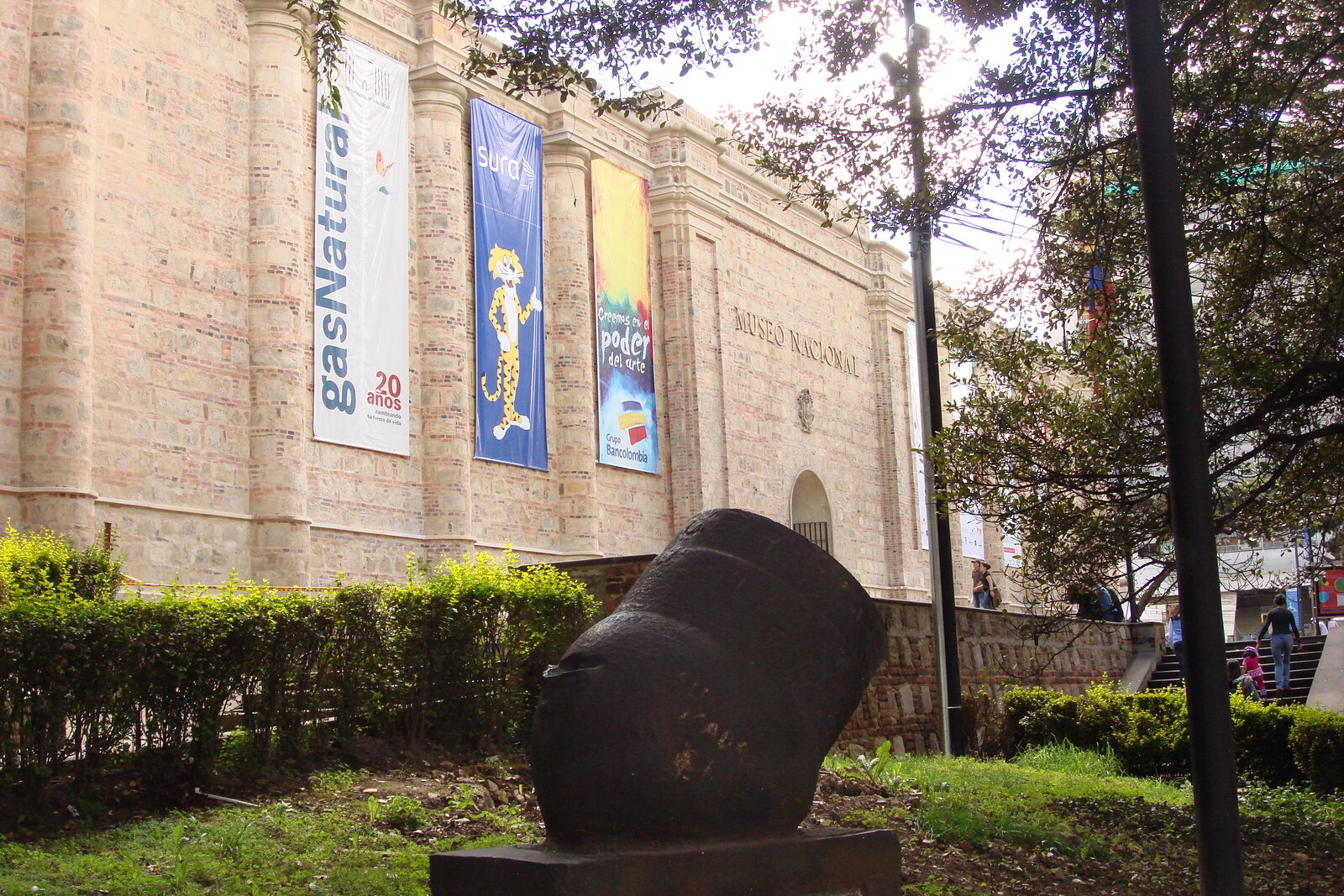
Look around first
What to notice
- Corner guard towers
- Stone walls
- Central entrance
The story of the place
Behind the stone walls of the National Museum of Colombia, the building once designed for isolation and surveillance has survived. Its four wings converge at the center, and small guard towers stand at the corners; the main entrance leads to where the cells once were. When the prisoners were transferred to the new La Picota Prison, these spaces were given over to archaeological, ethnographic, historical, and art collections. The museum now also preserves the memory of the building's former purpose: a separate room inside is devoted to it.
On the night of October twenty-fourth, nineteen hundred, this building was the Cundinamarca Panopticon. Bogotá residents called it the Panopticon—“the place from which everything can be seen.” The design called for observation from a central point, although the building that was constructed turned out to be cruciform and did not provide a complete view. The prisoners took advantage of this weakness.
The Thousand Days' War was under way—a civil war between the conservative government and liberal rebels. Prisoners of war and political opponents were held in the prison. Ricardo Jaramillo, a liberal prisoner, wanted to lead his comrades out to his troops. He had a plan of the building; his accomplices measured the wall, obtained a saw, and gradually removed the balusters from the railing. They assembled a ladder from them and from ropes smuggled in secretly. They waited for a rainy night to escape.
At around eleven o'clock, the conspirators locked themselves in the Bear Room—the name the prisoners gave to the upper room, farthest from the guards. They placed a table on a bed, a chair on the table, and began taking apart the ceiling. They climbed through the opening into the attic, removed the roof tiles, and climbed onto the roof.
An electric searchlight was burning in the courtyard. A person on the roof ridge immediately cast a shadow onto the illuminated wall; two guards stood below. Liberal General Celso Román was the first to secure the rope ladder, descend to the street, climb back up, and report that the way was clear. The guards watched the courtyard and the gate, but did not look up.
Fifty people left by the ladder. The lawyer and writer Adolfo León Gómez also prepared to escape. His brother reminded him that his wife, six children, and mother depended on his earnings, and that clients had entrusted their legal cases to him. Without money or weapons, he could only hide until the end of the war. Gómez stayed and later described that night in the book Secrets of the Panopticon.
It ended differently for the escapees. Captain Aurelio Cumplido was captured the next day. Colonel Luis María Villarreal fell while descending, was no longer able to return to the ranks, and soon died. The others reached the liberal camps or found safe shelter.
After the escape, the government added guard towers to the corners of the building and placed permanent guards in them. The prison operated here until nineteen forty-six, when the prisoners were transferred to the new La Picota Prison. Two years later, the former cells were occupied by the archaeological, ethnographic, historical, and art collections of the National Museum of Colombia.
Inside, there is now a separate room about the history of the Panopticon. Outside, the corner guard towers remain: they were built because one day the guards watched the courtyard while the prisoners passed over their heads.
Useful on site
Tue–Sun 09:00–17:00; Mon, including holidays, closed; Wednesday after 14:00 and the last Sunday of the month—free admission.
Checked: June 28, 2026. Check the official source before visiting.If entry is available, look not only at the collection but also at the building itself. With the doors closed, its fortress-like character is easy to see from outside.