 Guide On Map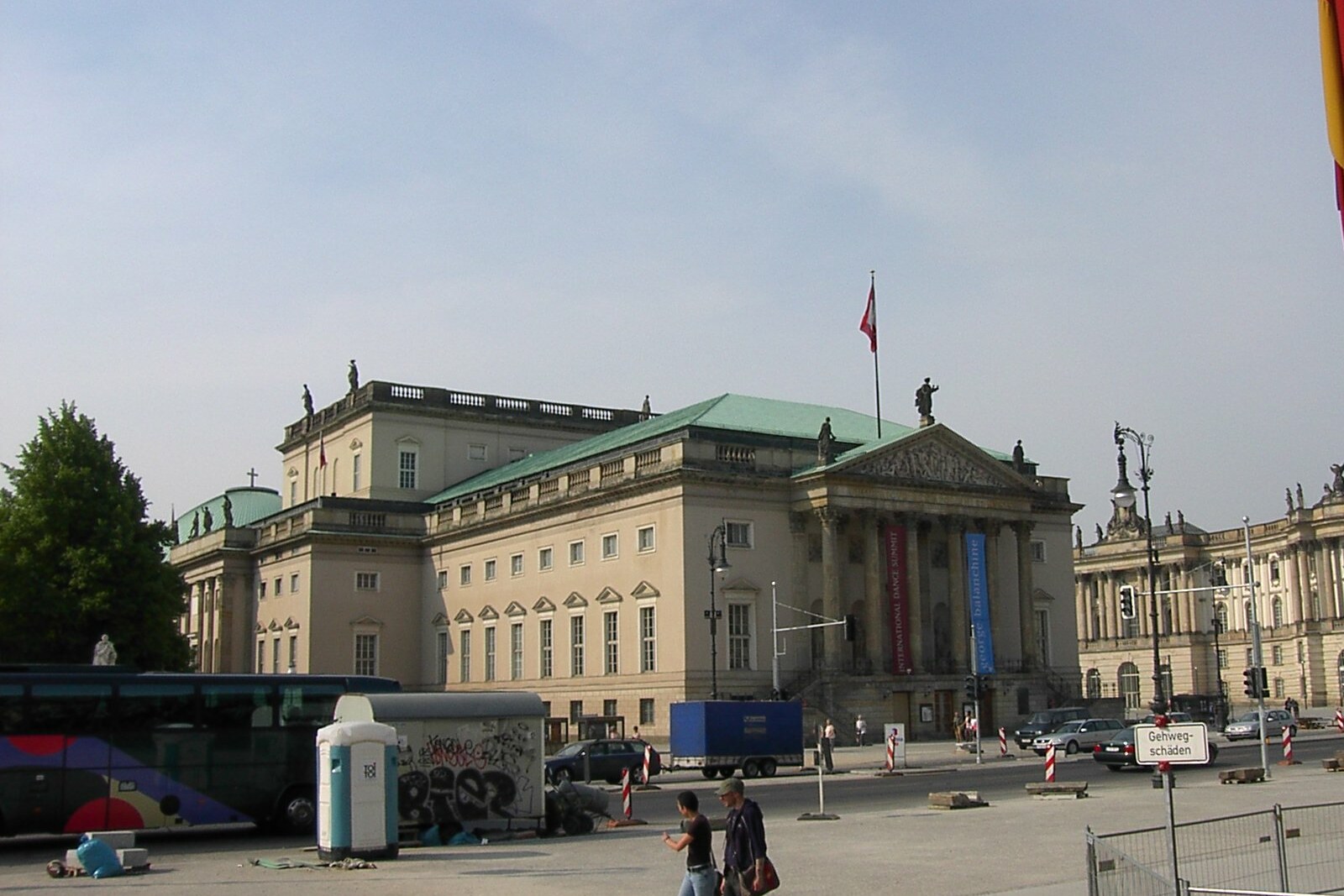
Look around first
What to notice
- The opera theater facade
- The colonnaded portico
- The golden Latin inscription
The story of the place
On November thirtieth, nineteen thirty-four, Erich Kleiber raised his baton here over a score that Nazi officials no longer wanted to see on the opera stage. Staatskapelle Berlin, this theater’s resident orchestra, sat in the auditorium at the time. Kleiber, the General Music Director, was responsible for productions and concerts: for twelve years, Berlin State Opera on Unter den Linden was his main place of work.
The Viennese composer Alban Berg trusted him. In nineteen twenty-five, Kleiber secured the world premiere here of Berg’s Wozzeck—a difficult opera that opponents of the production called impossible to perform and too expensive. The production’s success brought Berg international recognition and royalties. That is why he intended to entrust his next opera, Lulu, to this stage and this conductor as well.
After the Nazis came to power, German theaters stopped performing Berg’s music, and the royalties ceased. The composer lived on advances from his publisher and on sales of manuscript scores. A production of Lulu could have restored his income, but officials banned it. Berg then selected five excerpts from the still unfinished opera for concert performance—a sample of music meant to interest theaters outside Germany.
Even this concert was not permitted at first. Ruth Kleiber, the conductor’s wife, who was seeking a performance of Berg’s music, personally appealed to Hermann Göring. As Minister-President of Prussia, Göring controlled the state theaters and could approve the program. Permission was obtained.
Kleiber conducted excerpts from Lulu here, at Berlin State Opera. That evening, he risked his permanent contract and his position as head of one of Germany’s leading orchestras. After the concert, the Nazi press launched a campaign against Berg and his defenders. Four days later, Kleiber resigned. He completed the performances already stipulated by his contract, and in January nineteen thirty-five left Germany with Ruth and the children. He had to continue his work abroad, including at Teatro Colón in Buenos Aires.
Berg did not live to see a Berlin production. In December of that same year, he died, leaving the third act of Lulu not fully orchestrated. The first two acts were staged in Zurich in nineteen thirty-seven, after the composer’s death.
After the war, Kleiber nevertheless returned to Berlin State Opera. The building on Unter den Linden lay in ruins, and the company performed in another theater. Kleiber advocated restoring its former home, took part in discussions of the design, and in nineteen fifty-three again accepted the post of General Music Director. He wanted to return to the podium at the very institution he had left after the Lulu concert.
Above the columns of the original opera house stood a Latin dedication: “King Frederick—to Apollo and the Muses.” Frederick the Great commissioned this theater in the eighteenth century and made it the first building in the urban ensemble he envisioned. During postwar reconstruction, the inscription was first gilded, and in the spring of nineteen fifty-five an order was given to remove it and replace it with the words “German State Opera.”
On March sixteenth, Kleiber wrote a letter of resignation to the theater’s director, Max Burghardt. In the letter, he recalled nineteen thirty-four and explained that the order to remove the letters within two hours showed that instructions would soon be given to musicians as well. Less than half a year remained before the opening.
On September fourth, the restored theater opened with Die Meistersinger von Nürnberg. Franz Konwitschny conducted. Kleiber never performed in the new auditorium and died in January of the following year. The Latin dedication was restored to the portico in the mid-eighties. Today, the same golden words stand above the entrance again—the words whose removal made Kleiber leave Berlin State Opera for the second time.
Useful on site
The facade is accessible around the clock; tours of the theater and stage area follow the Berlin State Opera schedule and require a separate ticket.
Checked: June 28, 2026. Check the official source before visiting.The story of this stop can be read from outside. Plan a performance, tour, or visit to the interior separately; keep the entrances clear for the public.