 Guide On Map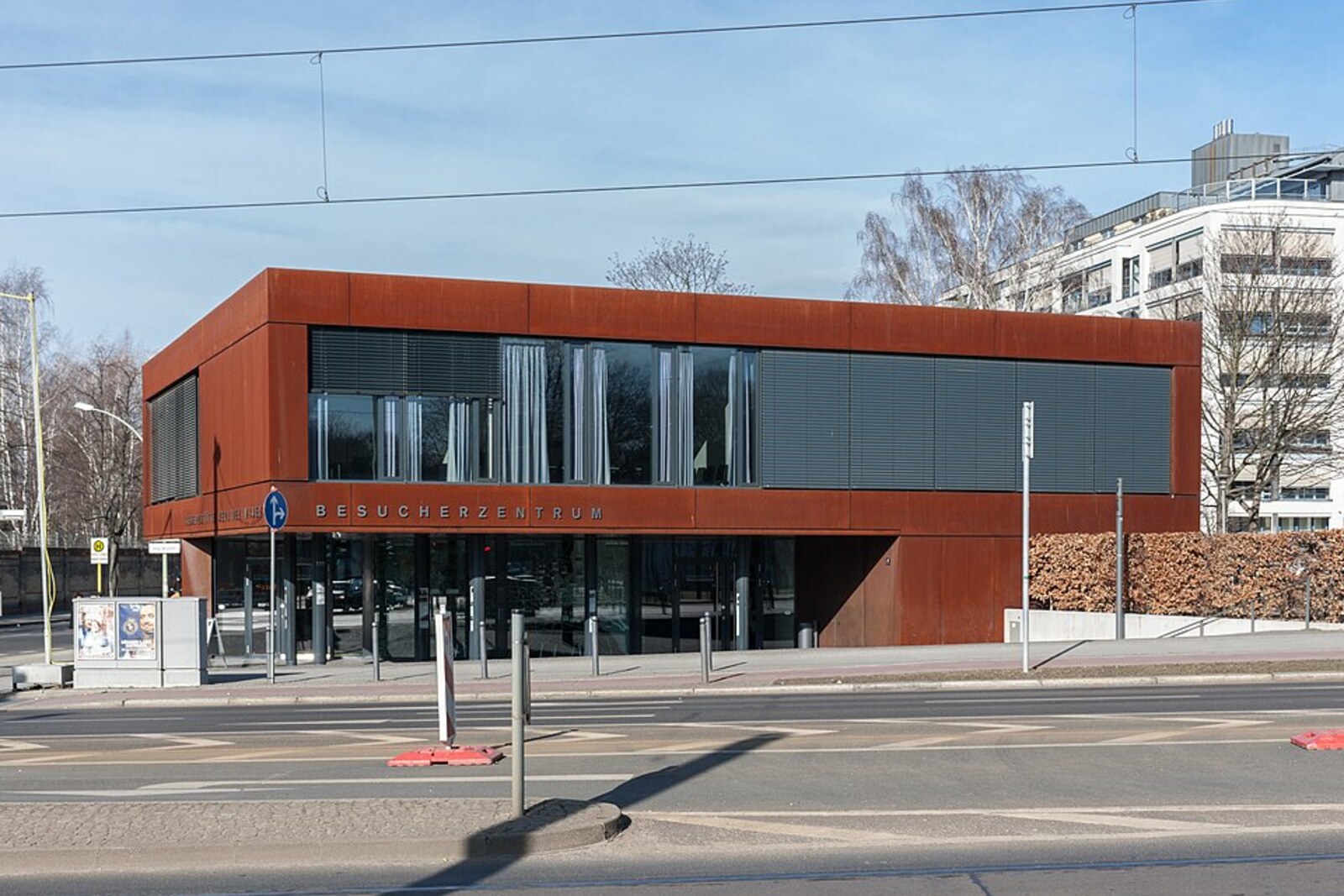
Look around first
What to notice
- Rust-brown facade
- Bend in the lower level
- Windows of the upper level
- Memorial map
The story of the place
The lower level of the rust-brown building follows the curve of the former wall, while the upper-level windows face the memorial field. It was built by Gartenstraße in two thousand nine, when the border had already become lost among new houses and people needed to understand where to look for its surviving traces. From here, the route leads to the open strip, where you can see not an isolated slab, but the layout of the entire border system.
The rust-brown building by the bend in Bernauer Straße serves as the entrance to a memorial nearly one and a half kilometers long. Here, visitors pick up a map, sign up for a tour, watch an introductory film, and find out which traces of the border remain on the street. The detailed exhibition is farther on, in the Berlin Wall Documentation Center. The Visitor Center exists above all to lead people out of the building and onto the former border strip.
On November ninth, nineteen eighty-nine, the border crossings opened, and Berliners began chipping pieces off the wall as souvenirs. Among those asking them to stop was Manfred Fischer, pastor of the Church of Reconciliation congregation in West Berlin. He lived in an official apartment at the parish hall on Bernauer Straße and wanted to preserve here a physical testament to the border.
For Fischer, this was the story of his own congregation. After the wall was built in nineteen sixty-one, the congregation was divided, and its church found itself inside the closed strip. Most parishioners lived in West Berlin and could no longer attend services. In nineteen eighty-five, the leadership of the German Democratic Republic (GDR) ordered the empty church to be blown up because it prevented border guards from surveying the area. When the border opened, the pastor risked losing the last object that could prove what had been done to this neighborhood.
At the end of December, the government of the German Democratic Republic (GDR) decided to dismantle the wall. Fischer appeared on East German television and demanded that a section on Bernauer Straße be left standing. He urged soldiers to stop working, found allies among staff at the German Historical Museum, helped fence off part of the strip, and organized watch over it. Resistance was strong: many residents believed that preserving the wall would bring back to the street what the city had just freed itself from.
The most dangerous moment came on a Sunday morning in June nineteen ninety. From his official apartment, Fischer saw an army brigade arrive at the section between Bergstraße and Ackerstraße that had been designated for protection. The pastor alerted Helmut Trotnow, a historian from the group creating the German Historical Museum. Trotnow sought to preserve the entire border structure: the front wall, the inner fence, and the space between them. A single concrete slab could not show how escapees were stopped.
Without permission, Trotnow crossed onto the territory of the German Democratic Republic (GDR) and approached the brigade commander with a copy of a document ordering that the future memorial section not be touched. The officer had the right to detain him for illegally crossing the border. Instead, he read the paper and led the soldiers away. For Fischer and Trotnow, the matter did not end with a promise: on October second, nineteen ninety, the Magistrate of East Berlin placed the strip from Ackerstraße to Bergstraße under protection as a monument. The next day, the German Democratic Republic (GDR) ceased to exist.
In nineteen ninety-eight, the memorial opened here. The Berlin Wall Documentation Center, a chapel on the site of the destroyed church, and an extensive outdoor exhibition followed. When visitors began asking where to look for the wall itself among the new houses and where to begin their visit, this Visitor Center was built by Gartenstraße in two thousand nine.
The building's lower level runs along the former line of the wall and follows its bend. The upper level faces the memorial field. The map handed out inside leads on to the section where, on that June morning, the army brigade read the document presented to it and left without continuing the dismantling.
Useful on site
Visitor Center: Tue–Sun 10:00–18:00; outdoor section of the memorial daily 08:00–22:00.
Checked: June 28, 2026. Check the official source before visiting.First, get familiar with the site plan: it will help you relate the next stops to the vanished houses. If the center is closed, continue along the outdoor section of the memorial.