 Guide On Map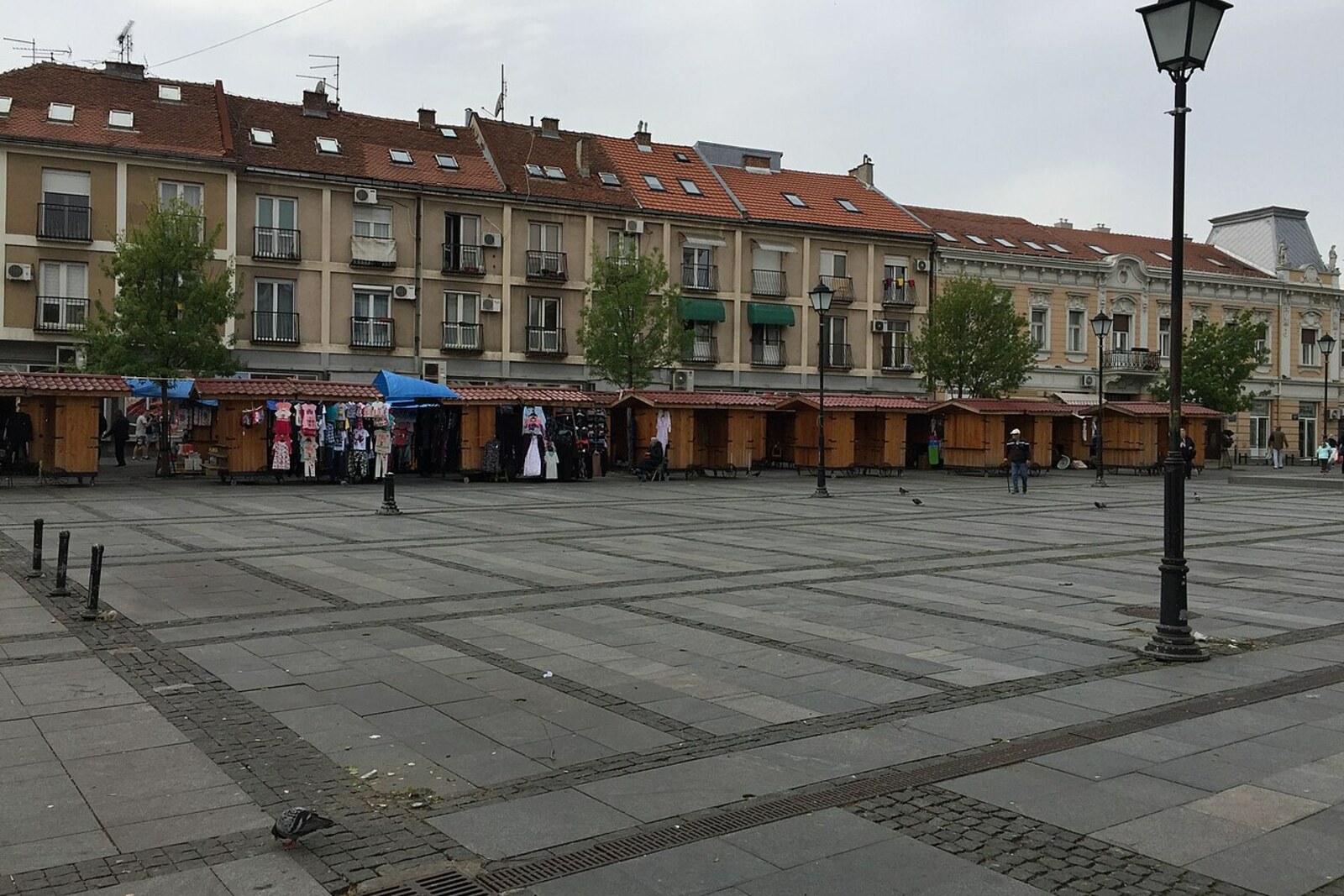
Look around first
What to notice
- Permanent and mobile stalls
- Fish rows on the Danube side
- Granite paving
- The exit onto Gospodska Street
The story of the place
Trade here stretches from Gospodska Street to the quay, while the fish rows remain closer to the Danube. The square took shape where overland routes from Srem and river deliveries met: vegetables and fruit arrived by boat, while river fishermen sold their catch on the bank. Accommodations for visitors and places for carriages were arranged nearby, so this entire block, rather than a single row of stalls, was devoted to trade. Today's granite and fixed stalls have changed its appearance, but the division retains the old logic: produce comes from the roads, fish arrives from the river.
Until nineteen sixty, horse-drawn wagons loaded with grain stopped on this site. Producers brought their own harvest, while traders brought purchased batches. The square was paved with rough cobblestones called Turkish paving: this surface could withstand carts and did not require expensive repairs. There may have been no vegetable stalls at all then—the sack of grain was the main unit of trade.
For sellers, this was income from the harvest; for the urban poor, it was a place to buy food without a middleman. In Zemun records from the late seventeenth century, affluent townspeople hardly ever went to the market: peasants delivered food to their homes or institutions. Those who could not access such a service came to the square. The same suppliers therefore delivered goods to wealthy houses and sold what remained here.
The place was chosen beside the Danube and the roads to Srem. Horse-drawn wagons arrived overland, boats delivered watermelons and grapes from Stari Slankamen, and cabbage was brought from Lido. On the riverbank, Zemun alasi—the local name for professional river fishermen—sold their catch. Accommodations for visitors and parking places for carriages appeared around the square. Trade occupied the entire area between present-day Gospodska Street and the quay.
The names followed the goods. The square was called Little Square, Flour Square, and Grain Square. In nineteen thirty-five, it was officially named after Tomáš Garrigue Masaryk, the first president of Czechoslovakia. For a Yugoslav city, this name was linked to a case that had begun long before Czechoslovakia appeared.
In nineteen oh nine, Masaryk was a professor at Charles University and a Czech deputy in the Austrian parliament. He sought an investigation into the charges against Serbian subjects of Austria-Hungary who were tried in Zagreb for high treason. Masaryk attended the trial, came to Belgrade for documents and testimony, and then spoke in parliament for two days, analyzing the weakness of the prosecution's case. For the professor, the stakes were personal: he publicly set his own investigation against the materials of the state prosecution and put his own scholarly reputation behind the conclusion that there had been forgery.
Thirty-one defendants had already been sentenced to prison terms, some to twelve years. But the verdicts did not stand: the supreme court ordered a new trial, after which the emperor ended the case. In another trial in Vienna, it emerged that the documents used to prove secret Serbian funding of the Croat-Serb Coalition had been forged. Masaryk later openly named those who had organized the forgery. That is why his name appeared here during his lifetime.
The Turkish paving and grain wagons are no longer on the square. They have been replaced by granite paving and permanent and mobile stalls. Gospodska Street still divides trade into two parts, and fish rows are set aside closer to the Danube. On the square named after the professor, the same arrangement remains that was once determined by peasants, traders, and alasi: produce arrives from the landward roads, while fish comes from the river.
Useful on site
The official page of the city markets lists daily hours of 06:00–19:00; actual market activity is livelier in the morning and during the first half of the day.
Opening hours by day
Come while trading is still underway, do not block the narrow passages, and ask permission before taking close-up photographs of sellers.